
Catalogue Search | MBRL


Are you sure you want to remove the book from the shelf?

{{itemTitle}}
4,535
result(s) for
"Food security China."
Sort by:

Securing the 'rice bowl' : China and global food security
This text offers a snappy but comprehensive investigation of how the resource needs of today could become the resource conflicts of tomorrow. As the most populous country in the world, the security of China's 'rice bowl' is not only a top political priority for China's policymakers but increasingly a critical global concern as the country emerges as a leading food importer and a major player in outward agricultural investment. This book sheds light on China's efforts, both at home and abroad, to safeguard its food security and how these efforts will affect global food systems. This book will be of interest to industry analysts, institutional investors, and scholars of China's global rise.
Book
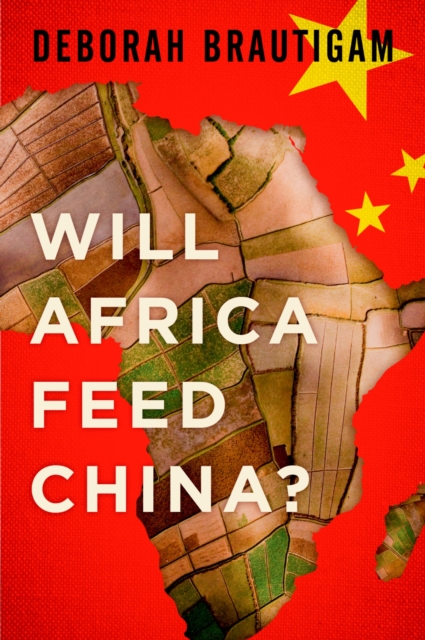
Will Africa feed China?
Is China building a new empire in rural Africa? Over the past decade, China's meteoric rise on the continent has raised a drumbeat of alarm. China has 9 percent of the world's arable land, 6 percent of its water, and over 20 percent of its people. Africa's savannahs and river basins host the planet's largest expanses of underutilized land and water. Few topics are as controversial and emotionally charged as the belief that the Chinese government is aggressively buying up huge tracts of prime African land to grow food to ship back to China. In Will Africa Feed China?, Deborah Brautigam, one of the world's leading experts on China and Africa, probes the myths and realities behind the media headlines. Her careful research challenges the conventional wisdom; as she shows, Chinese farming investments are in fact surprisingly limited, and land acquisitions modest. Defying expectations, China actually exports more food to Africa than it imports. Is this picture likely to change? African governments are pushing hard for foreign capital, and China is building a portfolio of tools to allow its agribusiness firms to \"go global.\" International concerns about \"land grabbing\" are well-justified. Yet to feed its own growing population, rural Africa must move from subsistence to commercial agriculture. What role will China play? Moving from the halls of power in Beijing to remote irrigated rice paddies of Africa, Will Africa Feed China? introduces the people and the politics that will shape the future of this engagement: the state-owned Chinese agribusiness firms that pioneered African farming in the 1960s and the entrepreneurial private investors who followed them. Their fascinating stories, and those of the African farmers and officials who are their counterparts, ground Brautigam's deeply informative, deftly balanced reporting. Forcefully argued and empirically rich, Will Africa Feed China? will be a landmark work, shedding new light on China's evolving global quest for food security and Africa's possibilities for structural transformation.
eBook


Regional differences, spatial temporal evolution and dynamic evolution of food security in China
Food security is the cornerstone of national security. It is urgent to scientifically and reasonably construct a food security assessment system and objectively measure the actual development level of China’s food security. This is an important issue to enhance the modernization level of China’s food security governance system and governance capacity. Constructing evaluation indicators for food security from a theoretical perspective, analyzing the spatiotemporal changes in China’s food security, and expanding the theoretical perspective of food security research. At the same time, it provides ideas for the construction and improvement of China’s long-term food security guarantee mechanism, and also provides scientific reference for world food security. The food security level of 30 provinces and cities in China from 2011–2021 was measured by using the Entropy weight TOPSIS model. The spatial characteristics and regional differences of China’s food security were analyzed using the Standard Deviation Ellipse technology, Moran’s index and Dagum Gini coefficient. The dynamic evolution process of food security level development was based on Markov Chain model. The food security scores of all regions in China showed three stages of fluctuation, balance and growth from 2011 to 2021. The spatial distribution of China’s food security level was developing from northeast to southwest, and shows spatial autocorrelation. Regional differences were the main source of regional disparities in China’s food security level. The evolution of China’s food security level had shown significant spatial self strengthening characteristics and spatial spillover effects. The spatial pattern of China’s food security presented a significant expansion feature along the ‘Northeast Southwest’ axis. The spatial differentiation of food security was showing a strengthening trend, and the regional coordination mechanism urgently needs to be improved. The root cause of regional differences lied in the imbalance between main production and main sales areas, with a dual lack of policy compensation and market mechanisms.
Journal Article

On feeding the masses : an anatomy of regulatory failure in China
Focuses on the oft-cited but ultimately overlooked concept of scale to identify the root causes of China's regulatory failures in food safety. --Page [i].
Book

Climate extremes and ozone pollution: a growing threat to china's food security
Ensuring global food security requires a sound understanding of climate and environmental controls on crop productivity. The majority of existing assessments have focused on physical climate variables (i.e., mean temperature and precipitation), but less on the increasing climate extremes (e.g., drought) and their interactions with increasing levels of tropospheric ozone (O
3
). Here we quantify the combined impacts of drought and O
3
on China's crop yield using a comprehensive, process-based agricultural ecosystem model in conjunction with observational data. Our results indicate that climate change/variability and O
3
together led to an annual mean reduction of crop yield by 10.0% or 55 million tons per year at the national level during 1981-2010. Crop yield shows a growing threat from severe episodic droughts and increasing O
3
concentrations since 2000, with the largest crop yield losses occurring in northern China, causing serious concerns in food supply security in China. Our results imply that reducing tropospheric O
3
levels is critical for securing crop production in coping with increasing frequency and severity of extreme climate events such as droughts. Improving air quality should be a core component of climate adaptation strategies.
Journal Article

Will Africa feed China?
\"Is China building a new empire in rural Africa? Over the past decade, China's meteoric rise on the continent has raised a drumbeat of alarm. China has 9 percent of the world's arable land, 6 percent of its water, and over 20 percent of its people. Africa's savannahs and river basins host the planet's largest expanses of underutilized land and water. Few topics are as controversial and emotionally charged as the belief that the Chinese government is aggressively buying up huge tracts of prime African land to grow food to ship back to China. In Will Africa Feed China?, Deborah Brautigam, one of the world's leading experts on China and Africa, probes the myths and realities behind the media headlines. Her careful research challenges the conventional wisdom; as she shows, Chinese farming investments are in fact surprisingly limited, and land acquisitions modest. Defying expectations, China actually exports more food to Africa than it imports. Is this picture likely to change? African governments are pushing hard for foreign capital, and China is building a portfolio of tools to allow its agribusiness firms to \"go global.\" International concerns about \"land grabbing\" are well-justified. Yet to feed its own growing population, rural Africa must move from subsistence to commercial agriculture. What role will China play? Moving from the halls of power in Beijing to remote irrigated rice paddies of Africa, Will Africa Feed China? introduces the people and the politics that will shape the future of this engagement: the state-owned Chinese agribusiness firms that pioneered African farming in the 1960s and the entrepreneurial private investors who followed them. Their fascinating stories, and those of the African farmers and officials who are their counterparts, ground Brautigam's deeply informative, deftly balanced reporting. Forcefully argued and empirically rich, Will Africa Feed China? will be a landmark work, shedding new light on China's evolving global quest for food security and Africa's possibilities for structural transformation\"-- Provided by publisher.
Book

An Inverse Relationship between Farm Size and Rice Harvest Loss: Evidence from China
Reducing food losses has become an important means of conserving resources and protecting food security. Based on nationwide survey data from 1526 households in 17 provinces in China, we evaluated Chinese rice harvest losses and used a fractional logit model to analyze the impact of farm size on these losses. The results show that, on average, 3.45% of total rice was lost during the harvest stage, representing a serious waste of resources. In addition, farm size was significantly negatively correlated with rice harvest losses, indicating an inverse relationship between farm size and rice harvest losses. As farms expand in size, farmers are more likely to adopt agricultural machinery services, which have been proven to reduce harvest losses. Our findings show that the government should encourage farm size expansion and promote better agricultural machinery services to reduce harvest losses.
Journal Article
The Impact of Climate Change on China and Brazil’s Soybean Trade
In the recent past, China has expanded its grain production to achieve high food security and increased its partial dependence on imported agricultural commodities, of which soybean supply is highly import-dependent. This study systematically reviews the past trends in China’s soybean demand, Brazil’s soybean production and export, factors contributing to the soybean trade between China and Brazil, and future uncertainty in China’s demand and Brazil’s supply under climate change. We find that recently China imported ~64% of soybean from Brazil, while ~73% of Brazil’s soybean exports were destined for China, making them key stakeholders in their international soybean trade. China’s accession to the World Trade Organization, China–Brazil trade cooperation, and diversion from trade with the USA have played a pivotal role in China’s increasing soybean imports from Brazil. China’s soybean import has brought increasing virtual land to China (from 3.57 million hectares (Mha) in 2005 to 19.63 mha in 2020). This growing virtual land import could be one of the reasons behind Brazil’s soybean harvested area, which increased from 22.95 Mha in 2005 to 37.19 Mha in 2020. In the future, climate change impacts on soybean production in Brazil can seriously affect China’s soybean imports from Brazil and its domestic food security. We analyze these effects using a climate-crop–economic modeling approach, where yield changes from the crop model are incorporated into the economic model as lower land productivity. Our results show that Brazil’s future soybean production and gross exports can drop up to 13.1% and 15.2% under the highest emissions scenario (RCP8.5). Consequently, China would face a decrease in its soybean imports from Brazil (−9.94 Mt). Due to these import reductions, China’s domestic soybean supply will be reduced (−9.94 Mt). There would also be some reduction in China’s meat supply and a drop in China’s consumer welfare. Our results can contribute to devising policies to ensure China’s food security and promote global sustainable development goals.
Journal Article

Climate hotspots: key vulnerable regions, climate change and limits to warming
Defining and operationalizing Article 2 of the UNFCCC remains a challenge. The question of what is dangerous climate change is not a purely scientific one, as danger necessarily has a subjective dimension and its definition requires judgment and precaution. The papers in this special issue of Regional Environmental Change attempt to navigate this problem, by offering an overview of the latest scientific findings in the context of risks and uncertainties, and assess some key vulnerabilities that might lead to dangerous climate change. This synthesis provides an overview of the papers in this issue and looks at four areas of possible dangerous climate change—adverse declines in regional food and water security, loss of arctic sea ice with projected extinction of species, large-scale sea-level rise and loss of coral reef systems. These issues affect a number of different regions including Africa, South Asia, and Small Island Developing States. Significant risks to vulnerable regions and systems at warming levels of 1.5–2°C above pre-industrial are identified. The direct effects of CO
2
concentration increases in terms of ocean acidification are identified as relevant to Article 2 because of the risks posed to coral reefs. Ultimate CO
2
stabilization levels that allow for the long-term viability of coral reefs likely are below 350 ppm. The paper concludes by arguing that the emission reduction pledges made by countries under the Copenhagen Accord will not suffice to prevent dangerous climate change.
Journal Article