
Catalogue Search | MBRL


Are you sure you want to remove the book from the shelf?

{{itemTitle}}
20,862
result(s) for
"Forage plants"
Sort by:

How to be a color wizard : forage and experiment with natural art making
A guide for children to making colorful dyes with natural materials which includes project ideas.
CHILDBOOK
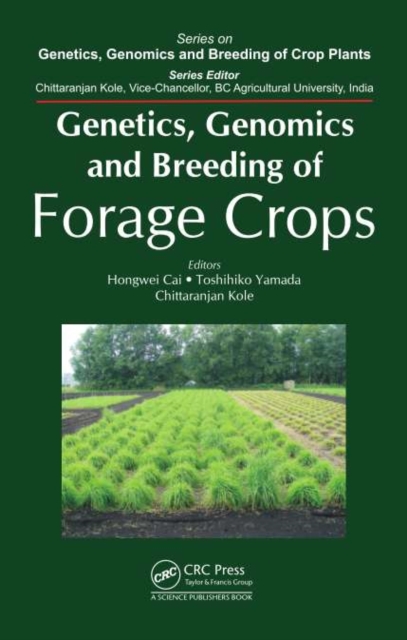
Genetics, Genomics and Breeding of Forage Crops
Forage crops include several species of grasses and legumes that are widely used as animal fodder in the form of hay, pasturage and silage, as well as for turf and erosion control. Some forage grasses are also being considered for bio-energy generation. In this book leading researchers review the latest advances in molecular genetics and genomics;
eBook

Chemical composition of forage watermelon fruit at different maturity stage or storage length
This study aimed to assess the chemical responses of forage watermelon fruit at different maturity stages or storage lengths, performing two experimental tests. In the first test, four maturity stages were assessed: 30, 45, 60, and 75 days after anthesis, with four replicates. In the second test, fruits were maintained under three storage lengths: T1D (harvest day), T3M (3 months after harvest), and T6M (6 months after harvest), with eight replicates. Experimental design was completely randomized in both experimental tests. Fruit maturity stage did not affect crude protein, total carbohydrate, neutral detergent fiber, in vitro dry matter digestibility (IVDMD), pulp firmness, soluble solids content and total pectin content, but increased acid detergent fiber content from 45 days after anthesis. Storage length up to six months after harvest increased ash, crude protein and IVDMD, and reduced the content of soluble solids. Forage watermelon fruit can be harvested from 30 to 75 days after anthesis equivalent to 75 - 120 days after planting, and they can be stored under tree shade up to 6 months after harvest.
Journal Article

North American Wildland Plants, Second Edition
North American Wildland Plantscontains descriptions of the salient characteristics of the most important wildland plants of North America. This comprehensive reference assists individuals with limited botanical knowledge as well as natural resource professionals in identifying wildland plants. The two hundred species of wildland plants in this book were selected because of their abundance, desirability, or poisonous properties.
Each illustration has been enhanced to maximize use of the book as a field guide. Each plant description includes identifying characteristics, an illustration of the plant with enlarged parts, and a general distribution map for North America. Each species description includes nomenclature; life span; origin; season of growth; inflorescence, flower or spikelet, or other reproductive parts; vegetative parts; and growth characteristics. Brief notes are included on habitat; livestock losses; and historic, food, and medicinal uses. This second edition includes updated information about closely related or easily misidentified species, new and revised illustrations, and revised distribution maps.
eBook

Potential of winter double crops and tillage for managing manure-based nutrient loading
Aims
Intensive dairy regions have an opportunity to enhance recycling of manure nutrients within forage rotations improving the system sustainability. This study investigated the combined effect of winter double crops and tillage on nutrient uptake, yield, and forage quality under annual manure applications with silage corn (
Zea mays
).
Methods
The 2 × 4 split block study consisted of conventional (CT) vs minimal (MT) tillage, and combinations of manure (M) vs synthetic fertilizer (S) and winter triticale (x
Triticosecale
) (D) vs fallow (F) for each tillage type. Plant tissue was collected for annual forage yield, nutrient concentrations, and forge quality.
Results
In soils, M significantly increased SOC, TN, Olsen P, K, Na, and Zn (20–96%) along with multiple enzyme activities (45–75%) and decreased NH
4
-N and Ca (9–26%) compared to synthetic fertilizers, regardless of tillage and winter crop. Manure increased tissue N, P, and K for both corn silage (12–39%) and triticale (31–45%) regardless of tillage. However, tillage effects were seen for corn Na and triticale Mg, Na, Zn, Ca, and Mn. Triticale removal of all nutrients was significantly greater with manure application (77- 97%) regardless of tillage. While inclusion of winter double crop removed 1.1 – 1.8 times as much NPK as winter fallow, triticale tissue K exceeded maximum concentrations for feed forages. Manure increased crude protein for both forages; however, M also increased triticale fiber content and reduced feed energy compared to synthetic fertilizer.
Conclusion
Winter triticale can increase forage production and enhance manure nutrient utilization in forage rotations.
Journal Article

Genome-wide identification of the MADS-box transcription factor family in autotetraploid cultivated alfalfa (Medicago sativa L.) and expression analysis under abiotic stress
Background
Alfalfa, the “queen of forage”, is the most extensively cultivated forage legume in the world. The development and yield of alfalfa are seriously limited by abiotic stress. MADS-box transcription factors are one of the largest gene families and play a pivotal role in plant development and abiotic stress. However, little is known regarding the MADS-box transcription factors in autotetraploid cultivated alfalfa.
Results
In the present study, we identified 120
MsMADS-box
genes in the alfalfa genome. Phylogenetic analysis indicated that 75 type-I
MsMADS-box
genes were classified into the Mα, Mβ, and Mγ subgroups, and 45 type-II
MsMADS-box
genes were classified into 11 subgroups. The promoter region of
MsMADS-box
genes containing several hormone and stress related elements. Chromosomal location analysis revealed that 117
MsMADS-box
genes were unevenly distributed on 32 chromosomes, and the remaining three genes were located on unmapped scaffolds. A total of nine pairs of segmental duplications and four groups of tandem duplications were found. Expression analysis showed that
MsMADS-box
genes were differentially expressed in various tissues and under abiotic stresses. qRT-PCR analysis revealed that the expression profiles of eight selected
MsMADS-box
genes were distinct under various stresses.
Conclusions
In this study,
MsMADS-box
genes were identified in the cultivated alfalfa genome based on autotetraploid level, and further confirmed by Gene Ontology (GO) analysis, phylogenetic analysis, sequence features and expression analysis. Taken together, these findings will provide clues for further study of
MsMADS-box
functions and alfalfa molecular breeding.
Our study is the first to systematically identify and characterize the MADS-box transcription factors in autotetraploid cultivated alfalfa (
Medicago sativa
L.), and eight
MsMADS-box
genes were significantly involved in response to various stresses.
Journal Article

Genome-wide association study of a Guinea grass (Megathyrsus maximus) diversity panel reveals the genetic basis of agronomic and nutritional traits
Guinea grass (
Megathyrsus maximus
) is a common tropical forage crop valued for its high biomass yields, nutritional quality, and adaptability to diverse abiotic stresses. However, the genetic basis of its key agronomic traits remains poorly understood. In this study, we conducted genome-wide association studies (GWAS) using whole genome sequencing (WGS) data from 124 diverse
M. maximus
genebank accessions, yielding a high-density single-nucleotide polymorphism (SNP) data set of 1,261,156 SNPs after mapping to a related reference genome. Population structure analysis revealed three major genetic subgroups within the collection. Using three complementary GWAS models (Bayesian-information and Linkage-disequilibrium Iteratively Incorporating Knowledge (BLINK), the Fixed and Random Model Circulating Polynomial Unification (FarmCPU), and the Multiple Loci Mixed Model (MLMM)), we identified 25 significant marker-trait associations (MTAs) spanning three major trait categories: (i) phenological and plant-architecture; (ii) nutritional and digestibility; and (iii) productivity and nitrogen-use traits, evaluated under wet-season, dry-season, and greenhouse conditions. Several MTAs were associated with genes related to plant growth and development, lignin biosynthesis, and nitrogen-cycling (including nitrogen uptake and biological nitrification inhibition). Notably, two SNPs were pleiotropic, with one associated with both nitrogen uptake and shoot biomass production, and another shared between crude protein and in vitro dry matter digestibility. Although a complete reference genome is not yet available for
M. maximus
, our results provide valuable information for future marker validation and breeding. This study highlights the potential of GWAS as a powerful tool for trait dissection and genetic improvement in tropical forage crops. The research represents a step forward in developing more resilient and productive
M. maximus
cultivars.
Journal Article

Seasonal variation of pollen collected by honey bees (Apis mellifera) in developed areas across four regions in the United States
For honey bees (Apis mellifera), colony maintenance and growth are highly dependent on worker foragers obtaining sufficient resources from flowering plants year round. Despite the importance of floral diversity for proper bee nutrition, urban development has drastically altered resource availability and diversity for these important pollinators. Therefore, understanding the floral resources foraged by bees in urbanized areas is key to identifying and promoting plants that enhance colony health in those environments. In this study, we identified the pollen foraged by bees in four developed areas of the U.S., and explored whether there were spatial or temporal differences in the types of floral sources of pollen used by honey bees in these landscapes. To do this, pollen was collected every month for up to one year from colonies located in developed (urban and suburban) sites in California, Texas, Florida, and Michigan, except during months of pollen dearth or winter. Homogenized pollen samples were acetolyzed and identified microscopically to the lowest taxonomic level possible. Once identified, each pollen type was classified into a frequency category based on its overall relative abundance. Species richness and diversity indices were also calculated and compared across states and seasons. We identified up to 64 pollen types belonging to 39 plant families in one season (California). Species richness was highest in CA and lowest in TX, and was highest during spring in every state. In particular, \"predominant\" and \"secondary\" pollen types belonged to the families Arecaceae, Sapindaceae, Anacardiaceae, Apiaceae, Asteraceae, Brassicaceae, Fabaceae, Fagaceae, Lythraceae, Myrtaceae, Rhamnaceae, Rosaceae, Rutaceae, Saliaceae, and Ulmaceae. This study will help broaden our understanding of honey bee foraging ecology and nutrition in urban environments, and will help promote the use of plants that serve the dual purpose of providing aesthetic value and nutritious forage for honey bee colonies placed in developed landscapes.
Journal Article
Manipulation of sward diversity is a more effective management strategy than addition of microbial inoculants in intensively managed grassland
Background and aims
Diversifying grassland sward composition and application of microbial inoculants are potential alternative routes to facilitate enhanced nutrient acquisition by plants, but their relative effects have been rarely tested in grasslands. In a two-year field experiment, we investigated the impact of inoculants and sward types on forage yield, nutrient uptake, and the soil microbiome.
Methods
We implemented a fully factorial experiment with inoculants (eight levels; arbuscular mycorrhizal fungi (AMF),
Paraburkholderia phytofirmans
PsJN and
Bacillus
sp. P5 (P5), applied singly and in combination), and sward types (three levels: grass-only, grass and legume, mixture of grass, legume, and herb) as the two factors.
Results
In both years, there was a very strong effect of sward type, with the grass + legume and grass + legume + herb swards having much higher yields and nutrient uptake (N, P, K, S, Ca, Mg, Zn, Cu) than grass-only. Generally, there was no effect of the inoculants on yield and nutrient uptake, with limited exceptions involving AMF + P5. The best-performing microbial inoculant increased forage yield by 597 kg/ha/year, while switching from grass-only to one of the other sward types increased forage yield by 3932 kg/ha/year (grass + legume) and 4693 kg/ha/year (grass + legume + herb). The inoculants persisted in plots for > 1 year after application. Inoculants and sward type significantly affected the overall prokaryotic and fungal community structures.
Conclusion
Overall, under controlled field plot conditions, including legumes and herbs in a grass sward proved to be a far better farm-scale management strategy for increasing grassland forage yield and nutrient uptake than the application of microbial inoculants.
Journal Article
Harvesting forage of the perennial grain crop kernza (Thinopyrum intermedium) increases root biomass and soil nitrogen cycling
Background and aims
Emerging perennial grain crops yield less grain than annual crops, but the economic viability of these perennial systems could be improved if both forage and grain are harvested. However, the belowground consequences of forage removal in perennial grain systems are unknown. This study aimed to determine the effect of the additional harvest of forage biomass on overall plant biomass allocation and labile soil C and N dynamics within a perennial grain dual-use system.
Methods
Plant biomass and associated soil samples of a perennial grain [Kernza (
Thinopyrum intermedium
)] were taken monthly over the first three growing seasons under three harvest regiments: No Cut (0x), Summer Cut (1x), and Summer and Fall Cut (2x).
Results
The harvesting of forage biomass significantly increased both above- and belowground biomass. The once and twice forage-harvested treatments averaged 39% and 73% greater root biomass in 2016 and 39% and 49% greater root biomass in 2017 relative to the treatment not harvested for forage. Soil indicators of carbon and nitrogen storage were not affected by forage harvest but mineralizable carbon, an indicator of nutrient cycling, was greater under the forage harvested treatments.
Conclusions
The harvest of forage and grain promoted nutrient availability and overall productivity (forage, root and grain biomass) relative to harvesting for grain only. Our findings suggest dual-use management of Kernza can provide a productive and profitable pathway for perennial grain adoption.
Journal Article