
Catalogue Search | MBRL


Are you sure you want to remove the book from the shelf?

{{itemTitle}}
1,622
result(s) for
"Ford, John, 1894-1973"
Sort by:

Print the legend : the life and times of John Ford
In this \"look at the life and career of one of America's true cinematic giants, ... biographer and critic Scott Eyman, working with the full participation of the Ford estate, has managed to document and delineate both aspects of John Ford's life--the human and the legend\"--Amazon.com.
Book

Searching for John Ford
John Ford's classic films--such as Stagecoach, The Grapes of Wrath, How Green Was My Valley, The Quiet Man, and The Searchers--have earned him worldwide admiration as America's foremost filmmaker, a director whose rich visual imagination conjures up indelible, deeply moving images of our collective past.Joseph McBride's Searching for John Ford, described as definitive by both the New York Times and the Irish Times, surpasses all other biographies of the filmmaker in its depth, originality, and insight. Encompassing and illuminating Ford's myriad complexities and contradictions, McBride traces the trajectory of Ford's life from his beginnings as \"Bull\" Feeney, the nearsighted, football-playing son of Irish immigrants in Portland, Maine, to his recognition, after a long, controversial, and much-honored career, as America's national mythmaker. Blending lively and penetrating analyses of Ford's films with an impeccably documented narrative of the historical and psychological contexts in which those films were created, McBride has at long last given John Ford the biography his stature demands.
eBook
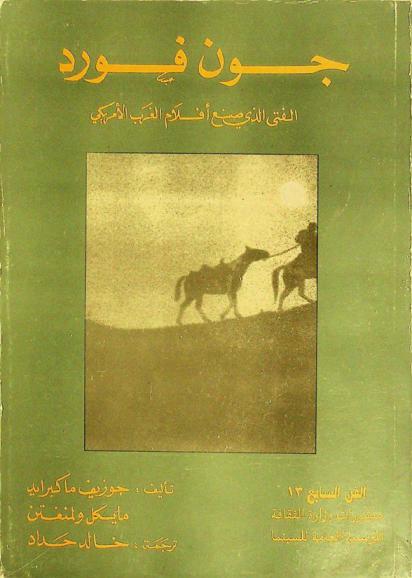
جون فورد : الفتى الذي صنع أفلام الغرب الأمريكي
الكتاب يسلط الضوء على حياة وأعمال المخرج الأمريكي الشهير جون فورد. الكتاب يتناول مسيرته المهنية الطويلة التي امتدت لأكثر من خمسين عاما، حيث أخرج خلالها أكثر من 140 فيلما، بما في ذلك العديد من أفلام الغرب الأمريكي التي أصبحت أيقونية. يستعرض الكتاب أيضا تأثير فورد الكبير على صناعة السينما، حيث كان رائدا في التصوير خارج الأستوديو واستخدام اللقطات الطويلة، مما أضفى على أفلامه طابعا فريدا. كما يتناول الكتاب الجوائز التي حصل عليها، بما في ذلك أربع جوائز أوسكار كأفضل مخرج.
Book

John Ford
Orson Welles was once asked which directors he most admired. He
replied: \"The old masters. By which I mean John Ford, John Ford,
and John Ford.\" A legend in his own time, John Ford (1894-1973)
received a record four Academy Awards for best director, and two of
his World War II documentaries won Oscars for the US Navy. He
directed 136 films in a career that lasted from the early silent
era through the late 1960s. Ford is celebrated throughout the world
as the cinema's foremost chronicler of American history, the
leading poet of the Western genre, and a wide-ranging filmmaker of
profound emotional impact. His classic films-including
Stagecoach (1939), The Grapes of Wrath (1940),
How Green Was My Valley (1941), The Quiet Man
(1952), The Searchers (1956), and The Man Who Shot
Liberty Valance (1962)-remain widely popular, and he has been
acknowledged as a major influence on filmmakers such as Jean
Renoir, Ingmar Bergman, Akira Kurosawa, Howard Hawks, Frank Capra,
Samuel Fuller, Elia Kazan, Sidney Lumet, Martin Scorsese, Steven
Spielberg, and George Lucas.
In this groundbreaking critical study, Joseph McBride and
Michael Wilmington provide an overview of Ford's career as well as
in-depth analyses of key Ford films. Analyzing recurring Fordian
themes and relating each film to his entire body of work, the
authors insightfully explore the full richness of Ford's tragicomic
vision of history. This new and revised version includes a study of
the twenty-seven Ford silent films now known to survive in whole or
in part (more than double the number available when the original
edition was published); essays on three controversial aspects of
Ford: his tragicomic sensibility, his views of race, and the
influence of his Irish heritage; and an expanded version of
McBride's interview with Ford on the last day of his career.
eBook

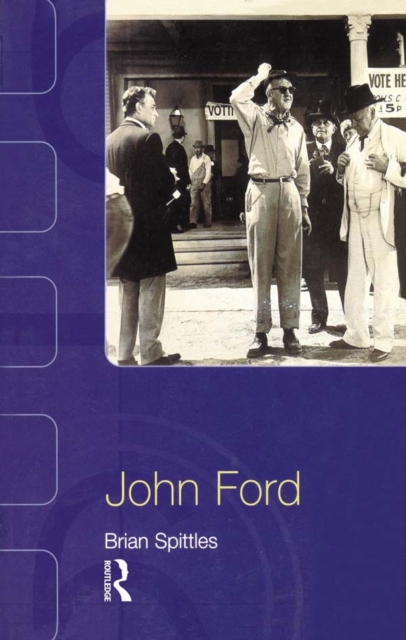
John Ford
John Ford is a monumental figure in Hollywood and world cinema. Throughout his long and varied career spanning the silent and sound era, he produced nearly 150 films of which Iron Horse (1924), Stagecoach (1939), The Grapes of Wrath (1940), How Green Was My Valley (1941), The Searchers (1956) and The Man Who Shot Liberty Valance (1962) are classics of cinema. Ford was also an influential figure in developing, and extending Hollywood's traditions. Stylistically Ford was instrumental in developing new camera techniques, atmospheric lighting and diverse narrative devices. Thematically, long before it became conventional wisdom, Ford was exploring issues that concern us today, such as gender, race, the treatment of ethnic minorities and social outcasts, the nature of history and the relationship of myth and reality. For all these reasons, John Ford the man and his films reward thought and study, both for the general reader and the academic student. Ford's pictures express the world in which they were made, and have contributed to making what Hollywood is today. This book illustrates the excitement, importance, influence, creativity, deviousness and complexity of the man and his films.
eBook

Hollywood westerns and American myth : the importance of Howard Hawks and John Ford for political philosophy
In this volume one of America's most distinguished philosophers explores the status and authority of law and the nature of political allegiance through close readings of three classic Hollywood westerns: Howard Hawks' 'Red River' and John Ford's 'The Man Who Shot Liberty Valance' and 'The Searchers'.
BOOK
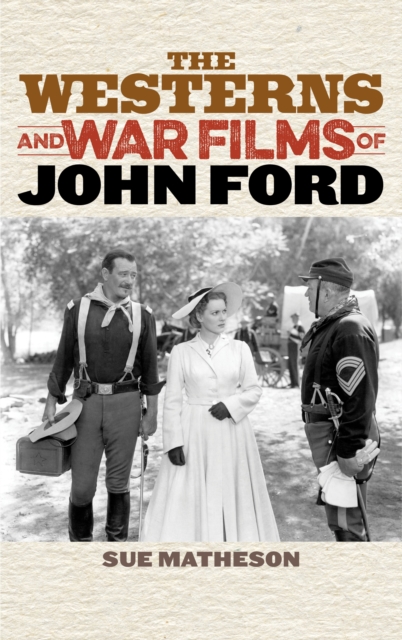
The westerns and war films of John Ford
Responsible for some of the greatest films of the 20th century--The Grapes of Wrath, How Green Was My Valley, and The Quiet Man among others--John Ford was best known for motion pictures that defined the American West and the face of wartime military.
eBook

Hollywood Westerns and American Myth
In this pathbreaking book one of America's most distinguished philosophers brilliantly explores the status and authority of law and the nature of political allegiance through close readings of three classic Hollywood Westerns: Howard Hawks'Red Riverand John Ford'sThe Man Who Shot Liberty ValanceandThe Searchers.
Robert Pippin treats these films as sophisticated mythic accounts of a key moment in American history: its \"second founding,\" or the western expansion. His central question concerns how these films explore classical problems in political psychology, especially how the virtues of a commercial republic gained some hold on individuals at a time when the heroic and martial virtues were so important. Westerns, Pippin shows, raise central questions about the difference between private violence and revenge and the state's claim to a legitimate monopoly on violence, and they show how these claims come to be experienced and accepted or rejected.
Pippin's account of the best Hollywood Westerns brings this genre into the center of the tradition of political thought, and his readings raise questions about political psychology and the political passions that have been neglected in contemporary political thought in favor of a limited concern with the question of legitimacy.
eBook

Apocalypse and Eschatology in John Ford's The Grapes of Wrath (1940)
John Ford's The Grapes of Wrath (1940) visualizes conventions of the apocalypse genre to represent not simply a particular historical setting, the Great Depression, but also a vision of history to be interpreted in terms of eschatology. Expressionistic photography transforms the characters' experiences into enigmatic visions that invite and guide interpretation. A comparison of montage sequences in Ford's The Grapes of Wrath and Pare Lorentz's The Plow That Broke The Plains (1936), a Farm Security Administration documentary, clarifies how Ford's narrative film aligns spectators within and outside the mise-en-scene.
Journal Article