
Catalogue Search | MBRL


Are you sure you want to remove the book from the shelf?

{{itemTitle}}
148
result(s) for
"Forecasting Fiction."
Sort by:

Storm's coming!
\"Did you know that flowers, insects, and birds can help predict the weather? Near her lighthouse home, Sophie reads the signs and sounds a warning: 'Storm's coming!'\"-- Provided by publisher.
Book
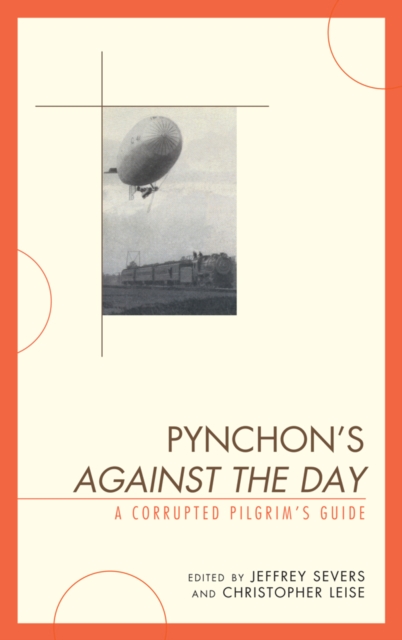
Pynchon's Against the day
Thomas Pynchon's longest novel to date, Against the Day (2006), excited diverse and energetic opinions when it appeared on bookstore shelves nine years after the critically acclaimed Mason & Dixon. Its wide-ranging plot covers nearly three decades—from the 1893 World's Fair to the years just after World War I—and follows hundreds of characters within its 1085 pages. The book’s eleven essays by established luminaries and emerging voices in the field of Pynchon criticism, address a significant aspect of the novel's manifold interests. By focusing on three major thematic trajectories (the novel's narrative strategies; its commentary on science, belief, and faith; and its views on politics and economics), the contributors contend that Against the Day is not only a major addition to Pynchon's already impressive body of work, but also a defining moment in the emergence of twenty-first century American literature.
eBook


From science fiction to smart reality: a technology foresight review of smartdust evolution through the lens of Hamilton’s Great North Road
The convergence of science fiction imagination and technological reality offers unique insights for urban technology planning and policy development. This technology foresight review examines the evolution of smartdust technology from its conceptual origins in hard science fiction to current research trajectories, using Peter F. Hamilton’s
Great North Road
as a focal analytical framework. While the concept of autonomous micro-scale machines in fiction traces back at least to Stanisław Lem’s
The Invincible
(Lem, The Invincible. A Continuum Book, 1964), Hamilton’s detailed treatment provides the most comprehensive framework for analyzing contemporary smartdust trajectories. Through systematic analysis of publications spanning smartdust research, edge computing, urban surveillance, and science fiction studies, we trace the technological pathways between fictional speculation and emerging reality. Our analysis reveals that while current smartdust prototypes operate at millimeter scale with limited autonomous capabilities, the convergence of edge computing, energy harvesting advances, and distributed artificial intelligence suggests achievable progression toward micron-scale, intelligent sensor networks within 30–50 years, though such projections remain contingent on breakthroughs and investments that are far from guaranteed. However, technical challenges in miniaturization and energy autonomy pale compared to the social, ethical, and governance barriers that fiction often glosses over. This review contributes a systematic methodological framework for extracting actionable technology insights from hard science fiction and demonstrates how speculative narratives can inform evidence-based urban planning while highlighting the critical importance of addressing privacy, behavioral autonomy, and democratic governance concerns proactively rather than reactively.
Journal Article

Normal
\"When Adam Dearden, a foresight strategist, arrives at Normal Head, he is desperate to unplug and be immersed in sylvan silence. But then a patient goes missing from his locked bedroom, leaving nothing but a pile of insects in his wake. A staff investigation ensues; surveillance becomes total. As the mystery of the disappeared man unravels ... Adam uncovers a conspiracy that calls into question the core principles of how and why we think about the future--and the past, and the now\"-- Provided by publisher
Book


Life expectancy : a novel
\"Before he died on a storm-wracked night, Jimmy Tock's grandfather predicted that there would be five dark days in his grandson's life--five dates whose terrible events Jimmy must prepare himself to face. The first is to occur in his twentieth year, the last in his thirtieth. What terrifying events await Jimmy on these five critical days? What challenges must he survive?\"--Page 4 of cover.
Book

Conversational recommendation: A grand AI challenge
Animated avatars, which look and talk like humans, are iconic visions of the future of AI‐powered systems. Through many sci‐fi movies, we are acquainted with the idea of speaking to such virtual personalities as if they were humans. Today, we talk more and more to machines like Apple's Siri, for example, to ask them for the weather forecast. However, when asked for recommendations, for example, for a restaurant to go to, the limitations of such devices quickly become obvious. They do not engage in a conversation to find out what we might prefer, they often do not provide explanations for what they recommend, and they may have difficulties remembering what was said 1 min earlier. Conversational recommender systems (CRS) promise to address these limitations. In this paper, we review existing approaches to building such systems, which developments we observe today, which challenges are still open and why the development of conversational recommenders represents one of the next grand challenges of AI.
Journal Article

Future vision : stories of our brilliant tomorrow
Children are taken on a journey into the year 2070, to a world transformed by technology, sustainability, and global initiatives. From traffic-free cities and carbon-free energy to eco-friendly homes and developments in space exploration, readers are invited to imagine the possibilities that lie ahead. Written as a positive exploration of life in the future, the book aims to inspire children to dream of the bright future that they can help create.
CHILDBOOK
