
Catalogue Search | MBRL


Are you sure you want to remove the book from the shelf?

{{itemTitle}}
3,202
result(s) for
"Foreign elements"
Sort by:

Grammatical Borrowing in Cross-Linguistic Perspective
The book contains 30 descriptive chapters dealing with a specific language contact situation. The chapters follow a uniform organisation format, being the narrative version of a standard comprehensive questionnaire previously distributed to all authors. The questionnaire targets systematically the possibility of contact influence / grammatical borrowing in a full range of categories. The uniform structure facilitates a comparison among the chapters and the languages covered. The introduction describes the setup of the questionnaire and the methodology of the approach, along with a survey of the difficulties of sampling in contact linguistics. Two evaluative chapters, each authored by one of the co-editors, draws general conclusions from the volume as a whole (one in relation to borrowed grammatical categories and meaningful hierarchies, the other in relation to the distribution of Matter and Pattern replication).
eBook
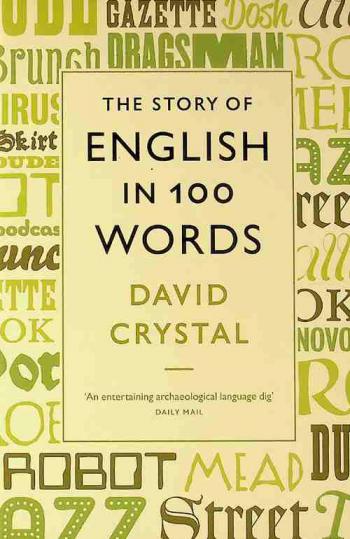
The story of English in 100 words
An eye-opening tour of the English language through the ages from Britain's leading linguistics expert.

Dictionary of Arabic loanwords in the languages of Central and East Africa
Dictionary of Arabic Loanwords in the Languages of Central and East Africa analyzes around 3000 Arabic loanwords in more than 50 languages in the area, and completes the work started in a previous similar work on West Africa.
eBook


Bilingualism and the Latin Language
Since the 1980s, bilingualism has become one of the main themes of sociolinguistics - but there are as yet few large-scale treatments of the subject specific to the ancient world. This book is the first work to deal systematically with bilingualism during a period of antiquity (the Roman period, down to about the fourth century AD) in the light of sociolinguistic discussions of bilingual issues. The general theme of the work is the nature of the contact between Latin and numerous other languages spoken in the Roman world. Among the many issues discussed three are prominent: code-switching (the practice of switching between two languages in the course of a single utterance) and its motivation, language contact as a cause of change in one or both of the languages in contact, and the part played by language choice and language switching in the establishment of personal and group identities.
eBook
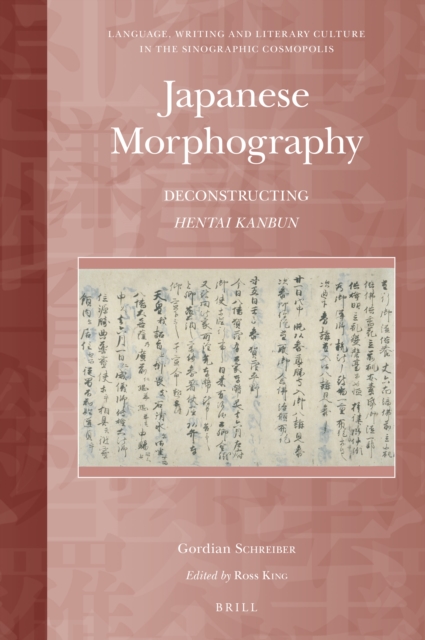
Japanese morphography : deconstructing hentai kanbun
In Japanese Morphography, Gordian Schreiber takes an in-depth look at texts from pre-modern Japan written exclusively in Chinese characters as morphograms and demonstrates why the language behind the script is, in fact, to be identified as Japanese rather than Chinese.
eBook


Ireland and the Classical World
On the boundary of what the ancient Greeks and Romans considered the habitable world, Ireland was a land of myth and mystery in classical times. Classical authors frequently portrayed its people as savages—even as cannibals and devotees of incest—and evinced occasional uncertainty as to the island's shape, size, and actual location. Unlike neighboring Britain, Ireland never knew Roman occupation, yet literary and archaeological evidence prove that Iuverna was more than simply terra incognita in classical antiquity. In this book, Philip Freeman explores the relations between ancient Ireland and the classical world through a comprehensive survey of all Greek and Latin literary sources that mention Ireland. He analyzes passages (given in both the original language and English) from over thirty authors, including Julius Caesar, Strabo, Tacitus, Ptolemy, and St. Jerome. To amplify the literary sources, he also briefly reviews the archaeological and linguistic evidence for contact between Ireland and the Mediterranean world. Freeman's analysis of all these sources reveals that Ireland was known to the Greeks and Romans for hundreds of years and that Mediterranean goods and even travelers found their way to Ireland, while the Irish at least occasionally visited, traded, and raided in Roman lands. Everyone interested in ancient Irish history or Classics, whether scholar or enthusiast, will learn much from this pioneering book.
eBook