
Catalogue Search | MBRL


Are you sure you want to remove the book from the shelf?

{{itemTitle}}
2,993
result(s) for
"Foreign trade and employment -- United States"
Sort by:


Outsourcing Economics
Outsourcing Economics has a double meaning. First, it is a book about the economics of outsourcing. Second, it examines the way that economists have understood globalization as a pure market phenomenon, and as a result have 'outsourced' the explanation of world economic forces to other disciplines. Markets are embedded in a set of institutions - labor, government, corporate, civil society, and household - that mold the power asymmetries that influence the distribution of the gains from globalization. In this book, William Milberg and Deborah Winkler propose an institutional theory of trade and development starting with the growth of global value chains - international networks of production that have restructured the global economy and its governance over the past twenty-five years. They find that offshoring leads to greater economic insecurity in industrialized countries that lack institutions supporting workers. They also find that offshoring allows firms to reduce domestic investment and focus on finance and short-run stock movements.
eBook

Social dimensions of U.S. trade policies
The contributors to this volume include numerous members of the trade policy community who analyze and discuss the salient social dimensions of U.S. trade policies. These issues include the effects of trade on wage inequality; trade and immigration policy; U.S. trade adjustment assistance policies; the effects of NAFTA on environmental quality; the role of labor standards in U.S. trade policies; the economics of labor standards and the GATT; issues of child labor; and the role of interest groups in the design and implementation of U.S. trade policies.
Chapter authors are Kyle Bagwell, Claude Barfield, George J. Borjas, Drusilla K. Brown, Alan V. Deardorff, Nancy Dunne, Gary S. Fields, John Kirton, Mike Jendrzejczyk, Phyllis Shearer Jones, Edward E. Leamer, Robert Naiman, Gregory K. Schoepfle, Robert W. Staiger, and Robert M. Stern.
Commenters are Steve Beckman, Jagdish Bhagwati, Alan V. Deardorff, Avinash Dixit, Pharis Harvey, David van Hoogstraten, John H. Jackson, Lawrence Mishel, Jack Otero, J. David Richardson, Dani Rodrik, Mark Silbergeld, and T. N. Srinivasan.
Alan V. Deardorff and Robert M. Stern are Professors of Economics and Public Policy, University of Michigan.
eBook

Studies in International Economics
Trade policy experts convene to explore the social ramifications of the United States' international trade policy.
Book

Illusions of prosperity : America's working families in an age of economic insecurity
Faith in the free market--the idea that, for instance, profit-seeking managed care companies will improve the health care delivery system--has become a basic tenet of public policy debate. But as Joel Blau demonstrates in this eye-opening book, so-called “free market” programs have been a dismal failure, heightening inequality, lowering the median standard of living, and steadily eroding the quality of our social and political life. In Illusions of Prosperity, Blau launches a far-reaching assault on idea that “the market” knows best. Blau writes that while the share of the national income held by the bottom four fifths of the population (the poor and broad middle class combined) has continued to decline, the top fifth gained 97 percent of the increase in total household income between 1979 and 1994. “Few experiments,” Blau comments, “yield such clear outcomes. Although many had hoped to benefit from the new market economy, this affluent fifth is the only segment of the population that truly has.” Blau looks at recent reforms in NAFTA, education, job training, welfare, and much more, showing that the new social policies have made matters worse, because reforms that rely on the market can’t compensate for the market’s deficiencies. Instead, he calls for a stronger, more caring government to counter the debilitating effects of the market, and he urges the development of the broadest possible political alliances to ensure economic security. Sure to raise controversy, Illusions of Prosperity turns today’s conventional wisdom inside out, making a profound case for the importance of a strong government in a world where markets do not have all the answers.
eBook
The impact of international trade on wages
Since the early 1980s, the U.S. economy has experienced a growing wage differential: high-skilled workers have claimed an increasing share of available income, while low-skilled workers have seen an absolute decline in real wages. How and why this disparity has arisen is a matter of ongoing debate among policymakers and economists. Two competing theories have emerged to explain this phenomenon, one focusing on international trade and labor market globalization as the driving force behind the devaluation of low-skill jobs, and the other focusing on the role of technological change as a catalyst for the escalation of high-skill wages. This collection brings together innovative new ideas and data sources in order to provide more satisfying alternatives to the trade versus technology debate and to assess directly the specific impact of international trade on U.S. wages. This timely volume offers a thorough appraisal of the wage distribution predicament, examining the continued effects of technology and globalization on the labor market.
eBook
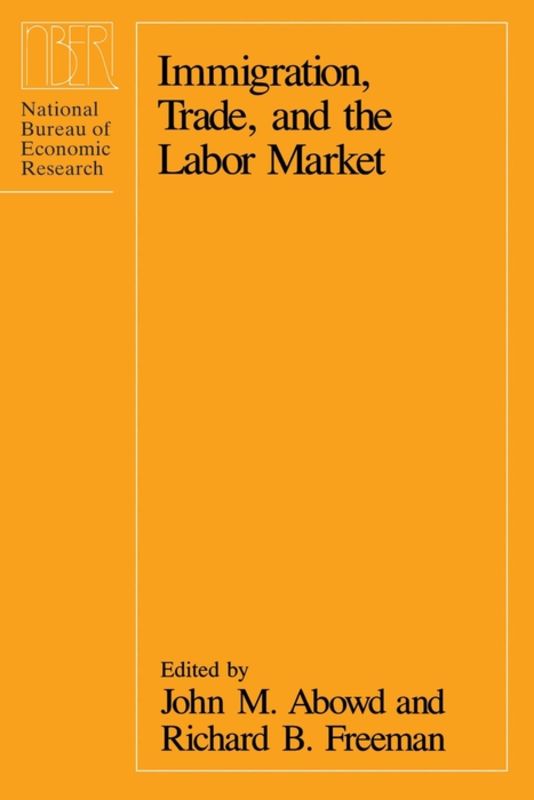
Immigration, Trade, and the Labor Market
Are immigrants squeezing Americans out of the work force? Or is competition wth foreign products imported by the United States an even greater danger to those employed in some industries? How do wages and unions fare in foreign-owned firms? And are the media's claims about the number of illegal immigrants misleading?
Prompted by the growing internationalization of the U.S. labor market since the 1970s, contributors to Immigration, Trade, and the Labor Market provide an innovative and comprehensive analysis of the labor market impact of the international movements of people, goods, and capital. Their provocative findings are brought into perspective by studies of two other major immigrant-recipient countries, Canada and Australia. The differing experiences of each nation stress the degree to which labor market institutions and economic policies can condition the effect of immigration and trade on economic outcomes
Contributors trace the flow of immigrants by comparing the labor market and migration behavior of individual immigrants, explore the effects of immigration on wages and employment by comparing the composition of the work force in local labor markets, and analyze the impact of trade on labor markets in different industries. A unique data set was developed especially for this study—ranging from an effort to link exports/imports with wages and employment in manufacturing industries, to a survey of illegal Mexican immigrants in the San Diego area—which will prove enormously valuable for future research.
eBook
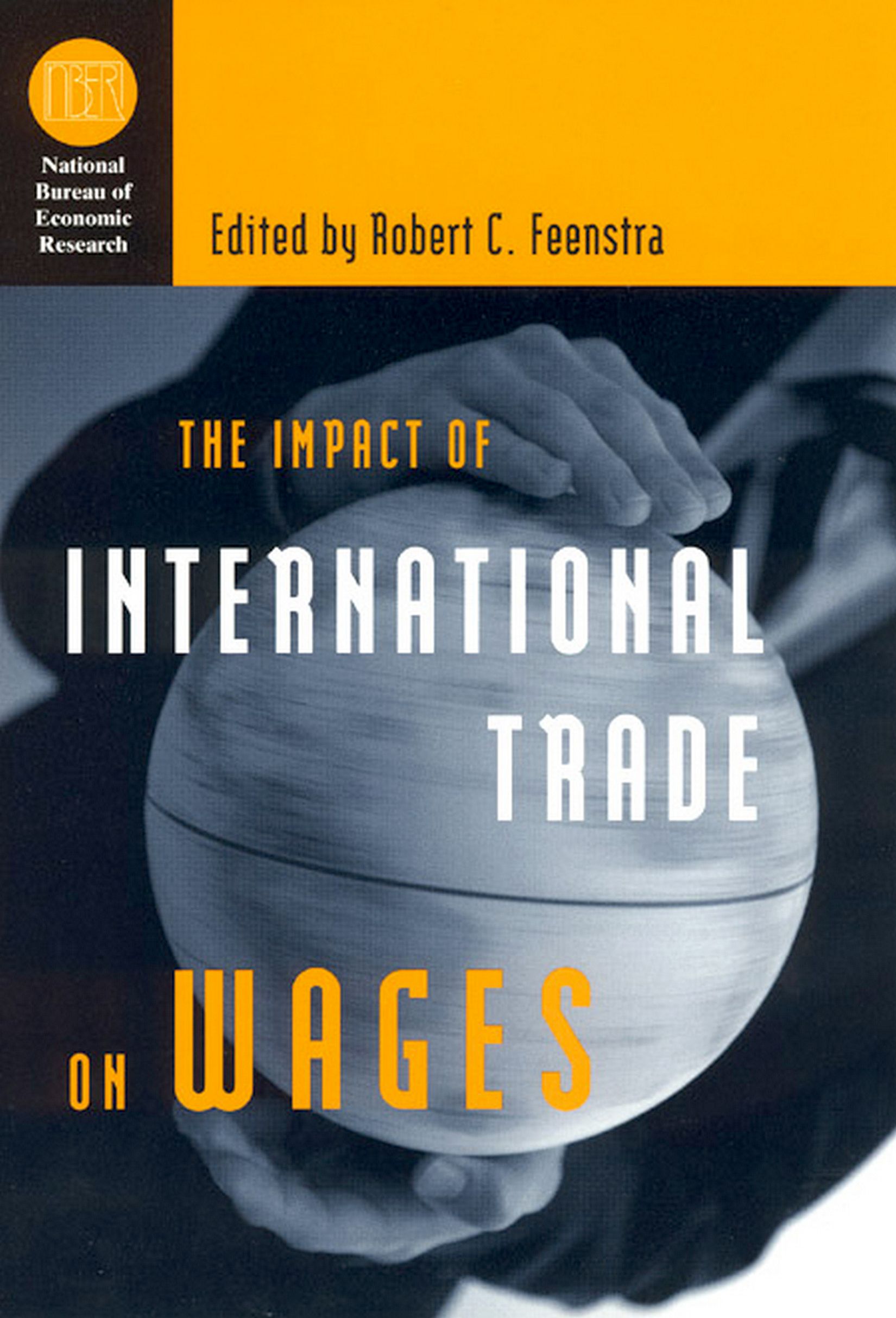
The Impact of International Trade on Wages
Since the early 1980s, the U.S. economy has experienced a growing wage differential: high-skilled workers have claimed an increasing share of available income, while low-skilled workers have seen an absolute decline in real wages. How and why this disparity has arisen is a matter of ongoing debate among policymakers and economists. Two competing theories have emerged to explain this phenomenon, one focusing on international trade and labor market globalization as the driving force behind the devaluation of low-skill jobs, and the other focusing on the role of technological change as a catalyst for the escalation of high-skill wages.
This collection brings together innovative new ideas and data sources in order to provide more satisfying alternatives to the trade versus technology debate and to assess directly the specific impact of international trade on U.S. wages. This timely volume offers a thorough appraisal of the wage distribution predicament, examining the continued effects of technology and globalization on the labor market.
eBook
Immigration, trade, and the labor market
Are immigrants squeezing Americans out of the work force? Or is competition wth foreign products imported by the United States an even greater danger to those employed in some industries? How do wages and unions fare in foreign-owned firms? And are the media's claims about the number of illegal immigrants misleading? Prompted by the growing internationalization of the U.S. labor market since the 1970s, contributors to Immigration, Trade, and the Labor Market provide an innovative and comprehensive analysis of the labor market impact of the international movements of people, goods, and capital. Their provocative findings are brought into perspective by studies of two other major immigrant-recipient countries, Canada and Australia. The differing experiences of each nation stress the degree to which labor market institutions and economic policies can condition the effect of immigration and trade on economic outcomes Contributors trace the flow of immigrants by comparing the labor market and migration behavior of individual immigrants, explore the effects of immigration on wages and employment by comparing the composition of the work force in local labor markets, and analyze the impact of trade on labor markets in different industries. A unique data set was developed especially for this study—ranging from an effort to link exports/imports with wages and employment in manufacturing industries, to a survey of illegal Mexican immigrants in the San Diego area—which will prove enormously valuable for future research.
eBook

The price of rights
Many low-income countries and development organizations are calling for greater liberalization of labor immigration policies in high-income countries. At the same time, human rights organizations and migrant rights advocates demand more equal rights for migrant workers. The Price of Rights shows why you cannot always have both.
Examining labor immigration policies in over forty countries, as well as policy drivers in major migrant-receiving and migrant-sending states, Martin Ruhs finds that there are trade-offs in the policies of high-income countries between openness to admitting migrant workers and some of the rights granted to migrants after admission. Insisting on greater equality of rights for migrant workers can come at the price of more restrictive admission policies, especially for lower-skilled workers. Ruhs advocates the liberalization of international labor migration through temporary migration programs that protect a universal set of core rights and account for the interests of nation-states by restricting a few specific rights that create net costs for receiving countries.
The Price of Rights analyzes how high-income countries restrict the rights of migrant workers as part of their labor immigration policies and discusses the implications for global debates about regulating labor migration and protecting migrants. It comprehensively looks at the tensions between human rights and citizenship rights, the agency and interests of migrants and states, and the determinants and ethics of labor immigration policy.
eBook