
Catalogue Search | MBRL


Are you sure you want to remove the book from the shelf?

{{itemTitle}}
822
result(s) for
"Foreign workers -- Civil rights"
Sort by:


The price of rights
Many low-income countries and development organizations are calling for greater liberalization of labor immigration policies in high-income countries. At the same time, human rights organizations and migrant rights advocates demand more equal rights for migrant workers. The Price of Rights shows why you cannot always have both.
Examining labor immigration policies in over forty countries, as well as policy drivers in major migrant-receiving and migrant-sending states, Martin Ruhs finds that there are trade-offs in the policies of high-income countries between openness to admitting migrant workers and some of the rights granted to migrants after admission. Insisting on greater equality of rights for migrant workers can come at the price of more restrictive admission policies, especially for lower-skilled workers. Ruhs advocates the liberalization of international labor migration through temporary migration programs that protect a universal set of core rights and account for the interests of nation-states by restricting a few specific rights that create net costs for receiving countries.
The Price of Rights analyzes how high-income countries restrict the rights of migrant workers as part of their labor immigration policies and discusses the implications for global debates about regulating labor migration and protecting migrants. It comprehensively looks at the tensions between human rights and citizenship rights, the agency and interests of migrants and states, and the determinants and ethics of labor immigration policy.
eBook

Disrupting deportability : transnational workers organize
\"Explores the effects of deportability--a social condition characterized by the possibility of removal--on the exercise of labor rights amongst temporary migrant workers--primarily Mexican nationals engaged in Canada's model Seasonal Agricultural Worker Program (SAWP)--struggling to organize, bargain collectively and sustain bargaining units\"-- Provided by publisher.
Book

Immigrant and migrant workers organizing in Canada and the United States
Across Canada and the United States, immigrant workers face important obstacles at work and in the broader society, whether their immigration status is temporary, permanent, or nonexistent. Hyper-precarious workers of all status groups, and their allies in unions and worker centers, are organizing to improve their conditions. In this book, Jorge Frozzini and Alexandra Law, two longtime volunteers with a Canadian worker center, draw on their own experience, in-depth interviews, and academic work from the fields of law, communication studies, and social movement theory, to produce a tactically focused, theoretically informed introduction to immigrant worker organizing in a neoliberal era. Frozzini and Law describe the phenomenon of employment precarity in the context of U.S. and Canadian labor history, explaining how union certification and collective bargaining function under the law. Without directing activists toward any single best strategy, they cover tactical and ethical questions raised when organizers offer casework as a recruitment and research tool. The royalties from this book will go to the Immigrant Workers Centre, Montreal.
eBook

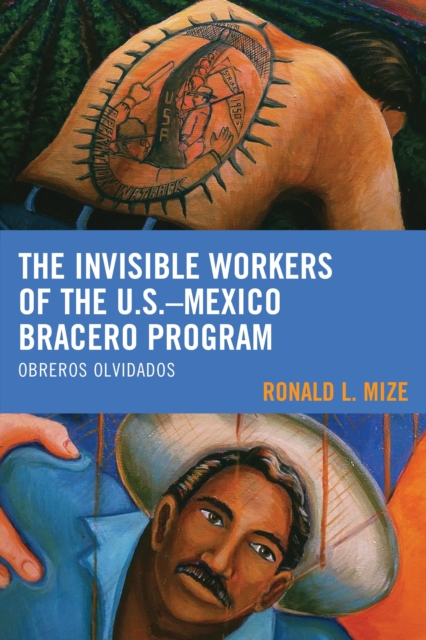
The invisible workers of the U.S.-Mexico Bracero program
As the first and largest guestworker program, the U.S. - Mexico Bracero Program (1942 - 1964) codified the unequal relations of labor migration between the two nations. This book interrogates the articulations of race and class in the making of the Bracero Program by introducing new syntheses of sociological theories and methods to center the experiences and recollections of former Braceros and their families.
eBook


Are Human Rights for Migrants?
Human rights seemingly offer universal protection. However, irregular migrants have, at best, only problematic access to human rights. Whether understood as an ethical injunction or legally codified norm, the promised protection of human rights seems to break down when it comes to the lived experience of irregular migrants. This book therefore asks three key questions of great practical and theoretical importance. First, what do we mean when we speak of human rights? Second, is the problematic access of irregular migrants to human rights protection an issue of implementation, or is it due to the inherent characteristics of the concept of human rights? Third, should we look beyond human rights for an effective source of protection? Written is an accessible style, with a range of socio-legal and doctrinal approaches, the chapters focus on the situation of the irregular migrant in Europe and the United States. Throughout the book, nuanced theoretical debates are put in the context of concrete case studies. The critical reflections it offers on the limitations and possibilities of human rights protections for irregular migrants will be invaluable for students, scholars and practitioners.
eBook

