
Catalogue Search | MBRL


Are you sure you want to remove the book from the shelf?

{{itemTitle}}
22,847
result(s) for
"Forensic Pathology"
Sort by:

Mystery in the morgue : be a pathologist
Forensic pathologists are experts in determining a person's cause of death. Part narrative and part science text, this book explains how pathologists use their knowledge of the human body to help solve mysteries. Readers will learn about the different aspects of this job while trailing a pathologist working on a case.
Book

Back to the Future - Part 1. The medico-legal autopsy from ancient civilization to the post-genomic era
Part 1 of the review “
Back to the Future
” examines the historical evolution of the medico-legal autopsy and microscopy techniques, from Ancient Civilization to the Post-Genomic Era. In the section focusing on “
The Past
”, the study of historical sources concerning the origins and development of the medico-legal autopsy, from the Bronze Age until the Middle Ages, shows how, as early as 2000 BC, the performance of autopsies for medico-legal purposes was a known and widespread practice in some ancient civilizations in Egypt, the Far East and later in Europe. In the section focusing on “
The Present
”, the improvement of autopsy techniques by Friedrich Albert Zenker and Rudolf Virchow and the contemporary development of optical microscopy techniques for forensic purposes during the 19th and 20th centuries are reported, emphasizing, the regulation of medico-legal autopsies in diverse nations around the world and the publication of international guidelines or best practices elaborated by International Scientific Societies. Finally, in “The Future” section, innovative robotized and advanced microscopy systems and techniques, including their possible use in the bio-medicolegal field, are reported, which should lead to the improvement and standardization of the autopsy methodology, thereby achieving a more precise identification of natural and traumatic pathologies.
Journal Article

Back to the Future - Part 2. Post-mortem assessment and evolutionary role of the bio-medicolegal sciences
Part 2 of the review “
Back to the Future
” is dedicated to the evolutionary role of the bio-medicolegal sciences, reporting the historical profiles, the state of the art, and prospects for future development of the main related techniques and methods of the ancillary disciplines that have risen to the role of “
autonomous
” sciences, namely, Genetics and Genomics, Toxicology, Radiology, and Imaging, involved in historic synergy in the “
post-mortem assessment
,” together with the mother discipline Legal Medicine, by way of its primary fundament, universally denominated as Forensic Pathology. The evolution of the scientific research and the increased accuracy of the various disciplines will be oriented towards the elaboration of an
“algorithm,”
able to weigh the value of “
evidence
” placed at the disposal of the “
justice system
” as real truth and proof.
Journal Article


Paediatric and perinatal deaths by the Office of the Irish State Pathologists: a 5-year retrospective cohort study
IntroductionThe Irish Office of the State Pathologist (OSP) provides a forensic pathology service for cases of criminal, suspicious or unusual deaths as referred by the coroner. This study aims to review the paediatric and perinatal deaths referred to the OSP and compare them to existing standards and data.MethodsA retrospective cohort study was conducted on all paediatric and perinatal cases (<18 years) referred to the OSP from 2018 to 2022. Postmortem examination (PME) reports were reviewed in line with the Royal College of Pathologists guidance. Case data results were then analysed independently and alongside previously published data for 2012–2017.Results65 cases were identified. Confirmed homicide accounted for the highest proportion of referred cases at 31% (n=20). Sudden infant death syndrome (SIDS) was the key cause under 1 years old (n=10/13). 91% of postmortem reports (2018–2022) met reporting standards. Paediatric and perinatal referrals remained consistent when comparing 2012–2017 to 2018–2022. Areas of inconsistency were in the area of SIDS and the inclusion of anthropometric reference values. PMEs involving forensic pathologists (FPs) and paediatric/perinatal pathologists (PPs) produced variations in reporting.ConclusionHomicide was the leading cause of referred cases at 31% over 2018–2022 and 29% between 2012-2022. While the OSP provides a high standard service, key areas of improvement include the reporting of SIDS, the anthropometric reference values and the integration of PP and FP reports. Analysis of child mortality data and statistics in Ireland would be improved with the implementation of a single reporting database.
Journal Article
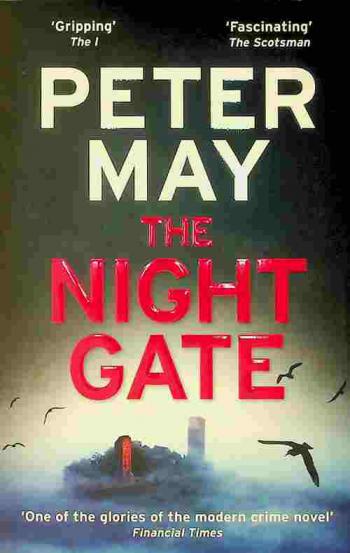
The night gate
\"In a sleepy French village, the body of a man shot through the head is disinterred by the roots of a fallen tree. A week later a famous art critic is viciously murdered in a nearby house. The deaths occurred more than seventy years apart. Asked by a colleague to inspect the site of the former, forensics expert Enzo Macleod quickly finds himself embroiled in the investigation of the latter. Two extraordinary narratives are set in train - one historical, unfolding in the treacherous wartime years of Occupied France; the other contemporary, set in the autumn of 2020 as France re-enters Covid lockdown. And Enzo's investigations reveal an unexpected link between the murders - the Mona Lisa.Tasked by the exiled General Charles de Gaulle to keep the world's most famous painting out of Nazi hands after the fall of France in 1940, 28-year-old Georgette Pignal finds herself swept along by the tide of history. Following in the wake of Da Vinci's Mona Lisa as it is moved from château to château by the Louvre, she finds herself just one step ahead of two German art experts sent to steal it for rival patrons - Hitler and Göring.What none of them know is that the Louvre itself has taken exceptional measures to keep the painting safe, unwittingly setting in train a fatal sequence of events extending over seven decades. Events that have led to both killings.\"--Publisher.

Breakdown and significance of neuropathology consultations in medico-legal autopsies in Southern Finland between 2016 and 2022
Proficient consultation practices between a general forensic pathologist and a neuropathology specialist may prove valuable in medico-legal cause-of-death investigation. Detailed data on the current use of neuropathology consultations in medico-legal autopsies are scarce. The aim of this retrospective register-based study was to provide a breakdown of medico-legal autopsy cases associated with a neuropathology consultation in Southern Finland over the period 2016—2022. An electronic information system of the Forensic Medicine Unit, Finnish Institute for Health and Welfare, was queried for cases that underwent a medico-legal autopsy at the Helsinki office and had a neuropathological examination performed by a consultant neuropathologist. Numerous detailed characteristics of the cases were collected, and the overall significance of neuropathology consultation for the cases was assessed. The statistical approach was descriptive. A total of 216 medico-legal autopsies with a neuropathology consultation were performed over the study period. Most cases involved a full neuropathological examination (97.7 %) of a male decendent (68.5 %; age at death 0—96 years). Traumatic brain injury was the most frequent consultation theme (45.4 %), followed by epilepsy (18.1 %), hypoxia-ischaemia (14.8 %), and neurodegeneration (14.8 %). Two most often reported findings were hypoxic-ischaemic injury (76.4 %; often mild and terminal) and cerebral oedema (36.6 %). In the majority of cases, the consultation was likely to guide the selection of the underlying cause of death (64.8 %), and in a third of cases also the manner of death (32.4 %). In addition, most consultations provided the forensic pathologist with other information that was considered significant for the case (67.6 %). In conclusion, medico-legal cause-of-death investigations have clearly benefited from the neuropathology consultation practice in Southern Finland over the recent years. Descriptive and comparative analyses of neuropathology practices in other medico-legal institutions are warranted.
•We studied 216 medico-legal autopsies with a neuropathology consultation from Southern Finland.•The two most common neuropathology consultation themes were traumatic brain injury and epilepsy.•The consultation was likely to guide the selection of the underlying cause of death in most cases.•Most consultations provided the forensic pathologist also with other significant information.
Journal Article

Working stiff : two years, 262 bodies, and the making of a medical examiner
\"The fearless memoir of a young forensic pathologist's \"rookie season\" as a NYC medical examiner, and the cases--hair-raising and heartbreaking and impossibly complex--that shaped her as both a physician and a mother. Just two months before the September 11 terrorist attacks, Dr. Judy Melinek began her training as a New York City forensic pathologist. With her husband T.J. and their toddler Daniel holding down the home front, Judy threw herself into the fascinating world of death investigation--performing autopsies, investigating death scenes, counseling grieving relatives. Working Stiff chronicles Judy's two years of training, taking readers behind the police tape of some of the most harrowing deaths in the Big Apple, including a firsthand account of the events of September 11, the subsequent anthrax bio-terrorism attack, and the disastrous crash of American Airlines flight 587. Lively, action-packed, and loaded with mordant wit, Working Stiff offers a firsthand account of daily life in one of America's most arduous professions, and the unexpected challenges of shuttling between the domains of the living and the dead. The body never lies--and through the murders, accidents, and suicides that land on her table, Dr. Melinek lays bare the truth behind the glamorized depictions of autopsy work on shows like CSI and Law & Order to reveal the secret story of the real morgue\"-- Provided by publisher.
Book
A field study to evaluate PMI estimation methods for advanced decomposition stages
Estimating the postmortem interval (PMI) is one of the major tasks and a continuous challenge in forensic pathology. It is often an exclusion process of available methods, which ultimately can lead to an unsatisfactory outcome due to poor reliability. This problem is most acute in the late PMI, when decomposition proceeds and some methods (such as rigor, livor, and algor mortis) are no longer applicable. Several methods, such as forensic entomology, skeletal muscle protein degradation, and the study of body decomposition by application of a morphological scoring, are expected to provide further information; however, all have certain limitations and weaknesses. Availability of a tool-box of methods allows a case-specific selection of the most appropriate one(s), or eventually provides improvements in the overall accuracy and precision of the PMI estimation by merging and combining methods. To investigate practical (field) application, eventual interferences, and/or synergetic effects, as well as the robustness of these methods towards specific influencing factors, a field study was conducted, using eight pig cadavers of different body weights and physical coverage, left to decompose under natural conditions for 16 days. Morphological changes during decomposition were assessed using the total body score (TBS), muscle samples were collected to analyze protein degradation, and insect colonization was evaluated. The results reveal strengths and current limitations of all tested methods, as well as promising synergistic effects, and thus, provide a baseline for targeted future research.
Journal Article