
Catalogue Search | MBRL


Are you sure you want to remove the book from the shelf?

{{itemTitle}}
12,200
result(s) for
"Forensic Sciences - methods"
Sort by:
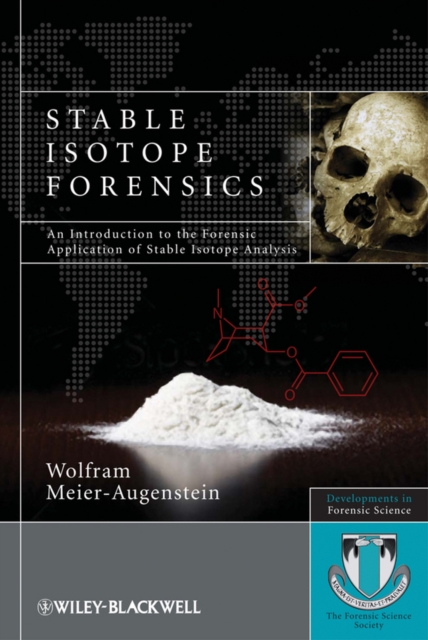
Stable isotope forensics : an introduction to the forensic application of stable isotope analysis
This book provides the first comprehensive, overview and guide to forensic isotope analysis, an exciting new application of stable isotope analytical techniques. Topics are introduced using examples and real-life case studies such as food quality control where isotope analysis has already had a major impact, in terms of consumer protection, These examples illustrate the underlying principles of isotope profiling or fingerprinting. A section comprising actual criminal case work is used to build a bridge between the introduction and the technical section to encourage students to engage with this novel departure for analytical sciences while at the same time providing hands-on examples for the experienced researcher and forensic practitioner to match problems and success stories encountered with the topics discussed in the technical section. What little information is available on the subject in book form so far, has been published as individual chapters in books dealing either with mass spectrometry, forensic geoscience or environmental forensics, this is the first book to focus on the entire spectrum of forensic isotope analysis and will be an invaluable reference to both researchers in the field and forensic practitioners.
eBook

Face recognition accuracy of forensic examiners, superrecognizers, and face recognition algorithms
Achieving the upper limits of face identification accuracy in forensic applications can minimize errors that have profound social and personal consequences. Although forensic examiners identify faces in these applications, systematic tests of their accuracy are rare. How can we achieve the most accurate face identification: using people and/or machines working alone or in collaboration? In a comprehensive comparison of face identification by humans and computers, we found that forensic facial examiners, facial reviewers, and superrecognizers were more accurate than fingerprint examiners and students on a challenging face identification test. Individual performance on the test varied widely. On the same test, four deep convolutional neural networks (DCNNs), developed between 2015 and 2017, identified faces within the range of human accuracy. Accuracy of the algorithms increased steadily over time, with the most recent DCNN scoring above the median of the forensic facial examiners. Using crowd-sourcing methods, we fused the judgments of multiple forensic facial examiners by averaging their rating-based identity judgments. Accuracy was substantially better for fused judgments than for individuals working alone. Fusion also served to stabilize performance, boosting the scores of lower-performing individuals and decreasing variability. Single forensic facial examiners fused with the best algorithm were more accurate than the combination of two examiners. Therefore, collaboration among humans and between humans and machines offers tangible benefits to face identification accuracy in important applications. These results offer an evidence-based roadmap for achieving the most accurate face identification possible.
Journal Article

Microbial forensics: new breakthroughs and future prospects
Recent advances in genetic data generation, through massive parallel sequencing (MPS), storage and analysis have fostered significant progresses in microbial forensics (or forensic microbiology). Initial applications in circumstances of biocrime, bioterrorism and epidemiology are now accompanied by the prospect of using microorganisms (i) as ancillary evidence in criminal cases; (ii) to clarify causes of death (e.g., drownings, toxicology, hospital-acquired infections, sudden infant death and shaken baby syndromes); (iii) to assist human identification (skin, hair and body fluid microbiomes); (iv) for geolocation (soil microbiome); and (v) to estimate postmortem interval (thanatomicrobiome and epinecrotic microbial community). When compared with classical microbiological methods, MPS offers a diverse range of advantages and alternative possibilities. However, prior to its implementation in the forensic context, critical efforts concerning the elaboration of standards and guidelines consolidated by the creation of robust and comprehensive reference databases must be undertaken.
Journal Article

Introduction to Data Analysis with R for Forensic Scientists
Statistical methods provide a logical, coherent framework in which data from experimental science can be analyzed. Minimizing theory and mathematics, this book focuses on the application and practice of statistics used in data analysis. The book includes a refresher on basic statistics and an introduction to R, techniques for the visual display of data through graphics, an overview of statistical hypothesis tests, a comprehensive guide to the use of the linear model, an introduction to extensions to the linear model for commonly encountered scenarios, and instruction on how to plan and design experiments.
eBook

Microbiome Tools for Forensic Science
Microbes are present at every crime scene and have been used as physical evidence for over a century. Advances in DNA sequencing and computational approaches have led to recent breakthroughs in the use of microbiome approaches for forensic science, particularly in the areas of estimating postmortem intervals (PMIs), locating clandestine graves, and obtaining soil and skin trace evidence. Low-cost, high-throughput technologies allow us to accumulate molecular data quickly and to apply sophisticated machine-learning algorithms, building generalizable predictive models that will be useful in the criminal justice system. In particular, integrating microbiome and metabolomic data has excellent potential to advance microbial forensics.
Microbes have been used as physical evidence for over a century. With recent advances in microbiome science, new opportunities exist for microbiome technologies in forensic science, particularly in the areas of estimating PMIs, location of clandestine graves, and soil and skin trace evidence.
Integrating microbiome and metabolomic data sets has the potential to improve our predictive ability, thereby lowering error rates, which is key to establishing new methods for the criminal justice system.
Low-cost, high-throughput technologies allow us to accumulate data quickly and to apply sophisticated machine-learning algorithms, building generalizable predictive models.
Journal Article

Uncovering Forensic Evidence: A Path to Age Estimation through DNA Methylation
Age estimation is a critical aspect of reconstructing a biological profile in forensic sciences. Diverse biochemical processes have been studied in their correlation with age, and the results have driven DNA methylation to the forefront as a promising biomarker. DNA methylation, an epigenetic modification, has been extensively studied in recent years for developing age estimation models in criminalistics and forensic anthropology. Epigenetic clocks, which analyze DNA sites undergoing hypermethylation or hypomethylation as individuals age, have paved the way for improved prediction models. A wide range of biomarkers and methods for DNA methylation analysis have been proposed, achieving different accuracies across samples and cell types. This review extensively explores literature from the past 5 years, showing scientific efforts toward the ultimate goal: applying age prediction models to assist in human identification.
Journal Article
Accuracy and reliability of forensic handwriting comparisons
Forensic handwriting examination involves the comparison of writing samples by forensic document examiners (FDEs) to determine whether or not they were written by the same person. Here we report the results of a large-scale study conducted to assess the accuracy and reliability of handwriting comparison conclusions. Eighty-six practicing FDEs each conducted up to 100 handwriting comparisons, resulting in 7,196 conclusions on 180 distinct comparison sets, using a five-level conclusion scale. Erroneous “written by” conclusions (false positives) were reached in 3.1% of the nonmated comparisons, while 1.1% of the mated comparisons yielded erroneous “not written by” conclusions (false negatives). False positive rates were markedly higher for nonmated samples written by twins (8.7%) compared to nontwins (2.5%). Notable associations between training and performance were observed: FDEs with less than 2 y of formal training generally had higher error rates, but they also had higher true positive and true negative rates because they tended to provide more definitive conclusions; FDEs with at least 2 y of formal training were less likely to make definitive conclusions, but those definitive conclusions they made were more likely to be correct (higher positive predictive and negative predictive values).We did not observe any association between writing style (cursive vs. printing) and rates of errors or incorrect conclusions. This report also provides details on the repeatability and reproducibility of conclusions, and reports how conclusions are affected by the quantity of writing and the similarity of content.
Journal Article
A call for more science in forensic science
Forensic science is critical to the administration of justice. The discipline of forensic science is remarkably complex and includes methodologies ranging from DNA analysis to chemical composition to pattern recognition. Many forensic practices developed under the auspices of law enforcement and were vetted primarily by the legal system rather than being subjected to scientific scrutiny and empirical testing. Beginning in the 1990s, exonerations based on DNA-related methods revealed problems with some forensic disciplines, leading to calls for major reforms. This process generated a National Academy of Science report in 2009 that was highly critical of many forensic practices and eventually led to the establishment of the National Commission for Forensic Science (NCFS) in 2013. The NCFS was a deliberative body that catalyzed communication between nonforensic scientists, forensic scientists, and other stakeholders in the legal community. In 2017, despite continuing problems with forensic science, the Department of Justice terminated the NCFS. Just when forensic science needs the most support, it is getting the least. We urge the larger scientific community to come to the aid of our forensic colleagues by advocating for urgently needed research, testing, and financial support.
Journal Article

On the Identification of Body Fluids and Tissues: A Crucial Link in the Investigation and Solution of Crime
Body fluid and body tissue identification are important in forensic science as they can provide key evidence in a criminal investigation and may assist the court in reaching conclusions. Establishing a link between identifying the fluid or tissue and the DNA profile adds further weight to this evidence. Many forensic laboratories retain techniques for the identification of biological fluids that have been widely used for some time. More recently, many different biomarkers and technologies have been proposed for identification of body fluids and tissues of forensic relevance some of which are now used in forensic casework. Here, we summarize the role of body fluid/ tissue identification in the evaluation of forensic evidence, describe how such evidence is detected at the crime scene and in the laboratory, elaborate different technologies available to do this, and reflect real life experiences. We explain how, by including this information, crucial links can be made to aid in the investigation and solution of crime.
Journal Article

The admissibility of digital evidence from open-source forensic tools: Development of a framework for legal acceptance
The proliferation of cybercriminal activities from 2023 to 2025 has highlighted the critical role of digital forensics in legal proceedings; however, resource constraints often limit access to effective investigative capabilities. Despite the technical adequacy of open-source digital forensic tools, courts typically favor commercially validated solutions because of the absence of standardized validation frameworks for open-source alternatives, creating unnecessary financial barriers to high-quality forensic investigations. This study aims to validate and enhance the conceptual open-source digital forensic framework developed by Ismail et al. (2024) to ensure the legal admissibility of evidence acquired through open-source tools. Through a rigorous experimental methodology utilizing controlled testing environments, we conducted comparative analyses between commercial tools (FTK and Forensic MagiCube) and open-source alternatives (Autopsy and ProDiscover Basic) across three distinct test scenarios: preservation and collection of original data, recovery of deleted files through data carving, and targeted artifact searching. Each experiment was performed in triplicate to establish repeatability metrics, with error rates calculated by comparing the acquired artifacts with control references. Our findings demonstrate that properly validated open-source tools consistently produce reliable and repeatable results with verifiable integrity comparable to their commercial counterparts. The enhanced three-phase framework integrating basic forensic processes, result validation, and digital forensic readiness to satisfy Daubert Standard requirements while providing practitioners with a methodologically sound approach. This study contributes significantly to digital forensics by democratizing access to forensically sound investigative capabilities without compromising legal admissibility requirements, ultimately benefiting resource-constrained organizations while maintaining the evidentiary standards necessary for judicial acceptance.
Journal Article