
Catalogue Search | MBRL


Are you sure you want to remove the book from the shelf?

{{itemTitle}}
2,180
result(s) for
"Forensic archaeology"
Sort by:

The bioarchaeology of mummies
\"The modern manifestation of the mummy studies field began to take shape in the 1970s. Largely stemming from a biomedical interest in soft tissue pathology, mummy based research has experienced significant growth during the last several decades. Although this points to a vibrant field, there are indications that we need to take stock of where it is today and how it may proceed in the future. In many ways, mummy studies and skeletal bioarchaeology are 'sister-disciplines', sharing data sources, methodologies, and practitioners. Given these close connections, this book considers whether paradigmatic shifts that influenced the development of the latter also impacted the former. This volume is unique in several ways. First, although there are many books that discuss mummy research, this volume does not focus on any particular mummy or collection of mummies. Rather, it is an attempt at a synthetic, state-of-the-field, critical analysis. Further, whereas recent field-wide reviews principally reflect a biomedical perspective, I consider the field from a more explicitly anthropological perspective. This book is intended for two audiences. On the one hand, it is written for skeletal bioarchaeologists that may not be familiar with the scope of mummy research. This book was also written for mummy researchers from biomedical fields that may not be as familiar with current research trends within bioarchaeology\"-- Provided by publisher.
Book
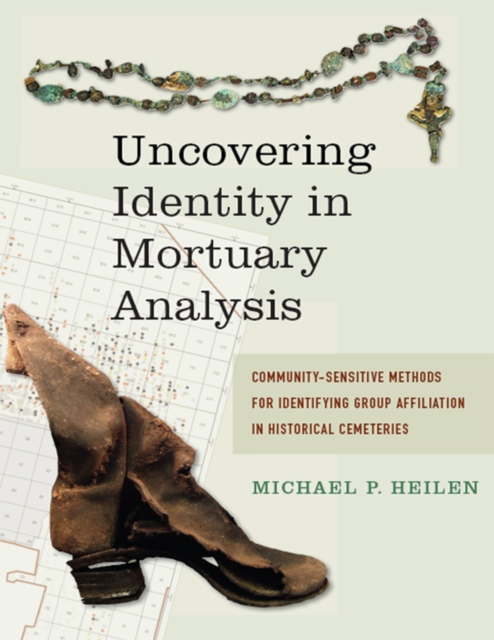
Uncovering Identity in Mortuary Analysis
This volume presents a sophisticated set of archival, forensic, and excavation methods to identify both individuals and group affiliations-cultural, religious, and organizational-in a multiethnic historical cemetery. Based on an extensive excavation project of more than 1,000 nineteenth-century burials in downtown Tucson, Arizona, the team of historians, archaeologists, biological anthropologists, and community researchers created an effective methodology for use at other historical-period sites. Comparisons made with other excavated cemeteries strengthens the power of this toolkit for historical archaeologists and others. The volume also sensitizes archaeologists to the concerns of community and cultural groups to mortuary excavation and outlines procedures for proper consultation with the descendants of the cemetery's inhabitants. Copublished with SRI Press
eBook

Forensic investigations of the ancient Chinese
What can modern forensic tools teach us about existing and newly uncovered artifacts from ancient Chinese dynasties? How can we learn about human migration from the discovery of preserved bodies? Can todays technology uncover new clues about the Great Wall of China? Dive into this intriguing title, which examines how forensic science has allowed scientists, archaeologists, and historians to solve mysteries and answer questions about ancient China.
Book

Exhuming Loss
This book examines the contested representations of those murdered during the Spanish Civil War of the 1930s in two small rural communities as they undergo the experience of exhumation, identification, and reburial from nearby mass graves. Based on interviews with relatives of the dead, community members and forensic archaeologists, it pays close attention to the role of excavated objects and images in breaking the pact of silence that surrounded the memory of these painful events for decades afterward. It also assesses the significance of archaeological and forensic practices in changing relationships between the living and dead. The exposure of graves has opened up a discursive space in Spanish society for multiple representations to be made of the war dead and of Spain's traumatic past.
eBook

Forensic investigations of the Romans
\"[This book] examines how forensic science has allowed scientists, archaeologists, and historians to solve mysteries and answer questions about ancient Rome\"--Provided by publisher.
BOOK

Introducing \Validated entheses-Based reconstruction of activity 2.0\
In archaeological sciences, the macroscopic morphology of distinct dry bone structures, such as tubercles, ridges, epicondyles, and fossae, is routinely used to infer habitual activity patterns in past human populations, extinct hominins, and other animals. This study introduces \"Validated Entheses-based Reconstruction of Activity 2.0\" (VERA 2.0), a new method for precisely quantifying 3D surface irregularities on enthesis-bearing bone structures. Building on VERA 1.0, first introduced by the same author in 2016 and later named in a 2021 literature review, VERA 2.0 enhances the previous approach by incorporating a semi-automated image segmentation technique that reduces manual input while maintaining accuracy. The method involves selecting a predefined broad bone surface region, after which an algorithm automatically detects subtle surface irregularities (see example video in the step-by-step protocol at dx.doi.org/10.17504/protocols.io.5jyl82z8dl2w/v3). Validation analyses confirm VERA 2.0's precision and reliability for activity reconstruction through intra- and inter-observer repeatability tests, experimental research comparing activity and control laboratory specimens, and analyses of historical human skeletons with extensively detailed long-term occupational data. Moreover, while this anthropological 3D measuring protocol paper cannot and does not aim to analyze the anatomical and histological nature of bone surface irregularities, preliminary anatomical dissection and virtual analysis of a cadaveric thumb enthesis suggest a possible association with attaching muscles and ligaments. Future anatomical and histological research aiming to explore soft-hard tissue interactions could clarify how these identified surface changes exactly relate to the attaching tissues. Overall, VERA 2.0 provides a robust, efficient quantitative tool for inferring activity patterns from skeletal remains, with applications across paleontological, paleoanthropological, and bioarchaeological contexts.
Journal Article

Forensic investigations of the Maya
\"What can modern DNA analysis of skeletons tell us about the lifestyle, diet, and beliefs of the Maya? How can new mapping technology uncover previously hidden Mayan cities and structures? Can we use forensic science to solve the mystery of how the Mayan civilization came to an end? Get lost in this compelling title, which examines how forensic science has allowed scientists, archaeologists, and historians to solve mysteries and answer questions about the Maya\"--Provided by the publisher.
Book

Prácticas forenses y violencia en masa: perspectivas contemporáneas y retos investigativos
ya tenemos cuarenta años de experiencia en América Latina en la aplicación de la antropología y la arqueología forense para la búsqueda de personas desaparecidas e investigaciones de violaciones graves de derechos humanos y del derecho humanitario internacional. A pesar de esta larga trayectoria de trabajo muy importante, lxs protagonistas más impactantes del meta-análisis en la literatura del trabajo forense y su impacto en los últimos años no han sido lxs científicxs forenses mismxs, sino lxs científicxs sociales. Este artículo introduce el dosier “Prácticas forenses y violencia en masa: perspectivas contemporáneas y retos investigativos”, un trabajo que une a lxs practicantes —incluidxs familiares de lxs desparecidxs— con investigadorxs académicxs, rompiendo una división estructural, social y artificial. Esta fuerza unida entre académicxs y practicantes refleja mejor el trabajo en su totalidad que incluye y resalta las metas no solo de búsqueda, recuperación, análisis e identificación, sino también de restitución y entrega. Esta introducción enfatiza los debates que están ausentes en muchas de las revistas científicas-forenses: el impacto de la política sobre las investigaciones y el producto político de las investigaciones. Asimismo, recalca las discusiones aún presentes sobre cuestiones de objetividad, neutralidad y el valor de un abordaje que involucra o es dirigido por familiares. En este dosier veremos una adaptación y evolución de la disciplina desde su forma particular latinoamericana, tanto en las distintas expresiones que ha tenido en la región como en la manera en que se ha expresado en el trabajo de profesionales latinoamericanxs en casos extranjeros como el de la antigua Yugoslavia.
Journal Article

Geoscientists at crime scenes : a companion to forensic geoscience
After the publication of the first Italian book on Forensic Geoscience: \"Geologia Forense\" (Di Maggio, Barone, et al. 2013, Flaccovio Ed.), the international demand to have an international version (in English language) about the new applications of this topic carried out in Italy and the possibility to apply them in international contexts encouraged us to create a new English book based on this. If forensic science is the application of technical and scientific methodologies applied to traditional categories of judicial investigations, in connection with the investigation of a crime or a social behavior, within them a special role is held by forensic geoscience, or the application of different disciplines of Earth Sciences in judicial contexts. Forensic geoscience encompasses some branches of the earth sciences such as geology, mineralogy, geochemistry, geophysics, remote sensing, soil science and archaeology, whose applications may provide a suitable or appropriate environmental interpretation of the surroundings, in the context of numerous types of offences, both criminal and civil. The environmental context can become part of the crime narrative in diverse situations: it can be the place where to hide a body or precious objects, or it may be a witness to a crime. Given the nature of many crime narratives carried out in outdoor areas, the environment, as it is not a closed system, plays a dual role, passive and active. Passive in the sense that it may be the principal repository of clues and evidence that both the victim and/or offender may have been present in a given location. Active since it can be the protagonist of the crime narrative, where, for example, it may have been abused in the design and construction phases of landfill or architectural structures, but also when it leaves proof marks on clothing and objects, such as the soil found on footwear. -- from back cover.
BOOK
Introducing “Validated entheses-Based reconstruction of activity 2.0” (VERA 2.0): Semi-automated 3D analysis of bone surface changes
In archaeological sciences, the macroscopic morphology of distinct dry bone structures, such as tubercles, ridges, epicondyles, and fossae, is routinely used to infer habitual activity patterns in past human populations, extinct hominins, and other animals. This study introduces “Validated Entheses-based Reconstruction of Activity 2.0” (VERA 2.0), a new method for precisely quantifying 3D surface irregularities on enthesis-bearing bone structures. Building on VERA 1.0, first introduced by the same author in 2016 and later named in a 2021 literature review, VERA 2.0 enhances the previous approach by incorporating a semi-automated image segmentation technique that reduces manual input while maintaining accuracy. The method involves selecting a predefined broad bone surface region, after which an algorithm automatically detects subtle surface irregularities (see example video in the step-by-step protocol at dx.doi.org/10.17504/protocols.io.5jyl82z8dl2w/v3 ). Validation analyses confirm VERA 2.0’s precision and reliability for activity reconstruction through intra- and inter-observer repeatability tests, experimental research comparing activity and control laboratory specimens, and analyses of historical human skeletons with extensively detailed long-term occupational data. Moreover, while this anthropological 3D measuring protocol paper cannot and does not aim to analyze the anatomical and histological nature of bone surface irregularities, preliminary anatomical dissection and virtual analysis of a cadaveric thumb enthesis suggest a possible association with attaching muscles and ligaments. Future anatomical and histological research aiming to explore soft-hard tissue interactions could clarify how these identified surface changes exactly relate to the attaching tissues. Overall, VERA 2.0 provides a robust, efficient quantitative tool for inferring activity patterns from skeletal remains, with applications across paleontological, paleoanthropological, and bioarchaeological contexts.
Journal Article