
Catalogue Search | MBRL


Are you sure you want to remove the book from the shelf?

{{itemTitle}}
1,784
result(s) for
"Forensic scientists"
Sort by:


Forensic Science under Siege
Explores the timely, far-reaching, inter-related and often controversial issues involving the branches of forensic science.
eBook

Forensic science : in pursuit of justice
\"This title presents the history of forensics. Vivid text details how early studies of toxic chemicals and firearm analysis led to modern scientific crime solving techniques. It also puts a spotlight on the brilliant scientists who made these advances possible.\"--Publisher's website.
Book

Role of forensic odontology in the identification of victims of major mass disasters across the world: A systematic review
Forensic odontology (FO) is regarded in the literature as one of the most reliable and economical scientific methods for victim identification in mass disasters (MDs). The present paper systematically reviews the role of forensic odontologists in various global MDs.
A comprehensive search of the literature databases (PubMed, Medline, SCOPUS, Web of Science and Google Scholar), along with cross-referencing published peer-reviewed articles, was conducted. The search included full texts, abstracts or titles, had no inclusion year limit (searched until September 2017) and was limited to the English language. Keywords included a combination of 'Forensic odontology', 'Dental records', 'Victim identification', 'Natural mass disaster', 'Criminal mass disaster', 'Accidental mass disaster' and 'Victim disaster'.
Of the included disasters (20), 12 (57.14%) were accidental, 5 (23.80%) natural and 3 (19.04%) were criminal. The maximum number of victims was associated with the Japan tsunami (15892), followed by the Thailand tsunami (4280) and the Estonia ferry disaster (852). A total of 23654 victims were reported, of which 20569 (86.96%) were positively identified. Reports from 17 MDs included the use of FO in victim identification [3025 (14.70%) cases]. In addition, 1094 victims (5.31%; from 7 papers) were identified using FO in combination with other methodologies. The highest percentage of victims was identified using FO following the Kentucky air crash (47; 100%), followed by the Newark air crash (38; 76%), the Nepal air crash (10; 71.42%), the France air crash (56; 65.88%), the Australian bushfire (14; 63.63%), and the Estonia ferry disaster (57; 60.63%).
FO has played a significant role in victim identification in several MDs around the world. The success of FO-based identification is heavily dependent on the availability of ante-mortem records from general dental practitioners. Hence, adequate knowledge about FO and appropriate dental record keeping among general dental practitioners are critical.
Journal Article

Takeover
What initially appears to be a bank heist turns into something far more complex and deadly. When forensic scientist Theresa MacLean seizes the opportunity to trade places with the city's best hostage negotiator, she must decide what she is willing to sacrifice in order to save the lives of innocent people as well as her own.

Law for the Expert Witness
Updated to incorporate legislative and practical changes enacted since the previous edition, this volume is designed for professionals and students requiring edification on the current processes and techniques of legal procedure. New topics in this edition include the non-discoverability of the expert's draft reports as mandated by FRCP26; the issue of destruction of evidence as it effects discovery and tests, experiments, and chain of custody; new and updated information on differing rules among states regarding who is an expert and whether that testimony will be admitted into evidence; and the reissuance of the Federal Rules of Civil Procedure with new subsections.
eBook
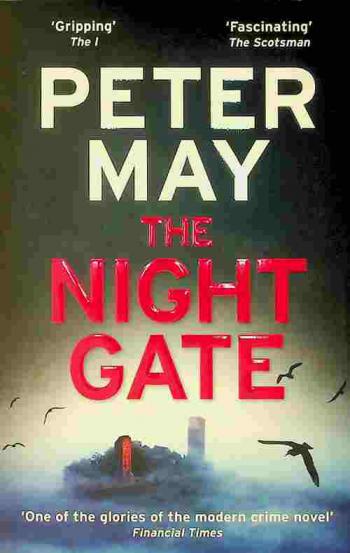
The night gate
\"In a sleepy French village, the body of a man shot through the head is disinterred by the roots of a fallen tree. A week later a famous art critic is viciously murdered in a nearby house. The deaths occurred more than seventy years apart. Asked by a colleague to inspect the site of the former, forensics expert Enzo Macleod quickly finds himself embroiled in the investigation of the latter. Two extraordinary narratives are set in train - one historical, unfolding in the treacherous wartime years of Occupied France; the other contemporary, set in the autumn of 2020 as France re-enters Covid lockdown. And Enzo's investigations reveal an unexpected link between the murders - the Mona Lisa.Tasked by the exiled General Charles de Gaulle to keep the world's most famous painting out of Nazi hands after the fall of France in 1940, 28-year-old Georgette Pignal finds herself swept along by the tide of history. Following in the wake of Da Vinci's Mona Lisa as it is moved from château to château by the Louvre, she finds herself just one step ahead of two German art experts sent to steal it for rival patrons - Hitler and Göring.What none of them know is that the Louvre itself has taken exceptional measures to keep the painting safe, unwittingly setting in train a fatal sequence of events extending over seven decades. Events that have led to both killings.\"--Publisher.

Forensic science under siege: the challenges of forensic laboratories and the medico-legal death investigation system
Forensic science laboratories' reputations have increasingly come under fire. Incidents of tainted evidence, false reports, allegations of negligence, scientifically flawed testimony, or - worse yet - perjury in in-court testimony, have all served to cast a shadow over the forensic sciences. Instances of each are just a few of the quality-related charges made in the last few years. Forensic Science Under Siege is the first book to integrate and explain these problematic trends in forensic science. The issues are timely, and are approached from an investigatory, yet scholarly and research-driven, perspective. Leading experts are consulted and interviewed, including directors of highly visible forensic laboratories, as well as medical examiners and coroners who are commandeering the discussions related to these issues. Interviewees include Henry Lee, Richard Saferstein, Cyril Wecht, and many others.The ultimate consequences of all these pressures, as well as the future of forensic science, has yet to be determined. This book examines these challenges, while also exploring possible solutions (such as the formation of a forensic science consortium to address specific legislative issues). It is a must-read for all forensic scientists. * Provides insight on the current state of forensic science, demands, and future direction as provided by leading experts in the field* Consolidates the current state of standards and best-practices of labs across disciplines* Discusses a controversial topic that must be addressed for political support and financial funding of forensic science to improve
eBook


Oh, It's Like CSI
\"Oh, it's like CSI...\": A Qualitative Study of Job Satisfaction Experiences of Forensic Scientists goes beyond the glamorous portrayals of CSI professionals on television to highlight the real sources of job satisfaction among forensic scientists.
eBook