
Catalogue Search | MBRL


Are you sure you want to remove the book from the shelf?

{{itemTitle}}
1,007
result(s) for
"Forgery History."
Sort by:

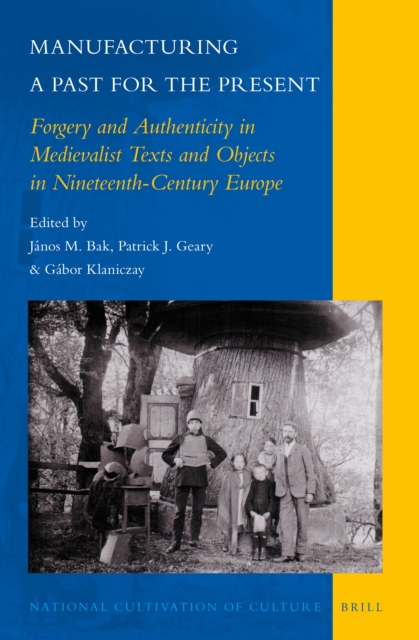
Manufacturing a past for the present : forgery and authenticity in medievalist texts and objects in nineteenth-century Europe
Manufacturing a Past for the Present contains a series of essays on forgeries and manipulated texts and objects mainly in the service of modern nations emerging during the long nineteenth century, and reflections on the related debates on authenticity.
eBook

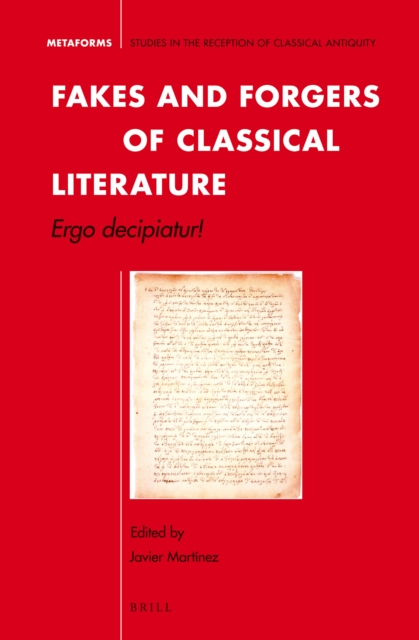
Fakes and forgers of classical Literature : Ergo decipiatur!
Fakes and Forgers of Classical Literature comprises essays which revise the position of the forged text in the literary tradition and, in light of modern approaches of philology and literary criticism, offer exciting new strategies for understanding forgery and the play with authenticity within ancient literature itself.
eBook

2ji avil̲um uṇmaikaḷ = 2G avizhum unmaikal
On 2G spectrum scam, case and the law proceedings unfolded by the author Andimuthu Raja, born 1963, an Indian politician from the Dravida Munnetra Kazhagam (DMK) political party, Tamilnadu, India an accused of this case.
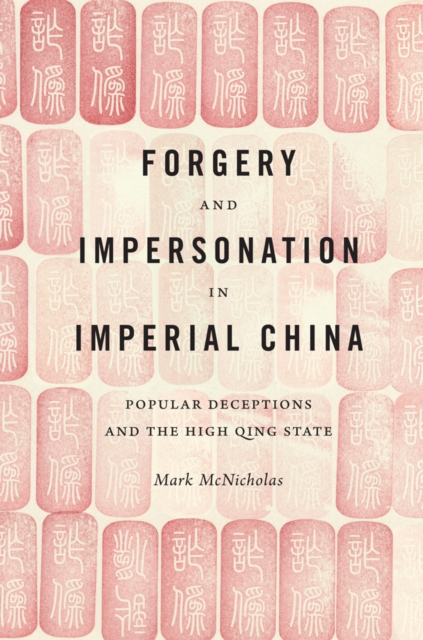
Forgery and Impersonation in Imperial China
Across eighteenth-century China a wide range of common people forged government documents or pretended to be officials or other agents of the state. This examination of case records and law codes traces the legal meanings and social and political contexts of small-time swindles that were punished as grave political transgressions.
eBook

Art forgery
Art Forgery charts the changing status of art forgery from the time of its appearance in the Renaissance, when it was initially hailed as a true artistic feat, to its condemnation in modern times. Lenain describes the genealogy of faking and the anxious, sometimes neurotic, reactions that these clever frauds trigger.
eBook

Faking It!
A collection of eleven chapters which explore the question of forgery from different disciplinary angles and in varied national contexts, using the concept of performance to gain greater insight.
eBook

The Myth of Ephraim Tutt
The Myth of Ephraim Tutt explores the true and
previously untold story behind one of the most elaborate literary
hoaxes in American history. Arthur Train was a Harvard-educated
and well-respected attorney. He was also a best-selling author.
Train’s greatest literary creation was the character
Ephraim Tutt, a public-spirited attorney and champion of
justice.Guided by compassion and a strong moral compass, Ephraim
Tutt commanded a loyal following among general readers and
lawyers alike—in fact, Tutt’s fictitious cases were
so well-known that attorneys, judges, and law faculty cited them
in courtrooms and legal texts. People read Tutt’s legal
adventures for more than twenty years, all the while believing
their beloved protagonist was merely a character and that
Train’s stories were works of fiction. But in 1943 a most
unusual event occurred: Ephraim Tutt published his own
autobiography. The possibility of Tutt’s existence as an
actual human being became a source of confusion, spurring heated
debates. One outraged reader sued for fraud, and the legendary
lawyer John W. Davis rallied to Train’s defense. While the
public questioned whether the autobiography was a hoax or
genuine, many book reviewers and editors presented the book as a
work of nonfiction. In
The Myth of Ephraim Tutt Molly Guptill Manning explores
the controversy and the impact of the Ephraim Tutt autobiography
on American culture. She also considers Tutt’s ruse in
light of other noted incidents of literary hoaxes, such as those
ensuing from the publication of works by Clifford Irving, James
Frey, and David Rorvik, among others. As with other outstanding
fictitious characters in the literary canon, Ephraim Tutt took on
a life of his own. Out of affection for his favorite creation,
Arthur Train spent the final years of his life crafting an
autobiography that would ensure Tutt’s lasting
influence—and he was spectacularly successful in this
endeavor. Tutt, as the many letters written to him attest, gave
comfort to his readers as they faced the challenging years of the
Great Depression and World War II and renewed their faith in
humanity and justice. Although Tutt’s autobiography
bewildered some of his readers, the great majority were glad to
have read the “life” story of this cherished
character.
eBook

The international companion to James Macpherson and the poems of Ossian
James Macpherson’s “poems of Ossian”, first published from 1760 as Fragments of Ancient Poetry, were the literary sensation of the age. Attacked by Samuel Johnson and others as “forgeries”, nonetheless the poems enthralled readers around the world, attracting rapturous admiration from figures as diverse as Goethe, Diderot, Jefferson, Bonaparte and Mendelssohn. This International Companion examines the social, political and philosophical context of the poems, their disputed origins, their impact on world literature, and the various critical afterlives of Macpherson and of his literary works.
eBook