
Catalogue Search | MBRL


Are you sure you want to remove the book from the shelf?

{{itemTitle}}
13
result(s) for
"Forgiveness Religious aspects Islam"
Sort by:

News media and the Muslim identity after the Christchurch mosque massacres
This article discusses news about Muslims via one researcher's social media news feeds after the Christchurch tragedy. Using intercultural and Islamic communication theories, the contents of several news stories are analysed for their contribution to the Muslim person's identity. Findings reveal four main categories: Muslim women and hijab; religion and terrorism; media, government, democracy and the politics of oppression; and representation of the Muslim voice. Substantial news content also depicts peace, love and forgiveness in its presentation of the human angle in New Zealand media. There is a significant shift from the negative othering rhetoric of international media to an inclusive national approach in the tone of the New Zealand press. However, Muslim narratives reveal that structural discrimination and systemic oppression do exist and pose safety and identity challenges. While news continues to divide and unite people depending on the press agenda, their depictions of Islam and Muslims have potentially major influences and serious consequences on the Muslim person's identity within the local and global Muslim communities.
Journal Article

Exploring Complexities of Forgiveness in Religious Traditions in a Post-Conflict Setting: Interviews with Muslim and Christian Leaders in Bosnia and Herzegovina
This article explores religious understandings of interpersonal forgiveness in post-conflict contexts. It challenges views that portray religious perspectives as purely normative, prescriptive, and insensitive to life’s complexities. This study draws from 75 in-depth interviews with religious leaders from Bosnia and Herzegovina’s three largest faith communities (Islamic Community, Roman Catholic Church, and Serbian Orthodox Church). Using grounded theory methodology for data collection and analysis, this research reveals three interrelated conceptualizations of forgiveness: (1) forgiveness as a dispensation from justified punishment, (2) forgiveness as an emotional process, and (3) forgiveness as a spiritual transformation. This paper further examines forgiveness along the dimensions of procedurality, collectivity, conditionality, and memory. Forgiveness emerges as a fragmented, non-linear process shaped by both individual and collective factors. While some fundamental openness toward forgiveness is often seen as unconditional, its progression depends significantly on the wrongdoer’s actions and broader context. Finally, the findings show that forgiveness does not imply forgetting, yet it substantially influences how past injuries are remembered and commemorated.
Journal Article
Atonement, Returning, and Repentance in Islam
The aim of this article is to demonstrate how in Islam the principle mechanism for atonement lies in tawba (returning, repentance). Divided into four sections, and drawing primarily on the literature of classical Sufism, the analysis begins by defining some key terms related to the idea of atonement, with special attention to the language of the Quran. Then it outlines three conditions of returning, repentance, and atonement, delineated by classical Muslim authorities, before turning to a brief overview of the concept of amending wrongs or settings matters aright. It concludes with some final remarks about the possibilities of atonement available until death, and the soteriological role divine mercy is believed to play in the posthumous states of the soul.
Journal Article
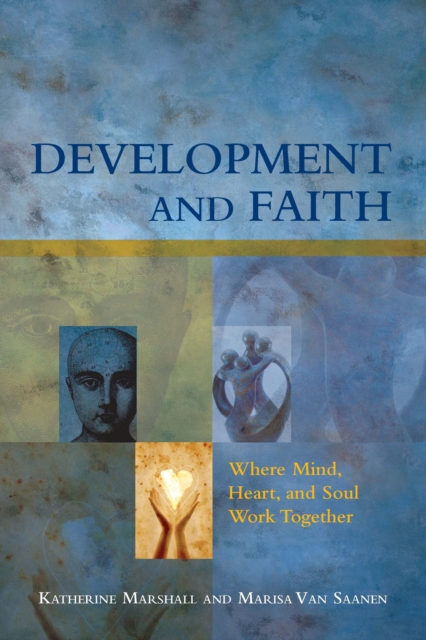
Development and faith : where mind, heart, and soul work together
The faith and development nexus is both a promising new focus for secular development agencies and a historic reality: for centuries, world faiths and individuals inspired by their faith have played many roles in social change and social welfare. Secular development agencies have largely operated in parallel to the world of faith-motivated development. The World Bank began in the late 1990s to explore ways in which faith and development are connected. The issue was not and is not about religion, but about the recognition that some of the best experts on development are faith leaders living and working in poor communities, where strong ties and moral authority give them unique experience and insight. The World Bank's goal is to act as a catalyst and convenor, bringing together development practitioners to find common ground, understand one another's efforts, and explore differences. 'Development and Faith' explores and highlights promising partnerships in the world between secular and faith development entities. It recounts the evolving history of relationships between faith and secular development institutions. It focuses on the Millennium Development Goals as a common framework for action and an opportunity for new forms of collaboration and partnership.
eBook

Forgive Me Friend: Mohammed and Ibrahim
This essay examines my accidental conversion to Islam and its discomforting consequences for my fieldwork in Morocco, While my conversion and my subsequent efforts to grasp its significance represents an awkward extreme, I use the episode to challenge similar tropes of friendship and obligation, accident and rapport in the American reflexive ethnographic tradition, especially in Morocco—one of the tradition's classic fieldwork sites. Focusing on my friendship with Mohammed (a Moroccan) and his efforts to negotiate my ambivalence, I argue that what remains underexplored in this ethnographic tradition and its thinking on friendship is the act of forgiving.
Journal Article

RELIGION, PEACE AND THE POST-SECULAR PUBLIC SPHERE
Religion is often cited as a source of conflict and violence, but it also serves the cause of peace in significant ways, including its calls for non-violence, unselfishness, forgiveness, reconciliation, and just war theory. The European Enlightenment caused many to discount religion's role in public affairs, but this is changing for multiple reasons, including the fact that attempts to build a good society without religion have been unsuccessful. This article draws attention to the more recent \"post-secular\" thought of Jurgen Habermas, a leading intellectual dedicated to \"the Enlightenment project.\" He represents a significant post-secular development in social theory with his awakening to religion's significance in his ideal of the public sphere. The United Nations, too, is reassessing the role of religion. Approaches to peace that remain religiously illiterate will fail to yield either accurate assessments or fruitful outcomes.
Journal Article
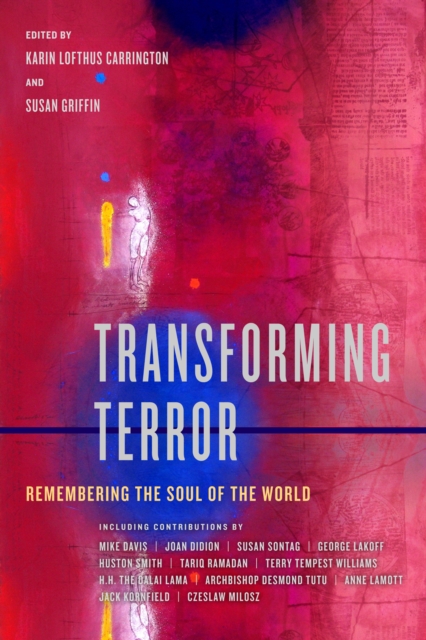
Transforming terror
This inspired collection offers a new paradigm for moving the world beyond violence as the first, and often only, response to violence. Through essays and poetry, prayers and meditations, Transforming Terror powerfully demonstrates that terrorist violence—defined here as any attack on unarmed civilians—can never be stopped by a return to the thinking that created it. A diverse array of contributors—writers, healers, spiritual and political leaders, scientists, and activists, including Desmond Tutu, Huston Smith, Riane Eisler, Daniel Ellsberg, Amos Oz, Fatema Mernissi, Fritjof Capra, George Lakoff, Mahmoud Darwish, Terry Tempest Williams, and Jack Kornfield—considers how we might transform the conditions that produce terrorist acts and bring true healing to the victims of these acts. Broadly encompassing both the Islamic and Western worlds, the book explores the nature of consciousness and offers a blueprint for change that makes peace possible. From unforgettable firsthand accounts of terrorism, the book draws us into awareness of our ecological and economic interdependence, the need for connectedness, and the innate human capacity for compassion.
eBook

WHAT RELIGION BRINGS TO THE POLITICS OF TRANSITIONAL JUSTICE
The past generation might well come to be called \"the age of transitional justice.\" Over forty transitions from authoritarianism to democracy since 1974 and a historically dense spate of civil war settlements since the end of the Cold War have begotten worldwide efforts to \"deal with the past,\" to use a phrase prevalent in Northern Ireland. These include over thirty truth commissions, national trials, two international tribunals and now an International Criminal Court, reparations schemes, an outbreak of apologies, dramatic instances of forgiveness, memorials, museums, commemorations, ceremonies and scores of forums, seminars and initiatives conducted by non-governmental organizations and other civil society groups. The religious, then, have played a pivotal role in developing and spreading a paradigm for transitional justice -- reconciliation -- that they espouse disproportionately though not exclusively. The foregoing analysis suggests that the thinkers as well as the doers who have promoted the concept in transitional justice have been predominantly Christian.
Journal Article

The contradiction between Israeli power and the humane Jewish tradition
Those who criticize Israeli policy, whether of the settlements, the construction of a so-called \"security fence\" between Israel and the West Bank, or the lack of separation of religion and state in Israel, where even non-Orthodox Jews have few rights, are often labeled \"anti-Semites\" or \"self-hating Jews.\" This has been a widespread tactic to silence debate--and, all too often, it has been successful. In this regard, [Marc Ellis] points out that, \"There is a personal and professional cost to speaking of what Jews are doing in the world in relation to the map of Israel/Palestine. Politically, the cost is high. Once labeled as a self-hating Jew or anti-Semite, one's character is undermined and distorted. Thus the fear of public speech in relation to Israel and on behalf of the Palestinians is substantial, and chilling for some in what should be open, substantive debate.\" If Judaism means adherence to the covenant at Sinai, to the moral and ethical teachings of the prophets, to the commitment to justice, Ellis asks: \"Can we claim to be Jewish if this cycle of power is affirmed as the last word? That we are either the victims of empire or the guardians of empire? That an interdependent empowerment is impossible? That the particularity of the Jewish witness must guard against the impulse toward the universal? That this dynamic of particularity and universality, so important to Jewish history and faith, must be rooted out as a danger to the survival of Jews, Judaism and the Jewish state? That to survive the language of innocence we must disguise policies of violence so that, in the end, Jews no longer understand where rhetoric and reality begins and ends? We have reached the place of decision. The fundamental questions facing the future of Jewish life are before us. But the issue is not a Judaism or an Israeli state hijacked by Jewish fundamentalists. Nor is it a fight against Islamic fundamentalists. Rather, it is a struggle for the heart and soul of the Jewish people.\" The time has come, Ellis declares, for Jews concerned about the humane tradition, kept alive through centuries of suffering and persecution, to speak up on its behalf, lest it be lost: \"What the Nazis had not succeeded in accomplishing--the undermining at a fundamental level of the very essence of what it means to be Jewish--we as Jews have embarked upon...It is difficult for Jews to speak of the permanent oppression of the Palestinians by those who have power in Israel, aided and abetted by Jews who have power in the U.S. In short, Jews who understand the maps of Jewish life, including the Holocaust and what Israel has done to the Palestinians, find it difficult to deny the fact of Jewish power in the world. We as Jews must admit that we, like others, use our power to pursue injustice in exactly the same way that other peoples and nation-states do...Jews of conscience...join in a tradition of dissent that remains alive, even grows, but as a remnant increasingly cut off from mainstream Judaism and Jewish life. This remnant, though seemingly modern...is paradoxically embodying the most ancient of Jewish traditions, the refusal of idolatry. By protesting against injustice at a personal sacrifice, by witnessing in history to the possibility of reconciliation and forgiveness, by seeking community over against empire, this remnant embodies the ancient prophetic and covenantal tradition without which Judaism and Jewishness is impossible.\"
Journal Article