
Catalogue Search | MBRL


Are you sure you want to remove the book from the shelf?

{{itemTitle}}
49
result(s) for
"Formulas, recipes, etc"
Sort by:

Recipes for Thought
For a significant part of the early modern period, England was the most active site of recipe publication in Europe and the only country in which recipes were explicitly addressed to housewives.Recipes for Thoughtanalyzes, for the first time, the full range of English manuscript and printed recipe collections produced over the course of two centuries.
Recipes reveal much more than the history of puddings and pies: they expose the unexpectedly therapeutic, literate, and experimental culture of the English kitchen. Wendy Wall explores ways that recipe writing-like poetry and artisanal culture-wrestled with the physical and metaphysical puzzles at the center of both traditional humanistic and emerging \"scientific\" cultures. Drawing on the works of Shakespeare, Spenser, Jonson, and others to interpret a reputedly \"unlearned\" form of literature, she demonstrates that people from across the social spectrum concocted poetic exercises of wit, experimented with unusual and sometimes edible forms of literacy, and tested theories of knowledge as they wrote about healing and baking. Recipe exchange, we discover, invited early modern housewives to contemplate the complex components of being a Renaissance \"maker\" and thus to reflect on lofty concepts such as figuration, natural philosophy, national identity, status, mortality, memory, epistemology, truth-telling, and matter itself. Kitchen work, recipes tell us, engaged vital creative and intellectual labors.
eBook


Perennial Ceremony
Travel through a garden's seasons toward healing,
reclamation, and wholeness-for us, and for our beloved relative,
the Earth
In this rich collection of prose, poetry, and recipes, Teresa
Peterson shares how she found refuge from the struggle to reconcile
her Christianity and Dakota spirituality, discovering solace and
ceremony in communing with the earth. Observing and embracing the
cycles of her garden, she awakens to the constant affirmation that
healing and wellness can be attained through a deep relationship
with land, plants, and waters. Dakota people call this way of
seeing and being in the world mitakuye owasin: all my
relations. Perennial Ceremony brings us into this
relationship, as Peterson guides us through the Dakota seasons to
impart lessons from her life as a gardener, gatherer, and lover of
the land.
We see the awakening of Wetu (spring), a transitional
time when nature comes alive and sweet sap flows from maples, and
the imperfect splendor of Bdoketu (summer), when rain
becomes a needed and nourishing gift. We share in the harvesting
wisdom of Ptaŋyetu (fall), a time to savor daylight and
reap the garden's abundance, and the restorative solitude of
Waniyetu (winter), when snow blankets the landscape and
sharpens every sound. Through it all, Peterson walks with us along
the path that both divides and joins Christian doctrine, everyday
spiritual experience, and the healing powers of Indigenous wisdom
and spirituality.
In this intimate seasonal cycle, we learn how the garden becomes
a healing balm. Peterson teaches us how ceremony may be found
there: how in the vegetables and flowers, the woods, the hillsides,
the river valley-even in the feeding of friends and family-we can
reclaim and honor our relationship with Mother Earth. She
encourages us to bring perennial ceremony into our own lives,
inviting us on a journey that brings us full circle to makoce
kiŋ mitakuye: the land is my relative.
eBook


Medicine, Magic, Alchemy, Food, and Ink
The Cairo geniza preserved hundreds of recipes But before you envision piles of variants on mulukbiyya and other medieval Egyptian dishes to impress your guests and solve your dinner dilemmas, consider this: roughly 68 percent of those recipes are likely to be medical prescriptions. Take, for example, a recipe written by that most famous of medieval physicians, Moses Maimonides, who spent the last forty years of his life in Cairo as leader and congregant in the synagogue where the geniza was preserved. In 2014, Amir Ashur discovered a prescription in Maimonides' hand for a dietary regimen, presumably to help someone with a digestive ailment. The recipe: a concoction of sugar, warm water, and the juice of two lemons. The goal: making the patient vomit. Lukewarm lemonade didn't sound so bad to me. But when I asked my resident eleven-year-old what she thought of it, her verdict \"was unequivocal. Translated into printable language: nauseating.
Journal Article

Chalk on the wild side
Chalk on the Wild Side is the second title in Art Camp, an art series geared toward adults who want to engage in creative play with the children in their lives. Designed to introduce young artists to a variety of art methods and techniques in fun, fresh, and inviting new ways, this addition to the series encourages parents and their kids to play outdoors with an assortment of chalk recipes and interactive games and activities. The first half of the book details a bevy of chalk recipes, from glow-in-the-dark chalk, fizzing chalk, and scented chalk to chalk foam, chalk goo paint, and ice chalk. Readers will then discover a variety of activities and ways to use their favorite chalk recipes. From classic games to 3D chalk projects such as chalk volcanoes, chalk powder bombs, chalk rockets, chalk hair dye, and more, parents and children alike will be delighted by the multitude of exciting ideas.
Book
Skin Deep
On march 15, 1503, a Jewish \"woman identified as Anna Hebrea of Rome sent a package of skin-care products to the noblewoman Caterina Sforza. The carefully curated bundle was meant to target age spots and create a smoother skin. Inside, there were two unguents--one black and one \"white--as well as a variety of \"waters to be used as toners and cleansers that refreshed the complexion. The products were accompanied by detailed instruction and a price list suggesting that Anna was adept at preparing and trading in the lucrative business of cosmetics. Pointing beyond mere vanity, the external appearance of the body has long been regarded as an indicator of overall physical health, and beauty was considered \"a legitimate medical aim. Medieval and early modern medical treatises have frequently dedicated a separate section to cosmetic recipes, foregrounding the porous boundary between professional medical, artisanal, and experiential types of knowledge.
Journal Article

The natural home : simple, pure cleaning solutions and recipes for a healthy house
\"With THE NATURAL HOME, you'll discover how to clean everything in your house the healthy way with just a few inexpensive, easy-to-find products using tried and true cleaning methods that have been around for centuries. Organized by product and location in the home, the book includes an in-depth explanation of natural products like vinegar, lemon, and baking soda which can be used to clean most areas in your home. There's a cleaning guide by room; tips for maintaining materials like marble, stainless steel, and wood; solutions for every stain; natural fragrances for your home; laundry tips; and natural products for pets. Also included are recipes for cleaning products you can make on your own that will help disinfect, whiten, deodorize and remove even the toughest stains in bathrooms, kitchen, carpets, and clothing.\"--Amazon.com.
Book
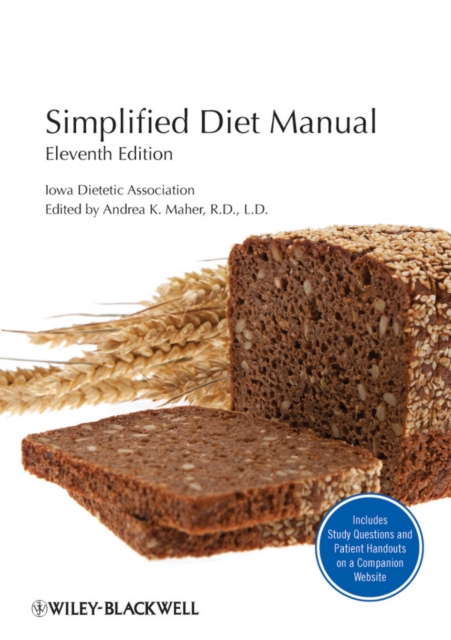
Simplified diet manual
This edited work provides easy-to-understand, fundamental nutrition guidelines for normal and therapeutic diets. It helps dietitians and foodservice managers maintain nutritional health and well-being of clients.
eBook