
Catalogue Search | MBRL


Are you sure you want to remove the book from the shelf?

{{itemTitle}}
3,414
result(s) for
"Forster, E"
Sort by:

Worlding Forster
Focusing on the literary works and career of British novelist E.M.Forster (1879-1970), this book argues that the writer adapted a much older literary form, the pastoral, to the purposes of writing about modern British experience.
eBook

Compromise and resistance in postcolonial writing : E.M. Forster's legacy
Compromise and Resistance in Postcolonial Writing offers a new critical approach to E. M. Forster's legacy. It examines key themes in Forster's work (homosexuality, humanism, modernism, liberalism) and their relevance to post-imperial and postcolonial novels by important contemporary writers.
eBook
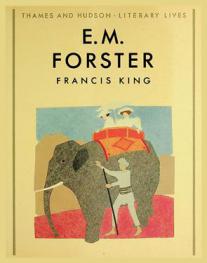
E .M. Forster
A biography of the English novelist, essayist, and literary critic known for such works as a \"A Room With A View,\" \"Howards End,\" and \"A Passage To India.\"
Book

Making Words Matter
Why should Salman Rushdie describe his truth telling as an act of swallowing impure \"haram\" flesh from which the blood has not been drained? Why should Rudyard Kipling cast Kim, the imperial child-agent, as a body/text written upon and damaged by empire? Why should E. M. Forster evoke through the Indian landscape the otherwise unspeakable racial or homosexual body in his writing? InMaking Words Matter: The Agency of Colonial and Postcolonial Literature,Ambreen Haiargues that these writers focus self-reflectively on the unstable capacity of words to have material effects and to be censored, and that this central concern with literary agency is embedded in, indeed definitive of, colonial and postcolonial literature.Making Words Mattercontends that the figure of the human body is central to the self-imagining of the text in the world because the body uniquely concretizes three dimensions of agency: it is at once the site of autonomy, instrumentality, and subjection. Hai's work exemplifies a new trend in postcolonial studies: to combine aesthetics and politics and to offer a historically and theoretically informed mode of interpretation that is sophisticated, lucid, and accessible.This is the first study to identify and examine the rich convergence of issues and to chart their dynamic. Hai opens up the field of postcolonial literary studies to fresh questions, engaging knowledgeably with earlier scholarship and drawing on interdisciplinary theory to read both well known and lesser-known texts in a new light. It should be of interest internationally to students and scholars in a variety of fields including British, Victorian, modernist, colonial, or postcolonial literary studies, queer or cultural studies, South Asian studies, history, and anthropology.
eBook


E.M. Forster's Female Musicality: Inconclusive Counter-romance in A Room with a View
E.M. Forster's A Room with a View (1908) musically animates a \"self-reflexive gender consciousness\" to expose the limits of romantic female life. Employing music to confront the logics of the heterosexual marriage plot, the novel embodies a counter-romantic subtext about the desire for female independence. As such, Forster's music moves attention away from marriage and toward female hesitation about domestic identities in early twentieth-century society. Forster's own late-in-life considerations of A Room also signal that post-war disruptions provide backgazing clues to the novel's inconclusiveness over nuptial anxieties, further highlighting how ideals of heterosexual love and social inheritance obscure the aims of unrealized female selfhood.
Journal Article

Arctic summer
In 1912, the SS Birmingham approaches India. On board is Morgan Forster, novelist and man of letters, who is embarking on a journey of discovery. As Morgan stands on deck, the promise of a strange new future begins to take shape before his eyes. The seeds of a story start to gather at the corner of his mind: a sense of impending menace, lust in close confines, under a hot, empty sky. It will be another 12 years, and a second time spent in India, before 'A Passage to India', E.M. Forster's great work of literature, is published. During these years, Morgan will come to a profound understanding of himself as a man, and of the infinite subtleties and complexity of the human nature, bringing these great insights to bear in his remarkable novel.
BOOK

“The battle against sameness”: Hospitality as Romantic Transcendence in Howards End
The present article presents a thematic analysis of hospitality in E. M. Forster’s novel Howards End (1910). The article begins by suggesting the centrality of personal relations in Forster’s philosophy and in his reputation as a writer, and then proceeds to consider episodes of hospitality in Howards End in a variety of aspects. First, the argument addresses the ideological work performed by non-transformative situations of hospitality in the novel (what the author terms “conservative hospitality”), and details the spiritual discontent that they engender in the novel’s protagonists. Second, the article highlights the connection between hospitality and the romantic mode, chiefly as a result of the Schlegels’ interactions with Leonard Bast. This personal connection, however, ultimately fails to coalesce into a truly transformative hospitality due to Bast’s material circumstances and experiences, preventing him from overcoming the class difference that separates him from the Schlegels; this suggests the inherent difficulties that face those who attempt to engage in hospitality across lines of class. Third, there follows a con sideration of the association between hospitality and transcendence in the novel, which appears in connection to the figure of Ruth Wilcox and presents forms of spiritual desire for transcendence that take place in a secular, agnostic con text. The article approaches Ruth Wilcox’s bequest of Howards End to Margaret Schlegel as a gesture of supreme or divine hospitality, which produces a spiritual inheritance that makes the guest into a permanent hostess of the Howards’ house. Finally, the article considers the status of Howards End as a house that inherits and refashions the literary tradition of country house hospitality at the symbolic level, while embracing privacy and isolation at the thematic level.
Journal Article