
Catalogue Search | MBRL


Are you sure you want to remove the book from the shelf?

{{itemTitle}}
7,434
result(s) for
"Fortune"
Sort by:

The fortune-tellers
A carpenter in the West African country of Cameroon goes to a fortune teller and finds the predictions about his future coming true in an unusual way.
Book

Circumstance, Answerability, and Luck
This paper identifies a distinctive kind of moral luck, deep circumstantial luck, and then explores its effects on moral responsibility. A key feature of the phenomenon is that it is recurrent rather than one-off. It also affects agents across a wide range of situations making it difficult to detect. Deeply unlucky agents are subject to unfavourable moral assessments through no fault of their own both in specific cases and when they try to respond to such initial assessments. In this respect, deep circumstantial luck takes the form of a normative burden that grows over time. A process-oriented conception of moral responsibility as answerability is proposed to explain this phenomenon and highlight its implications for rethinking vicarious responsibility.
Journal Article


Chaucer's Amoral Lyrics
Abstract Scholarship on Chaucer's \"Boethian lyrics\" continues to show the discrepancy between their moral and political ambiguities on one hand and the fixed precepts of their source text, De consolatione philosophiae, by Anicius Manlius Severinus
Boethius (d. 524), on the other. While Chaucer's \"The Former Age,\" \"Fortune,\" \"Truth,\" \"Gentilesse,\" and \"Lak of Stedfastnesse\" revive topics first raised in the sixth-century treatise, they trade philosophy's universalist
consolations for a contingent morality suitable for the political instability of Ricardian England. Recent treatments of the lyrics have read in the poems a resistance to the external and oppressive moral and political systems for which Philosophy and Fortune stand. Another option remains,
however, for functioning within Fortune's world order. This essay explores how the lyrics' contradictions of form and content undermine their own calls for polite behavior and just rule. In doing so, they artfully imagine bolder subversions of Fortune's regime by willfully
embracing her tactics.
Journal Article
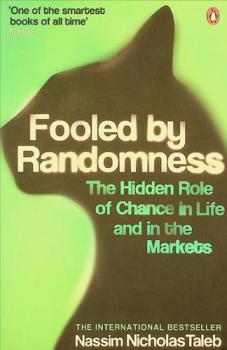
Fooled by randomness : the hidden role of chance in life and in the markets
This is a book about luck. More specifically, it is a book about how we perceive luck, twist it around and regard it as intention or purpose.
Book

Aristotle and Contemporary Theories of Luck
Contemporary theories of luck face problems when it comes to moral luck, that is, luck that nevertheless partially determines moral responsibility. Either they conceive of luck as chancy or modally fragile, which is too narrow and excludes cases such as choosing to do something that is unlikely for you to do or that you do not do in many nearby possible worlds. Others see luck as primarily a matter of lack of control, which is too broad and includes things like the sun’s rising, which is outside of our control, but certainly not a matter of luck. Some try to rescue the moral luck phenomenon by positing hybrid accounts or denying that moral luck is a species of luck. Very little has been written about how Aristotle’s conceptions of luck fit into modern conceptions. Yet, Aristotle has sophisticated accounts of luck and good fortune that shed light on certain problems. I will show how Aristotle fares compared to contemporary theories and what we can learn from his approach to luck and fortune when it comes to how lack of control, modal robustness, and probability factor into luck, the difference between luck and good fortune, and whether moral luck is a species of luck.
Journal Article


The Sanctification of the Disabled: A Study on the Images of Fortune Gods in Japanese Folk Beliefs
Similarly to China, Japan has a long history of worshiping fortune gods. The act of making offerings and praying to these deities has been practiced since ancient times. Fortune gods are figures in Japanese folk religion that are believed to bring happiness, hope, and good luck. When speaking of fortune gods in Japan, people will first think of the Seven Lucky Gods. Apart from them, there are also some local fortune gods such as Fukusuke and Sendai Shiro. These gods share some common traits and also have connections with the Japanese folk belief in Fukuko (fortune child). This study adopts a comparative methodology to compare Japan’s Seven Lucky Gods with the local Japanese fortune gods as well as Fukuko, and then analyze their similarities. This article argues that the Japanese fortune gods have two major common characteristics: the super power to bring good fortune, and their distinctive appearance. By systematically analyzing the common features of Japanese fortune gods, this study will clarify the mechanism behind their deification as fortune deities and also help us to gain a better insight into the Japanese conceptions of deities and spirits.
Journal Article

The misfortune cookie
Zack visits a very strange Chinese restaurant called Wun Dum Guy and finds that the fortunes in his fortune cookies start coming true.
Book

A framework for understanding artificial intelligence research: insights from practice
PurposeThe current evolution of artificial intelligence (AI) practices and applications is creating a disconnection between modern-day information system (IS) research and practices. The purpose of this study is to propose a classification framework that connects the IS discipline to contemporary AI practices.Design/methodology/approachWe conducted a review of practitioner literature to derive our framework's key dimensions. We reviewed 103 documents on AI published by 25 leading technology companies ranked in the 2019 list of Fortune 500 companies. After that, we reviewed and classified 110 information system (IS) publications on AI using our proposed framework to demonstrate its ability to classify IS research on AI and reveal relevant research gaps.FindingsPractitioners have adopted different definitional perspectives of AI (field of study, concept, ability, system), explaining the differences in the development, implementation and expectations from AI experienced today. All these perspectives suggest that perception, comprehension, action and learning are the four capabilities AI artifacts must possess. However, leading IS journals have mostly published research adopting the “AI as an ability” perspective of AI with limited theoretical and empirical studies on AI adoption, use and impact.Research limitations/implicationsFirst, the framework is based on the perceptions of AI by a limited number of companies, although it includes all the companies leading current AI practices. Secondly, the IS literature reviewed is limited to a handful of journals. Thus, the conclusions may not be generalizable. However, they remain true for the articles reviewed, and they all come from well-respected IS journals.Originality/valueThis is the first study to consider the practitioner's AI perspective in designing a conceptual framework for AI research classification. The proposed framework and research agenda are used to show how IS could become a reference discipline in contemporary AI research.
Journal Article