
Catalogue Search | MBRL


Are you sure you want to remove the book from the shelf?

{{itemTitle}}
9,372
result(s) for
"Fossils History."
Sort by:

A history of dinosaurs in 50 fossils
This is the story of the dinosaurs, uniquely retold through 50 of the most significant findings from the fossil record. Each entry is illustrated with special photography of original specimens that illustrate both the history of dinosaur discovery and key evolutionary events. Palaeontologist Paul M. Barrett explains the importance of each fossil and how it marks a crucial inflection point in an evolutionary dynasty that ruled the Earth for more than 150 million years. The book is divided into themed sections, beginning with dinosaur ancestors before introducing all the major dinosaur groups and moving on to the distinctive aspects of their biology such as feeding, distribution, locomotion and behaviour. The final section focuses on the first fossil birds including the legendary Archaeopteryx, the feathered dinosaur that is widely considered to be the first bird species.
BOOK

Fossil Legends of the First Americans
The burnt-red badlands of Montana's Hell Creek are a vast graveyard of the Cretaceous dinosaurs that lived 68 million years ago. Those hills were, much later, also home to the Sioux, the Crows, and the Blackfeet, the first people to encounter the dinosaur fossils exposed by the elements. What did Native Americans make of these stone skeletons, and how did they explain the teeth and claws of gargantuan animals no one had seen alive? Did they speculate about their deaths? Did they collect fossils?
Beginning in the East, with its Ice Age monsters, and ending in the West, where dinosaurs lived and died, this richly illustrated and elegantly written book examines the discoveries of enormous bones and uses of fossils for medicine, hunting magic, and spells. Well before Columbus, Native Americans observed the mysterious petrified remains of extinct creatures and sought to understand their transformation to stone. In perceptive creation stories, they visualized the remains of extinct mammoths, dinosaurs, pterosaurs, and marine creatures as Monster Bears, Giant Lizards, Thunder Birds, and Water Monsters. Their insights, some so sophisticated that they anticipate modern scientific theories, were passed down in oral histories over many centuries.
Drawing on historical sources, archaeology, traditional accounts, and extensive personal interviews, Adrienne Mayor takes us from Aztec and Inca fossil tales to the traditions of the Iroquois, Navajos, Apaches, Cheyennes, and Pawnees.Fossil Legends of the First Americansrepresents a major step forward in our understanding of how humans made sense of fossils before evolutionary theory developed.
eBook

Otherlands : a world in the making
What would it be like to visit the ancient landscapes of the past? To experience the Jurassic or Cambrian worlds, to wander among these other lands, as creatures extinct for millions of years roam? In this mesmerizing debut, the award-winning palaeontologist Thomas Halliday gives us a breath-taking up close encounter with worlds that are normally unimaginably distant. Journeying backwards in time from the most recent Ice Age to the dawn of complex life itself, and across all seven continents, Halliday immerses us in a series of extinct ecosystems, each one rendered with a novelist's eye for detail and drama.
BOOK

A New Species of Nyanzachoerus (Cetartiodactyla: Suidae) from the Late Miocene Toros-Ménalla, Chad, Central Africa
During the latest Miocene and the early Pliocene, tetraconodontine suids were the most predominant large omnivorous mammals in Africa. Yet, new species were often identified on the grounds of limited evidence, a situation impacting their value for biochronological correlations as well as for environmental and biogeographical reconstructions. The description of the most abundant known collection of craniodental remains attributed to the tetraconodontine Nyanzachoerus helps to improve this situation. These specimens were collected in the upper Miocene deposits at Toros-Ménalla, northern Chad, central Africa, by the Mission Paléoanthropologique Franco-Tchadienne. We compared them with Nyanzachoerus from eastern and southern Africa, using extant species as a reference for patterns of morphological variation. Thanks to a large sample of observations, our work focused as much on craniomandibular morphology as on dental morphology and metrics (improved by an index scoring for the complexity of distal third molars and a detailed investigation of premolar-molar ratios). We recognized two taxa at Toros-Ménalla: Nyanzachoerus khinzir nov. sp. and Ny. cf. australis. We also revised the taxonomic status for other species, including: the restriction of Ny. syrticus to its holotype specimen from Sahabi (Libya), the resurrection of the nomen Ny. tulotos, and the synonymy of Ny. kuseralensis with Ny. waylandi. At Toros-Ménalla, Ny. khinzir was the only suid coexisting with the anthracotheriid Libycosaurus and the hominid Sahelanthropus, whereas Ny. cf. australis was associated with a different, probably younger faunal context. Nyanzachoerus. khinzir, which probably had a diversified diet, supports a latest Miocene biogeographical distinction between central Africa and eastern Africa.
Journal Article

Discovering the mammoth : a tale of giants, unicorns, ivory, and the birth of a new science
\"Today, we know that a mammoth is an extinct type of elephant that was covered with long fur and lived in the north country during the ice ages. But how do you figure out what a mammoth is if you have no concept of extinction, ice ages, or fossils? Long after the last mammoth died and was no longer part of the human diet, it still played a role in human life. Cultures around the world interpreted the remains of mammoths through the lens of their own worldview and mythology. When the ancient Greeks saw deposits of giant fossils, they knew they had discovered the battle fields where the gods had vanquished the Titans. When the Chinese discovered buried ivory, they knew they had found dragons' teeth. But as the Age of Reason dawned, monsters and giants gave way to the scientific method. Yet the mystery of these mighty bones remained. How did Enlightenment thinkers overcome centuries of myth and misunderstanding to reconstruct an unknown animal? The journey to unravel that puzzle begins in the 1690s with the arrival of new type of ivory on the European market bearing the exotic name \"mammoth.\" It ends during the Napoleonic Wars with the first recovery of a frozen mammoth. The path to figuring out the mammoth was traveled by merchants, diplomats, missionaries, cranky doctors, collectors of natural wonders, Swedish POWs, Peter the Great, Ben Franklin, the inventor of hot chocolate, and even one pirate. McKay brings together dozens of original documents and illustrations, some ignored for centuries, to show how this odd assortment of characters solved the mystery of the mammoth and, in doing so, created the science of paleontology.\"-- Dust jacket.
Book

The timescale of early land plant evolution
Establishing the timescale of early land plant evolution is essential for testing hypotheses on the coevolution of land plants and Earth’s System. The sparseness of early land plant megafossils and stratigraphic controls on their distribution make the fossil record an unreliable guide, leaving only the molecular clock. However, the application of molecular clock methodology is challenged by the current impasse in attempts to resolve the evolutionary relationships among the living bryophytes and tracheophytes. Here, we establish a timescale for early land plant evolution that integrates over topological uncertainty by exploring the impact of competing hypotheses on bryophyte−tracheophyte relationships, among other variables, on divergence time estimation. We codify 37 fossil calibrations for Viridiplantae following best practice. We apply these calibrations in a Bayesian relaxed molecular clock analysis of a phylogenomic dataset encompassing the diversity of Embryophyta and their relatives within Viridiplantae. Topology and dataset sizes have little impact on age estimates, with greater differences among alternative clock models and calibration strategies. For all analyses, a Cambrian origin of Embryophyta is recovered with highest probability. The estimated ages for crown tracheophytes range from Late Ordovician to late Silurian. This timescale implies an early establishment of terrestrial ecosystems by land plants that is in close accord with recent estimates for the origin of terrestrial animal lineages. Biogeochemical models that are constrained by the fossil record of early land plants, or attempt to explain their impact, must consider the implications of a much earlier, middle Cambrian–Early Ordovician, origin.
Journal Article


Ancient DNA : the making of a celebrity science
The untold story of the rise of the new scientific field of ancient DNA research, and how Jurassic Park and popular media influenced its development Ancient DNA research—the recovery of genetic material from long-dead organisms—is a discipline that developed from science fiction into a reality between the 1980s and today. Drawing on scientific, historical, and archival material, as well as original interviews with more than fifty researchers worldwide, Elizabeth Jones explores the field's formation and explains its relationship with the media by examining its close connection to de-extinction, the science and technology of resurrecting extinct species. She reveals how the search for DNA from fossils flourished under the influence of intense press and public interest, particularly as this new line of research coincided with the book and movie Jurassic Park. Ancient DNA is the first account to trace the historical and sociological interplay between science and celebrity in the rise of this new research field. In the process, Jones argues that ancient DNA research is more than a public-facing science: it is a celebrity science.
eBook

A child's introduction to natural history : the story of our living earth-from amazing animals and plants to fascinating fossils and gems
\"Highlighting every kingdom of life--plants, bacteria, mammals, birds, amphibians, insects, rocks and minerals--the book is also full of charming and witty illustrations by Meredith Hamilton plus 30 photographs throughout. The book delves into topics like geology; prehistoric times, including fossils and dinosaurs; how animals move and fly; evolution; biomes; and more.\"--Provided by publisher.
Book
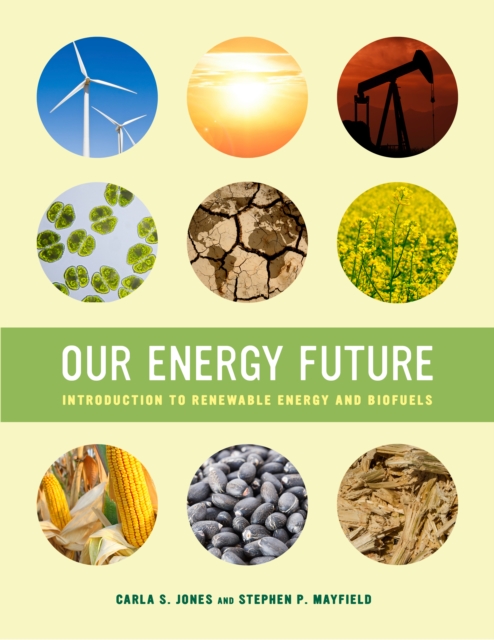
Our energy future
Our Energy Future is an introductory textbook for the study of energy production, alternative and renewable fuels, and ways to build a sustainable energy future. Jones and Mayfield explore the creation and history of fossil fuels, their impact on the environment, and how they have become critical to our society. The authors also outline how adopting sustainable biofuels will be key to the future of energy stability and discuss a number of renewable energy options and biofuel feedstocks that are replacements for petroleum-based products. Our society is consuming energy at an alarming rate, and the authors warn that continuing fuel-usage patterns could permanently damage the environment. This book emphasizes the importance of continued scientific, agricultural, and engineering development while it outlines the political and environmental challenges that will accompany a complete shift from fossil fuels to renewable energy and biomass. Our Energy Future is an accessible resource for undergraduate students studying biofuels and bioenergy.
eBook