
Catalogue Search | MBRL


Are you sure you want to remove the book from the shelf?

{{itemTitle}}
56
result(s) for
"Foster home care -- Japan"
Sort by:
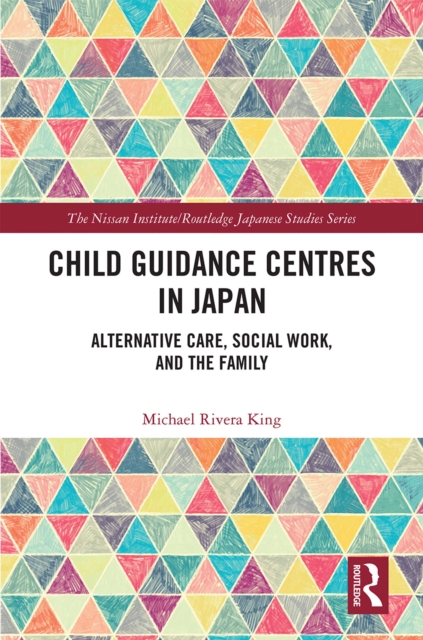
Child guidance centres in Japan : alternative care and the family
In contemporary Japan, 85% of children in alternative care remain housed in large welfare institutions, as opposed to family-based foster care. This publication examines how Japan has been isolated from global discourse on alternative care, urging a shift in social work and alternative care policies. As the first ethnographic account from inside child guidance centres, it makes a key contribution towards understanding the closed world of Japan's social services; including the decision-making processes by which a child is removed from the family and placed into care. In addition, regional variation in policy implementation for alternative care is outlined, with reference to detailed case studies and a discussion around organisational cultures of the child guidance centres. Where foster care is constructed as anything other than professional, it is often seen as a threat to the child's family-bond with their natal parent and therefore not used. Child Guidance Centres in Japan destabilises this construction of the family-bond as singular and discrete, highlighting new practices in alternative care.Child Guidance Centres in Japan: Alternative Care and the Family will be a vital resource for students, scholars of social work and Japanese studies, as well as practitioners and lobbyists involved in alternative care.
eBook

Child Guidance Centres in Japan
This book represents a Copernican change to our understanding of alternative care in Japan and answers the question of Japan's continued use of institutional care over foster care.
- Tsuzaki Tetsuo
In contemporary Japan, 85 per cent of children in alternative care remain housed in large welfare institutions, as opposed to family-based foster care. This publication examines how Japan has been isolated from the global discourse on alternative care, urging a shift in social work and alternative care policies.
As the first ethnographic account from inside child guidance centres, it makes a key contribution towards understanding the closed world of Japan's social services, including the decision-making processes by which a child is removed from the family and placed into care. In addition, regional variation in policy implementation for alternative care is outlined, with reference to detailed case studies and a discussion around organisational cultures of the child guidance centres. Where foster care is constructed as anything other than professional, it is often seen as a threat to the child's family-bond with their natal parent and therefore not used. Child Guidance Centres in Japan destabilises this construction of the family-bond as singular and discrete, highlighting new practices in alternative care.
Child Guidance Centres in Japan: Alternative Care, Social Work, and the Family will be a vital resource for students, scholars of social work and Japanese studies, as well as practitioners and lobbyists involved in alternative care.
eBook


Roles of attachment and self-esteem: impact of early life stress on depressive symptoms among Japanese institutionalized children
Background
Although exposure to early life stress is known to affect mental health, the underlying mechanisms of its impacts on depressive symptoms among institutionalized children and adolescents have been little studied.
Methods
To investigate the role of attachment and self-esteem in association with adverse childhood experiences (ACEs) and depressive symptoms, 342 children (149 boys, 193 girls; age range 9-18 years old, mean age = 13.5 ± 2.4) living in residential foster care facilities in Japan completed questionnaires related to internal working models, self-esteem, and depressive symptoms. Their care workers completed questionnaires on ACEs.
Results
Structural equation modeling (SEM) was created and the goodness of fit was examined (CMIN = 129.223, df = 1.360, GFI = .959, AGFI = .936, CFI = .939, RMSEA = .033). Maltreatment negatively predicted scores on secure attachment, but positively predicted scores on avoidant and ambivalent attachment. The secure attachment score negatively predicted depressive symptoms. The ambivalent attachment score positively predicted depressive symptoms both directly and through self-esteem, whereas the avoidant attachment score positively predicted depressive symptoms only directly. Maltreatment neither directly predicts self-esteem nor depressive symptoms, and parental illness/death and parental sociopathic behaviors did not predict any variables.
Conclusions
Results show that the adversity of child maltreatment affects depression through attachment styles and low self-esteem among institutionalized children. Implications of child maltreatment and recommendations for child welfare services and clinical interventions for institutionalized children are discussed.
Journal Article

Attachment Styles in Children Living in Alternative Care: A Systematic Review of the Literature
Background
A large number of children are currently living in Alternative Care. The relationship they establish with their temporary caregivers can play a significant role in their development. However, little has been published regarding attachment with
temporary Caregivers
.
Objective
The aim of this review is to analyse the existing published studies regarding attachment styles in children
living in alternative care
(Children’s Homes and Foster Care). The review analyses rates of attachment styles and associated factors (including characteristics of settings, children and caregivers) in both settings.
Methods
A systematic literature review was conducted searching electronic databases for peer reviewed publications in different languages. Studies considering attachment in children living in Children’s Homes or Foster families at the time of the study were included.
Results
Overall, 18 articles reporting 13 studies met the inclusion criteria. The results are presented in terms of characteristics of the studies, rates of attachment in different settings and possible mediating factors. Implications for practice and research are discussed.
Conclusions
Attachment styles in children living in alternative care differ from those observed in children living with biological or adoptive families, however several factors can mediate this outcome (including characteristics of settings, children and caregivers). Most research has been conducted in Europe and USA. Therefore, further research is needed in less developed countries in order to guide local policies for better care.
Journal Article

The Scenario of Adoption and Foster Care in Relation to the Reproductive Medicine Practice in Asia
In vitro fertilization (IVF) is a hallmark of reproductive medicine. However, the inconclusive outcome leads to marital disharmonies; thus, the choices of gamete donation and surrogacy (GD/S) are often offered. In restricted countries, the child-rearing choice through foster/adoption care is promising, but the uptake remains low. We explore the current reproductive services and adoption scenarios in Asian countries to delineate this issue. The web and literature search using PubMed and Ichushi was conducted in Japanese and English using the keywords “adoption”, “foster care”, “reproductive medicine”, including the interview with the respective Asian clinicians. We found that an established adoption system was seen in China, Malaysia, and the Philippines, mainly due to the restriction of GD/S. Although GD/S were allowed in Thailand, Singapore, and India, the different local affordability of IVF cost led to various adoption system scenarios. Nevertheless, the country’s economic aspect does influence the establishment of adoption care, mainly due to financial support from local government. Otherwise, the significant barrier was the cultural/religious background leading to low adoption rates. We concluded that the adoption option should always be highlighted as an alternative strategy as it synergistically contributes to children’s and infertile couples’ welfare.
Journal Article

Coming To Look Alike
Abstract In contemporary Japan, non-biological family ties are not easily legible as kinship. This article examines how parents of adopted and fostered children in Japan mobilize material similarity to represent their kinship relationships as existing objectively in the world, untainted by socially suspect desires. Material resemblance is taken up as a semiotic framework through which people self-reflexively interpret the signs that are understood as relatedness, what I call ‘kinship technologies’. Focusing on two local categories used to conceptualize non-biological kinship (kizuna and en), this article explores how long-lasting relational ties are embodied through caring proximity and physical similarity. However, difference always lingers within similarity: the borderlines between family and non-family; made connections or inherent, ineffable ties; and observable markers of otherness, such as race and ethnicity.
Journal Article

The Experiences and Perspectives of Japanese Substitute Caregivers and Maltreated Children: A Cultural-Developmental Approach to Child Welfare Practice
This article describes the experiences and perspectives of child welfare workers and maltreated children living in Japanese state care. Japanese adults emphasize supporting children's emotional well-being and empowerment through developmentally and ecologically focused socialization strategies. One developmental goal articulated by caregivers of maltreated children has been for them to create their Ibasho—that is, a place where they feel peace, security, acceptance, and belonging. Adults support children's Ibasho creation, in part, through the socialization practice of mimamori—that is, watching over others as a protective figure. Through mimamori, adults may create an accepting and positive social-emotional context that provides children with opportunities for exploration, self-expression, and peer relationships, which are important for Ibasho creation. Understanding of how maltreated children secure their Ibasho and what facilitates their Ibasho creation can provide insights into possible protective factors that may be incorporated into caregivers' daily practice with maltreated children, therapeutic interventions, and innovation in child welfare services as a whole. Understanding of culturally embedded beliefs and practices that may support the resilience and well-being of maltreated children allows social workers to reflect and step outside of that which they take for granted to consider how differently they may serve maltreated children in their own society.
Journal Article

Reform of the Japanese Foster Care System
Japan's Children's Charter (1951) states that \"all children shall be entitled to be brought up in their homes with proper love, knowledge, and skill. Those children not having homes shall be brought up in an environment having similar advantages.\" The country's Child Welfare Law provides for a foster care system and institutions for child care and protection following this criterion. Recent changes in the system are presented.
Journal Article
