
Catalogue Search | MBRL


Are you sure you want to remove the book from the shelf?

{{itemTitle}}
27
result(s) for
"Foundlings Fiction"
Sort by:

Silas Marner - The Play
This classic short novel gets a classic Mark Wheeller treatment. Ideal for students studying Edexcel GCSE English Literature to familiarise a class with the language of the novel and the story.
An adaptation of a George Eliot novel might seem something of a departure, but as the play contains only words used in the novel the production exhibits narrative characteristics of other Mark Wheeller plays. He has created a beautifully taut and compelling script with immense skill.
Karen Robson. Southern Daily Echo.
Silas Marner, a member of a strict religious community, is wrongly accused of theft and is forced to move to the faraway village of Raveloe.Arobberyat his new home leaves Marner without his hard earned gold and in the depths of depression.A mysterious, drug addictedwoman is later founddeadin the woods outside Marner's cottage.That same night he thinks his gold has returned… but it proves to be something very different…
Silas Marner was originally performed as a Promenade production. It offers opportunities for imaginative staging that has become the hallmark for all the best known Wheellerplays.
It will serve as a great 'read around the class' script in English lessons because of its narrative style.
eBook

Silas Marner
This classic short novel gets a classic Mark Wheeller treatment. An adaptation of a George Eliot novel might seem something of a departure, but as the play contains only words used in the novel the production exhibits narrative characteristics of other Mark Wheeller plays. He has created a beautifully taut and compelling script with immense skill. Karen Robson. Southern Daily Echo. Silas Marner, a member of a strict religious community, is wrongly accused of theft and is forced to move to the faraway village of Raveloe. A robbery at his new home leaves Marner without his hard earned gold and in the depths of depression. A mysterious, drug addicted woman is later found dead in the woods outside Marner's cottage. That same night he thinks his gold has returned... but it proves to be something very different... Silas Marner was originally performed as a Promenade production. It offers opportunities for imaginative staging that has become the hallmark for all the best known Wheellerplays. It will serve as a great read around the class script in English lessons because of its narrative style. The book is one of those allowed on various English GCSE Syllabi and is a set text for Edexcel GCSE English.
eBook

Wild boar in the cane field : a novel
\"One day, a baby girl, Tara, is found, abandoned and covered in flies. She is raised by two mothers in a community rife with rituals and superstition. As she grows, Tara pursues acceptance at all costs. Saffiya, her adoptive mother, and Bhaggan, Saffiya's maidservant, are victims of the men in their community, and the two women, in turn, struggle and live short but complicated lives. The only way for the villagers to find solace is through the rituals of ancient belief systems. Tara lives in a village that could be any village in South Asia, and she dies, like many young women in the area, during childbirth. Her short life is dedicated to her efforts to find happiness, despite the fact that she has no hope of going to school or making any life choices in the feudal, patriarchal world in which she finds herself. Poignant and compelling, Wild Boar in the Cane Field depicts the tragedy that often characterizes the lives of those who live in South Asia--and demonstrates the heroism we are all capable of even in the face of traumatic realities.\"--Publisher.
Book

Silas Marner
A man becomes a recluse when he's accused of a crime he did not commit Silas Marner is a skilled weaver working long hours in London for a Calvinist sect that does not appreciate him.When the congregation's funds are stolen, Silas is framed for the theft and excommunicated.
eBook

The great wave
A Japanese couple adopts a boy found in a giant wave who does not grow, in a story inspired by Hokusai's \"The Great Wave Off Kanegawa\" and featuring information on the artist and his work on the back lining papers.
Book

Silas Marner
A man becomes a recluse when he's accused of a crime he did not commit
Silas Marner is a skilled weaver working long hours in London for a Calvinist sect that does not appreciate him. When the congregation's funds are stolen, Silas is framed for the theft and excommunicated. Presumed guilty, abandoned by the love of his life, evicted from his modest home, and humiliated by the men he called his brothers, Silas wanders north to a small village in England's bucolic countryside. Forsaking contact with humanity, he throws himself into his work, caring for little other than the constant movement of his hands and the stack of money he is slowly amassing. But fate sees it fit that Silas should lose his newfound wealth and gain the companionship of a young orphan, an experience that proves more valuable than any currency.
This ebook has been professionally proofread to ensure accuracy and readability on all devices.
\"I think Silas Marner holds a higher place than any of the author's works. It is more nearly a masterpiece; it has more of that simple, rounded, consummate aspect which marks a classical work.\" —Henry James
eBook

The Beginning Woods
Scientists have been striving to explain why adults started suddenly vanishing, but Max, a strange foundling, may discover the answers in the Beginning Woods where he goes to seek his Forever Parents.
Book

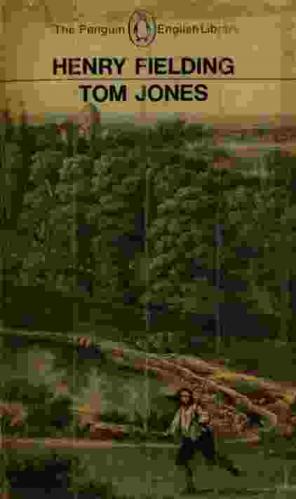
The real history of Tom Jones
The Real History of Tom Jones revivifies historical materials from which Henry Fielding constructed the greatest comic novel of the eighteenth century. This study recovers and explores the contexts necessary to understand Fielding's subtle art, such as the bloody conflict for the throne between Stuarts and Hanoverians, a contradictory class system, game laws that both protected and flouted individual property rights, and a justice system that proclaimed hanging for many crimes but let most criminals go. Drawing on evidence such as the peculiar appearance of eighteenth-century money, the fraudulent autobiography of a gypsy king, and a magical prayer book illustration, the book offers new readings of both Tom Jones and the political and legal landscape of Georgian England.
eBook