
Catalogue Search | MBRL


Are you sure you want to remove the book from the shelf?

{{itemTitle}}
2,964
result(s) for
"Fowling"
Sort by:
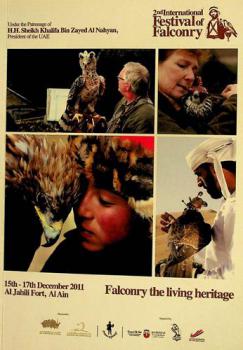


Rough Edges, Meticulous Attention
According to the British Museum, a team of artists created the images, initially sketching outlines for each scene, then adding details, using for pigments a range of natural materials, including soot and various ground stones and minerals. According to the Centers for Disease Control and Prevention, “Scientists estimate that more than 6 out of every 10 known infectious diseases in people can be spread from animals, and 3 out of every 4 new or emerging infectious diseases in people come from animals.” The story of Nebamun’s tomb chapel [cited 2024 Oct 25]. https://www.britishmuseum.org/collection/galleries/egyptian-life-and-death#nebamuns-story British Museum.
Journal Article

The persistent problem of lead poisoning in birds from ammunition and fishing tackle
Lead (Pb) is a metabolic poison that can negatively influence biological processes, leading to illness and mortality across a large spectrum of North American avifauna (>120 species) and other organisms. Pb poisoning can result from numerous sources, including ingestion of bullet fragments and shot pellets left in animal carcasses, spent ammunition left in the field, lost fishing tackle, Pb-based paints, large-scale mining, and Pb smelting activities. Although Pb shot has been banned for waterfowl hunting in the United States (since 1991) and Canada (since 1999), Pb exposure remains a problem for many avian species. Despite a large body of scientific literature on exposure to Pb and its toxicological effects on birds, controversy still exists regarding its impacts at a population level. We explore these issues and highlight areas in need of investigation: (1) variation in sensitivity to Pb exposure among bird species; (2) spatial extent and sources of Pb contamination in habitats in relation to bird exposure in those same locations; and (3) interactions between avian Pb exposure and other landscape-level stressors that synergistically affect bird demography. We explore multiple paths taken to reduce Pb exposure in birds that (1) recognize common ground among a range of affected interests; (2) have been applied at local to national scales; and (3) engage governmental agencies, interest groups, and professional societies to communicate the impacts of Pb ammunition and fishing tackle, and to describe approaches for reducing their availability to birds. As they have in previous times, users of fish and wildlife will play a key role in resolving the Pb poisoning issue.
Journal Article

The \Fire Stick Farming\ Hypothesis: Australian Aboriginal Foraging Strategies, Biodiversity, and Anthropogenic Fire Mosaics
Aboriginal burning in Australia has long been assumed to be a \"resource management\" strategy, but no quantitative tests of this hypothesis have ever been conducted. We combine ethnographic observations of contemporary Aboriginal hunting and burning with satellite image analysis of anthropogenic and natural landscape structure to demonstrate the processes through which Aboriginal burning shapes arid-zone vegetational diversity. Anthropogenic landscapes contain a greater diversity of successional stages than landscapes under a lightning fire regime, and differences are of scale, not of kind. Landscape scale is directly linked to foraging for small, burrowed prey (monitor lizards), which is a specialty of Aboriginal women. The maintenance of small-scale habitat mosaics increases small-animal hunting productivity. These results have implications for understanding the unique biodiversity of the Australian continent, through time and space. In particular, anthropogenic influences on the habitat structure of paleolandscapes are likely to be spatially localized and linked to less mobile, \"broad-spectrum\" foraging economies.
Journal Article

Multilevel Learning in the Adaptive Management of Waterfowl Harvests: 20 Years and Counting
In 1995, the U.S. Fish and Wildlife Service implemented an adaptive harvest management program (AHM) for the sport harvest of midcontinent mallards (Anas platyrhynchos). The program has been successful in reducing long-standing contentiousness in the regulatory process, while integrating science and policy in a coherent, rigorous, and transparent fashion. After 20 years, much has been learned about the relationship among waterfowl populations, their environment, and hunting regulations, with each increment of learning contributing to better management decisions. At the same time, however, much has been changing in the social, institutional, and environmental arenas that provide context for the AHM process. Declines in hunter numbers, competition from more pressing conservation issues, and global-change processes are increasingly challenging waterfowl managers to faithfully reflect the needs and desires of stakeholders, to account for an increasing number of institutional constraints, and to (probabilistically) predict the consequences of regulatory policy in a changing environment. We review the lessons learned from the AHM process so far, and describe emerging challenges and ways in which they may be addressed. We conclude that the practice of AHM has greatly increased an awareness of the roles of social values, trade-offs, and attitudes toward risk in regulatory decision-making. Nevertheless, going forward the waterfowl management community will need to focus not only on the relationships among habitat, harvest, and waterfowl populations, but on the ways in which society values waterfowl and how those values can change over time.
Journal Article

Partner choice creates competitive altruism in humans
Reciprocal altruism has been the backbone of research on the evolution of altruistic behaviour towards non-kin, but recent research has begun to apply costly signalling theory to this problem. In addition to signalling resources or abilities, public generosity could function as a costly signal of cooperative intent, benefiting altruists in terms of (i) better access to cooperative relationships and (ii) greater cooperation within those relationships. When future interaction partners can choose with whom they wish to interact, this could lead to competition to be more generous than others. Little empirical work has tested for the possible existence of this 'competitive altruism'. Using a cooperative monetary game with and without opportunities for partner choice and signalling cooperative intent, we show here that people actively compete to be more generous than others when they can benefit from being chosen for cooperative partnerships, and the most generous people are correspondingly chosen more often as cooperative partners. We also found evidence for increased scepticism of altruistic signals when the potential reputational benefits for dishonest signalling were high. Thus, this work supports the hypothesis that public generosity can be a signal of cooperative intent, which people sometimes 'fake' when conditions permit it.
Journal Article

Responses of birds to observers holding popguns: Hunting history influences escape behavior of urban birds
Abstract
Human activities affect bird behavior both directly and indirectly. Birds constantly regulate their behavior in response to human disturbance. Gun hunting, a major directional disturbance, puts enormous selection pressure on birds. In China, gun bans have been in place for nearly 30 years, and little hunting using guns occurs in modern cities. However, little attention has been paid to whether a history of hunting still affects the behavioral adaptations of urban birds. In this study, we compared the flight initiation distance (FID) of the Eurasian tree sparrow Passer montanus, Azure-winged magpie Cyanopica cyanus, Common hoopoe Upupa epops and Eurasian magpie Pica pica in the presence of observers with or without popguns. The Eurasian tree sparrow, Azure-winged magpie, and Eurasian magpie effectively recognized the difference between the observers, and perceived the armed observer as a greater threat, exhibiting earlier escape behavior, but this phenomenon was not found in the Common hoopoe. The different expressions in FID of experimental bird species in China cities may be affected by the different levels of recognition of hunting pressure due to different hunting histories.
Journal Article

Evidence for a fundamental and pervasive shift away from nature-based recreation
After 50 years of steady increase, per capita visits to U.S. National Parks have declined since 1987. To evaluate whether we are seeing a fundamental shift away from people's interest in nature, we tested for similar longitudinal declines in 16 time series representing four classes of nature participation variables: (i) visitation to various types of public lands in the U.S. and National Parks in Japan and Spain, (ii) number of various types of U.S. game licenses issued, (iii) indicators of time spent camping, and (iv) indicators of time spent backpacking or hiking. The four variables with the greatest per capita participation were visits to Japanese National Parks, U.S. State Parks, U.S. National Parks, and U.S. National Forests, with an average individual participating 0.74-2.75 times per year. All four time series are in downtrends, with linear regressions showing ongoing losses of -1.0% to -3.1% per year. The longest and most complete time series tested suggest that typical declines in per capita nature recreation began between 1981 and 1991, are proceeding at rates of -1.0% to -1.3% per year, and total to date -18% to -25%. Spearman correlation analyses were performed on untransformed time series and on transformed percentage year-to-year changes. Results showed very highly significant correlations between many of the highest per capita participation variables in both untransformed and in difference models, further corroborating the general downtrend in nature recreation. In conclusion, all major lines of evidence point to an ongoing and fundamental shift away from nature-based recreation.
Journal Article