
Catalogue Search | MBRL


Are you sure you want to remove the book from the shelf?

{{itemTitle}}
25
result(s) for
"Frame, Janet Criticism and interpretation."
Sort by:


Janet Frame's World of Books
This study investigates how Janet Frame weaves together literary sources from her extensive reading to create a web of intertextual relationships.Patricia Neville traces Frames passion for books beginning with her childhood and earliest published work in the Otago Daily Times.
eBook

Janet Frame
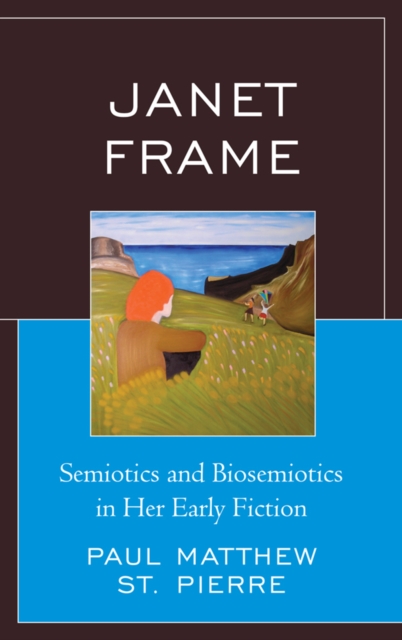
In Janet Frame: Semiotics and Biosemiotics in Her Early Fiction, Paul Matthew St. Pierre exploits the linguistic discipline of semiotics and the neurobiological discipline of biosemiotics to propose an original and dynamic reading of the first four works of fiction by New Zealand writer Janet Frame (1924-2004): The Lagoon: Stories (1951), Owls Do Cry (1957), Faces in the Water (1961), and The Edge of the Alphabet (1962). Opposing the prevailing reading of Frame's early fiction as autobiographical, deriving from her medical history, he argues her books are singular evocations of her astonishing imagination. His purpose is to fix this historical record and provide an alternative model for interpreting one of the 20th century's most stylistically demanding and rewarding writers. Semiotics and biosemiotics are his means for unlocking the early fiction and her later works to a polemical analysis focusing on language, sign transmissions, writing the body, and the biosemiotic self. In The Lagoon, Owls Do Cry, Faces in the Water, and The Edge of the Alphabet Frame produced what St. Pierre interprets as an original semiotic and biosemiotic modeling system that she applied throughout her oeuvre of twenty books, comprising eight story collections, seven novels, a book of poetry, a children's novel, and three volumes of autobiography. Using this modeling system, she designed her fiction as a visual verbal field consisting of still and moving images generated in the imagination, located in the brains and central nervous systems of her narrators, characters, and readers, and, primarily, of the author herself. The author discusses the significations of: 1) Frame's image-signs in water, glass, photographs, film, membranes, skin, and clothing; 2) her primary sign repertoire of objects, language, and human persons in the figures of blood, skin, and sun; 3) her body-signs, including those generated in the circulatory and neurological systems of all human organisms as biosemiotic living s
eBook

Secular visionaries : aestheticism and New Zealand short fiction in the twentieth century
This retrospective study examines short fiction in the context of stylistic tradition in New Zealand's literary history. By exploring the extent to which the major exponents of twentieth-century short fiction extend the traditions of realism and impressionism as initiated by Katherine Mansfield and Frank Sargeson, this study embraces the stylistic diversity of twentieth-century New Zealand short fiction in both Pakeha and Mهaori traditions.
Book
Dangerous Writing
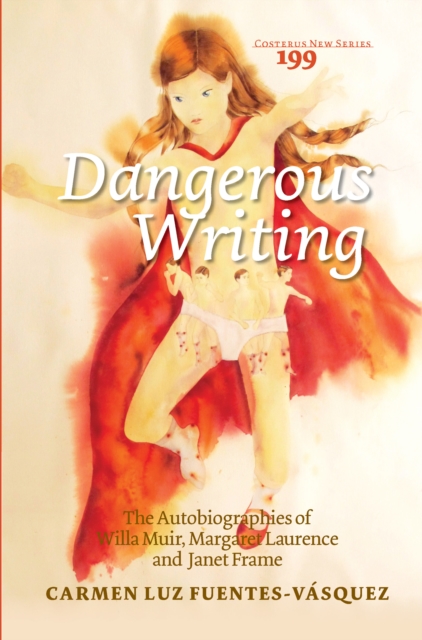
This book examines the literary construction of personal identity through autobiographical narratives by three significant writers analysed together for the first time: the Scottish Willa Muir (1890-1970), the Canadian Margaret Laurence (1926-1987), and the New Zealander Janet Frame (1924-2004). These apparently dissimilar authors suffered not only geographical, but also political marginality: they were women from the working-class or struggling middle-class, striving to be considered as professional writers, and emerging from countries that might be felt to be under the shadows of economic and political world powers such as England and the United States. During their lifetimes, they exerted themselves to overcome prejudices about class, gender and ethnicity. They experienced war and the post-war era, and lived through most of the twentieth century, being accurate witnesses and critics of their times. As it discusses major writers who are iconic for the development of the literatures of their respective countries, this book also attracts readers who are interested in learning more about the lives of these remarkable women, the way their socio-historical and geographical circumstances affected their writing and how they expressed such concerns in their autobiographies and other fictional and non-fictional works, besides considering them in relation to contemporary women writers --and autobiographers-- who underwent similar experiences.
eBook


“How can Life be still?”: Teaching Janet Frame’s A State of Siege and Virginia Woolf’s To the Lighthouse
Janet Frame's A State of Siege was published in 1966. In both style and theme, the novel was ahead of its time. Its style remains a challenge to today's students, and the feminist overtones of Frame's tale, dealing as it does with a middle-aged woman breaking free of family and job to pursue her art, might at first glance seem dated to a generation in which women have seemingly made such gains in opportunities in education and career. The novel would work in many classes from Women in Literature, to the Female Gothic, New Zealand Literature, and Modernism. Here, McQuail compares Frame's novel with Virginia Woolf's To the Lighthouse and other works, including films, to provide resources that may prove helpful in teaching a range of classes.
Journal Article
Returned Soldiers in Owls Do Cry, A State of Siege, and The Carpathians: Janet Frame’s Subversive Representations
Returned soldiers and victims of war appear in all of Janet Frame's longer fictional works. War, and themes relating to war in Frame's fiction, has been discussed by several critics, including Patrick Evans (see, for example, \"'They Kill on Wednesdays': Janet Frame, Modernity and the Holocaust\"); however, the pervasiveness of soldier characters in Frame's fiction has not previously been addressed. Frame's writing is haunted by the emotional debris of war, often personified by a character whose postwar life is an epilogue to his war past - and in writing her soldier characters in such a fashion, Frame is, at some points tacitly, at others overtly, writing against the glorification of war and its associated mix of sentimental and heroic masculinity. In a reading of three of these novels, this article discusses some of Frame's returned soldier characters, explores how these soldiers are represented, and addresses their significance in her writing. 'Owls Do Cry' (1957), 'A State of Siege' (1966), and 'The Carpathians' (1988) present the stories of soldiers who have experienced combat in either the First or the Second World War. Unlike in some of Frame's other novels, which have the returned soldier as a central character (see, for example, 'Intensive Care' [1970]), the soldiers I discuss in this article are comparatively minor characters; my contention is, however, that the presence of the soldiers highlights Frame's ongoing, underlying concern to problematize the role of war in New Zealand's public memory and private lives. In the novels addressed, particularly 'The Carpathians', the soldier character is situated in the position of victim, even outcast, a position typically occupied in Frame's fiction by characters who live liminal existences that challenge dominant gender roles and class expectations. Such positioning of these characters suggests that Frame regards the experience of combat as one that isolates the soldier when he returns, rather than one that inspires in him a sense of comradeship and national pride.
Journal Article

The Ethics of the Melancholic Witness: Janet Frame and W.G. Sebald
In the case of Sebald, his unusual prose style, which interweaves the conventions of multiple genres, including autobiography, has attracted interpretations of his works that are filtered through a biographical lens. [...]for Peter Morgan, Sebald's eerie prose constitutes the melancholic response of its author, an \"exemplary West German, for whose existence Auschwitz is the central defining event\" (92). According to Freud, the mourner moves from grief to a position of accepting loss, whereas the melancholic, in contrast, exhibits a form of pathological and prolonged mourning.
Journal Article