
Catalogue Search | MBRL


Are you sure you want to remove the book from the shelf?

{{itemTitle}}
136
result(s) for
"France -- Politics and government -- 19th century"
Sort by:


Friendship and Politics in Post-Revolutionary France
In Friendship and Politics in Post-Revolutionary France, Sarah Horowitz brings together the political and cultural history of post-revolutionary France to illuminate how French society responded to and recovered from the upheaval of the French Revolution. The Revolution led to a heightened sense of distrust and divided the nation along ideological lines. In the wake of the Terror, many began to express concerns about the atomization of French society. Friendship, though, was regarded as one bond that could restore trust and cohesion. Friends relied on each other to serve as confidantes and men and women described friendship as a site of both pleasure and connection. Because trust and cohesion were necessary to the functioning of post-revolutionary parliamentary life, politicians turned to friends and ideas about friendship to create this solidarity. Relying on detailed analyses of politicians’ social networks, new tools from arising from the digital humanities, and examinations of their behind-the-scenes political transactions, Horowitz makes clear the connection between politics and emotions in the early nineteenth century, and she reevaluates the role of women in political life by showing the ways in which the personal was the political in the post-revolutionary era.
eBook

Massacre : the life and death of the Paris Commune
\"The Paris Commune lasted for only 64 days in 1871, but during that short time it gave rise to some of the grandest political dreams of the nineteenth century--before culminating in horrific violence. Following the disastrous French defeat in the Franco-Prussian War, hungry and politically disenchanted Parisians took up arms against their government in the name of a more just society. They expelled loyalists and soldiers and erected barricades in the streets. In Massacre, John Merriman introduces a cast of inimitable Communards--from les petroleuses (female incendiaries) to the painter Gustave Courbet--whose idealism fueled a revolution. And he vividly recreates the Commune's chaotic and bloody end when 30,000 troops stormed the city, burning half of Paris and executing captured Communards en masse. A stirring evocation of the spring when Paris was ablaze with cannon fire and its citizens were their own masters, Massacre reveals how the indomitable spirit of the Commune shook the very foundations of Europe\"-- Provided by publisher.
Book
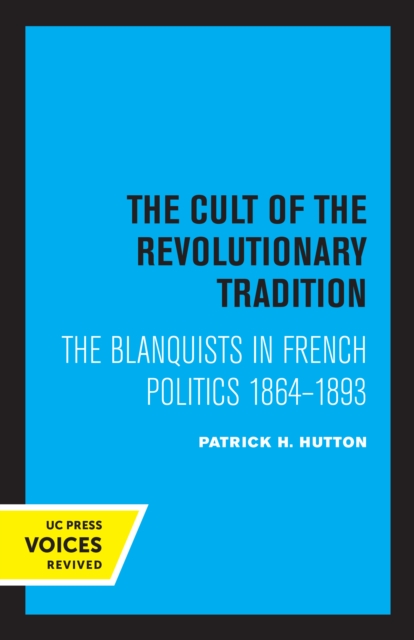
The Cult of the Revolutionary Tradition
This pathbreaking study deals with the thought and activities of the disciples of the renowned revolutionary, Auguste Blanqui, from the later years of the French Second Empire (1860s) through the crisis attending the political campaign of General Boulanger (1880s). It explores the mythological significance of Blanqui for the French Lef, the atheist thoughts of the Blanquists as the foundation of their revolutionary politics, the role of the Blanquists in the Paris Commune of 1871, the relationship between Blanquist and Marxist ideologies, and the influence of the Blanquists as promoters of the cult of the Revolutionary tradition in the early years of the Third Republic. The Cult of the Revolutionary Tradition is the first comprehensive study of the Blanquists to appear in French or English. It is also the first to treat seriously the impact of the legend of Blanqui upon his followers and admirers. In tracing their changing conception of the revolutionary cause--from its sources in the radical thought of a Parisian youth movement to its perversion in the proto-fascist doctrine of some aging Blanquists employed myth and ritual to popularize their ideas, and how in the end their efforts to do so transformed their revolutionary party into a conservative sect. Hutton takes issue with the standard interpretation of the Blanquists as unreflective precursors of the Marxists. Far from contributing to Marxist Socialsim, he contends, the Blanquists began with different theoretical assumption and developed a different model of revolution. In describing the antagonisms between Blanquists, guardians of the French Revolutionary tradition, and Marxists, apostles of a new Socialism, the author reveals the obstacles which stood in the way of a unified revolutionary movement in the Third Republic, and sheds light on the ideological divisions which have plagued the
French Left ever since. The study raises issue which transcend the French revolutionary experience. In analyzing the Blanquists's conception of revolution as an ultimate concern, it underscores the parallels between religious and revolutionary consciousness. Through the investigation of the myths and rituals of Blanquist revolutionary practice, it offers some observations on the nature of the revolutionary mentality and some perspective upon the phenomenon of revolution in general. This title is part of UC Press's Voices Revived program, which commemorates University of California Press's mission to seek out and cultivate the brightest minds and give them voice, reach, and impact. Drawing on a backlist dating to 1893, Voices Revived makes high-quality, peer-reviewed scholarship accessible once again using print-on-demand technology. This title was originally published in 1981. Many titles in the Voices Revived program are also newly available as ebooks, offered at a discounted price to support wider access to scholarly work.
eBook


The Modernity of Others
The most prominent story of nineteenth-century German and French Jewry has focused on Jewish adoption of liberal middle-class values. The Modernity of Others points to an equally powerful but largely unexplored aspect of modern Jewish history: the extent to which German and French Jews sought to become modern by criticizing the anti-modern positions of the Catholic Church. Drawing attention to the pervasiveness of anti-Catholic anticlericalism among Jewish thinkers and activists from the late eighteenth to the early twentieth century, the book turns the master narrative of Western and Central European Jewish history on its head. From the moment in which Jews began to enter the fray of modern European politics, they found that Catholicism served as a convenient foil that helped them define what it meant to be a good citizen, to practice a respectable religion, and to have a healthy family life. Throughout the long nineteenth century, myriad Jewish intellectuals, politicians, and activists employed anti-Catholic tropes wherever questions of political and national belonging were at stake: in theoretical treatises, parliamentary speeches, newspaper debates, the founding moments of the Reform movement, and campaigns against antisemitism.
eBook

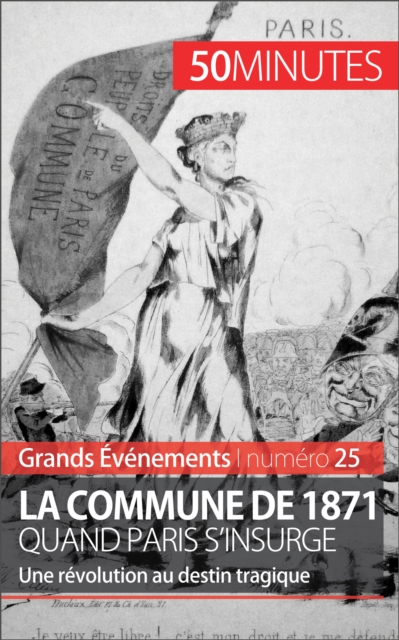
La Commune de 1871, quand Paris s'insurge
Découvrez enfin tout ce qu'il faut savoir sur la Commune de Paris en moins d'une heure! Entre 1789 et 1871, la France connaît de nombreux soubresauts politiques. Entre révolutions, tentatives républicaines, restauration de la monarchie et prestige impérial, elle n'a pas eu un instant de répit. En 1870, sa cuisante défaite contre la Prusse attise à nouveau la colère du peuple. Du 18 mars au 28 mai 1871, un dernier soulèvement secoue Paris et aboutit à la constitution d'une Commune autonome. Rapidement, des premières mesures sont prises pour rétablir la liberté de la presse, instaurer la laïcité, rendre l'enseignement obligatoire... Mais la répression ne se fait pas attendre et la Commune finit par s'éteindre dans le feu et le sang. Ce livre vous permettra d'en savoir plus sur: •Le contexte de l'époque •Les acteurs principaux •La Commune •Ses répercussions Le mot de l'éditeur: « Dans ce numéro de la collection 50MINUTES | Grands Événements, Mélanie Mettra nous fait découvrir le dernier soulèvement parisien dans la lignée de ceux qui ont jalonné l'histoire révolutionnaire. Bien décidés à se battre pour leur liberté, les Parisiens se soulèvent contre le gouvernement de Versailles et s'érigent en Commune autonome. Si l'espoir est grand du côté des C-communards, l'événement connaît une issue tragique et meurtrière. » Stéphanie Dagrain À PROPOS DE LA SÉRIE 50MINUTES | Grands Événements La série « Grands Événements » de la collection « 50MINUTES » aborde plus de cinquante faits qui ont bouleversé notre histoire. Chaque livre a été pensé pour les lecteurs curieux qui veulent tout savoir sur un sujet précis, tout en allant à l'essentiel, et ce en moins d'une heure. Nos auteurs combinent les faits, les analyses et les nouvelles perspectives pour rendre accessibles des siècles d'histoire.
eBook

The cult of the modern : trans-Mediterranean France and the construction of French modernity
\"The Cult of the Modern focuses on nineteenth-century France and Algeria and examines the role that ideas of modernity and modernization played in both national and colonial programs during the years of the Second Empire and the early Third Republic. Gavin Murray-Miller rethinks the subject by examining the idiomatic use of modernity in French cultural and political discourse. The Cult of the Modern argues that the modern French republic is a product of nineteenth-century colonialism rather than a creation of the Enlightenment or the French Revolution. This analysis contests the predominant Parisian and metropolitan contexts that have traditionally framed French modernity studies, noting the important role that colonial Algeria and the administration of Muslim subjects played in shaping understandings of modern identity and governance among nineteenth-century politicians and intellectuals. In synthesizing the narratives of continental France and colonial North Africa, Murray-Miller proposes a new framework for nineteenth-century French political and cultural history, bringing into sharp relief the diverse ways in which the French nation was imagined and represented throughout the country's turbulent postrevolutionary history, as well as the implications for prevailing understandings of France today\"-- Provided by publisher.
Book

Massacre
The Paris Commune lasted for only 64 days in 1871, but during that short time it gave rise to some of the grandest political dreams of the nineteenth century-before culminating in horrific violence. Following the disastrous French defeat in the Franco-Prussian War, hungry and politically disenchanted Parisians took up arms against their government in the name of a more just society. They expelled loyalists and soldiers and erected barricades in the streets. In Massacre, John Merriman introduces a cast of inimitable Communards-from les pétroleuses (female incendiaries) to the painter Gustave Courbet-whose idealism fueled a revolution. And he vividly recreates the Commune's chaotic and bloody end when 30,000 troops stormed the city, burning half of Paris and executing captured Communards en masse. A stirring evocation of the spring when Paris was ablaze with cannon fire and its citizens were their own masters, Massacre reveals how the indomitable spirit of the Commune shook the very foundations of Europe.
eBook