
Catalogue Search | MBRL


Are you sure you want to remove the book from the shelf?

{{itemTitle}}
80
result(s) for
"France Colonies Asia."
Sort by:


Imperial heights
Intended as a reminder of Europe for soldiers and clerks of the empire, the city of Dalat, located in the hills of Southern Vietnam, was built by the French in an alpine locale that reminded them of home. This book uncovers the strange 100-year history of a colonial city that was conceived as a center of power and has now become a kitsch tourist destination famed for its colonial villas, flower beds, pristine lakes, and pastoral landscapes. Eric T. Jennings finds that from its very beginning, Dalat embodied the paradoxes of colonialism—it was a city of leisure built on the backs of thousands of coolies, a supposed paragon of hygiene that offered only questionable protection from disease, and a new venture into ethnic relations that ultimately backfired. Jennings’ fascinating history opens a new window onto virtually all aspects of French Indochina, from architecture and urban planning to violence, labor, métissage, health and medicine, gender and ethic relations, schooling, religion, comportments, anxieties, and more.
eBook


Races on display : French representations of colonized peoples 1886-1940
While European commerce in race was substantial, the colonial trade in ideas of race was highly profitable as well. Looking at official propaganda and commercial representations in France during the Third Republic, this book explores the way the French increased the value of their racial identity at home at the expense of their colonized brothers and sisters. The French did not create the identity-effacing stereotypes of Africans, Arabs, and Indochinese. Instead they refined or remolded these images, and as they did so they redefined and remolded their images of themselves. Focusing on world's fairs, colonial expositions, and mundane manufacturers' trademarks, Races on Display shows not only the prevalence of racial stereotypes, but also how complex these representations prove to be.
eBook

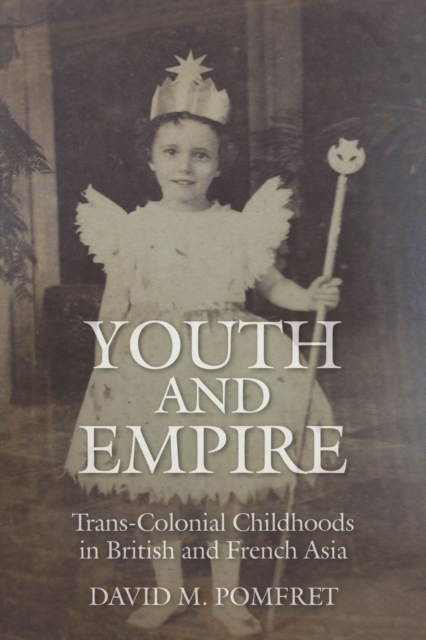
Youth and Empire
This is the first study of its kind to provide such a broadly comparative and in-depth analysis of children and empire.Youth and Empire brings to light new research and new interpretations on two relatively neglected fields of study: the history of imperialism in East and South East Asia and, more pointedly, the influence of childhood-and children's voices-on modern empires.
By utilizing a diverse range of unpublished source materials drawn from three different continents, David M. Pomfret examines the emergence of children and childhood as a central historical force in the global history of empire in the late nineteenth and twentieth centuries. This book is unusual in its scope, extending across the two empires of Britain and France and to points of intense impact in \"tropical\" places where indigenous, immigrant, and foreign cultures mixed: Hong Kong, Singapore, Saigon, and Hanoi. It thereby shows how childhood was crucial to definitions of race, and thus European authority, in these parts of the world. By examining the various contradictory and overlapping meanings of childhood in colonial Asia, Pomfret is able to provide new and often surprising readings of a set of problems that continue to trouble our contemporary world.
eBook

Embers of war : the fall of an empire and the making of America's Vietnam
A history of the four decades leading up to the Vietnam War offers insights into how the U.S. became involved, identifying commonalities between the campaigns of French and American forces while discussing relevant political factors.
Book

Reconstructing the invasion and the demographic history of the yellow-legged hornet, Vespa velutina, in Europe
The yellow-legged hornet, Vespa velutina, was accidentally introduced from Southeast Asia and then invaded France and Korea over the last 10 years. Since its introduction, its predation on honeybee colonies has rapidly become an economic problem in invaded countries. Using mitochondrial cytochrome C oxidase and 22 nuclear microsatellite loci, we showed that native hornet populations were well differentiated and highly diverse. In contrast, introduced populations from France and Korea suffered a genetic bottleneck, which did not prevent their rapid geographic expansion. Analysis of the genetic data indicates that French and Korean populations likely arose from two independent introduction events. The most probable source population is from an area between the Chinese provinces of Zhejiang and Jiangsu. This invasion route is in agreement with knowledge on trade and historical records. By studying colonies of V. velutina, we demonstrated its polyandry, which is very rare among Vespidae. This mating behavior could have favored the success of this Asian hornet in Europe and Korea. Combined, the population and colony results suggest that very few or possibly only one single multi-mated female gave rise to the invasion.
Journal Article

Environmental Imaginaries of the Middle East and North Africa
The landscapes of the Middle East have captured our imaginations throughout history. Images of endless golden dunes, camel caravans, isolated desert oases, and rivers lined with palm trees have often framed written and visual representations of the region. Embedded in these portrayals is the common belief that the environment, in most places, has been deforested and desertified by centuries of misuse. It is precisely such orientalist environmental imaginaries, increasingly undermined by contemporary ecological data, that the eleven authors in this volume question. This is the first volume to critically examine culturally constructed views of the environmental history of the Middle East and suggest that they have often benefitted elites at the expense of the ecologies and the peoples of the region. The contributors expose many of the questionable policies and practices born of these environmental imaginaries and related histories that have been utilized in the region since the colonial period. They further reveal how power, in the form of development programs, notions of nationalism, and hydrological maps, for instance, relates to environmental knowledge production. Contributors: Samer Alatout, Edmund Burke III, Shaul Cohen, Diana K. Davis, Jennifer L. Derr, Leila M. Harris, Alan Mikhail, Timothy Mitchell, Priya Satia, Jeannie Sowers, and George R. Trumbull IV
eBook
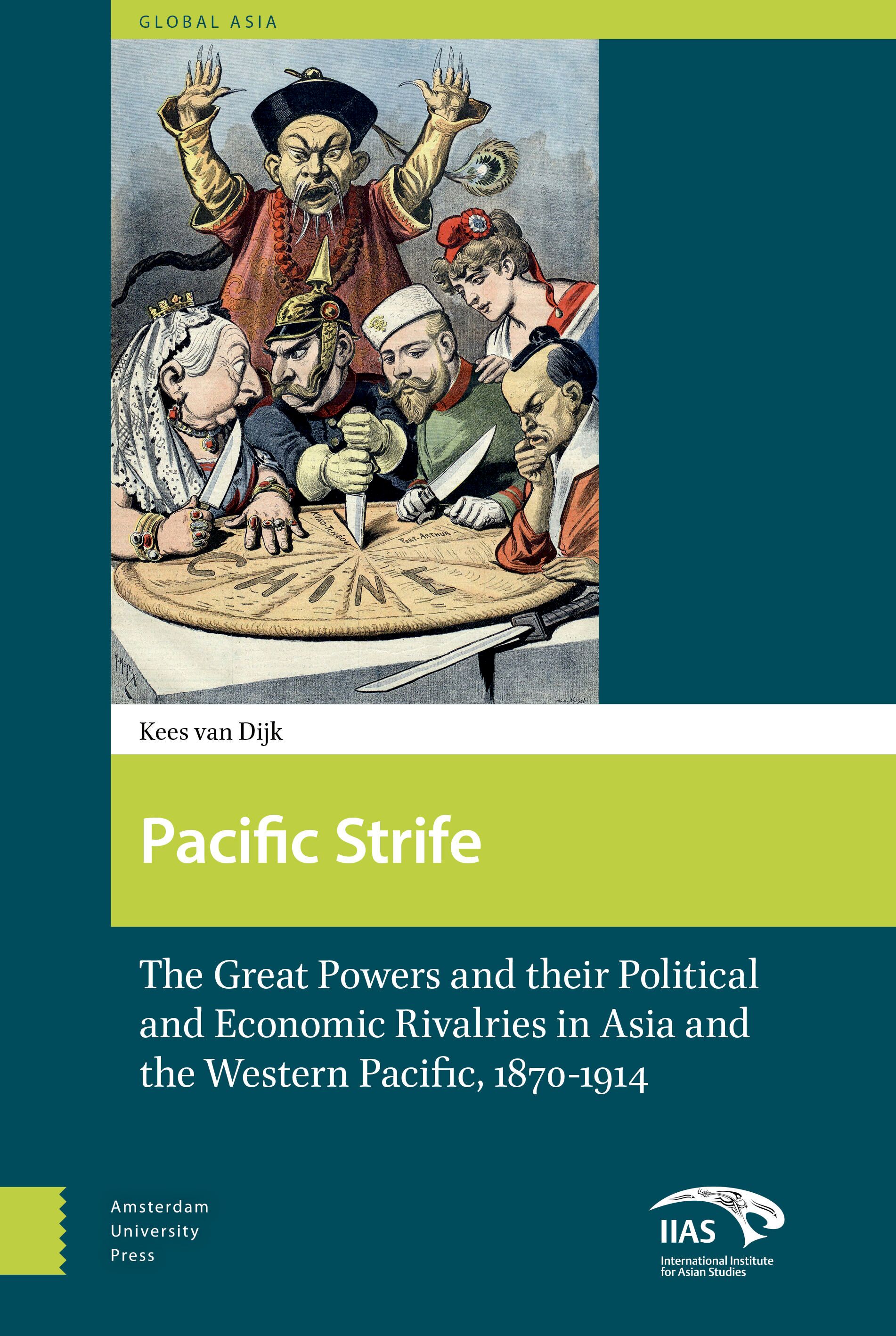
Pacific Strife
In the late 1800s and early 1900s, colonial powers clashed over much of Central and East Asia: Great Britain and Germany fought over New Guinea, the Bismarck Archipelago, Fiji, and Samoa; France and Great Britain competed over control of continental Southwest Asia; and the United States annexed the Philippines and Hawaii. Meanwhile, the possible disintegration of China and Japan’s growing nationalism added new dimensions to the rivalries. Surveying these and other international developments in the Pacific basin during the three decades preceding World War I, Kees van Dijk traces the emergence of superpowers during the colonial race and analyzes their conduct as they struggled for territory. Extensive in scope, Pacific Strife is a fascinating look at a volatile moment in history.
eBook