
Catalogue Search | MBRL


Are you sure you want to remove the book from the shelf?

{{itemTitle}}
32
result(s) for
"France Politics and government 1870-1940"
Sort by:

Beyond the Balance of Power
This is a major new study of French foreign and security policy before, during and after the First World War. Peter Jackson examines the interplay between two contending conceptions of security: the first based on traditional practices of power politics and the second on internationalist doctrines that emerged in the late nineteenth century. He pays particular attention to the social and political context in which security policy was made and to the cultural dynamics of the policy-making process. The result is a comprehensive reassessment of France's security policy in the era of the Great War. The book reconsiders the evolution of French war aims and reinterprets the peace policy of the Clemenceau government in 1919. It also provides a new perspective on the foreign policy of successive French governments in the early 1920s. It shows that internationalist ideas were far more influential over this entire period than is commonly understood.
eBook

Gilded youth : three lives in France's Belle âEpoque
In Gilded Youth, Kate Cambor paints a portrait of a generation lost in upheaval. While France weathered social unrest, violent crime, the birth of modern psychology, and the dawn of World War I, these three young adults (Lâeon Daudet, Jean-Baptiste Charcot, and Jeanne Hugo) experienced the disorientation of a generation forced to discover that the faith in science and progress that had sustained their fathers had failed them. --from publisher description
Book

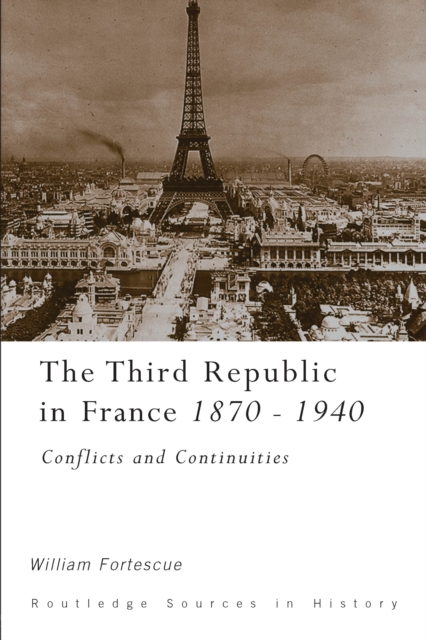
The Third Republic in France, 1870-1940: Conflicts and Continuities
An essential introduction to the major political problems, debates and conflicts which are central to the history of the Third Republic in France, from the Franco-Prussian War of 1870-71 to the fall of France in June 1940.It provides original sources, detailed commentary and helpful chronologies and bibliographies on topics including:* the emergence of the regime and the Paris Commune of 1871* Franco-German relations* anti-Semitism and the Dreyfus Affair* the role of women and the importance of the national birth-rate* the character of the French Right and of French fascism.
eBook

Post-imperial democracies : ideology and party formation in Third Republic France, Weimar Germany, and post-Soviet Russia
\"This book examines the causal impact of ideology through a comparative-historical analysis of three cases of \"post-imperial democracy\": the early Third Republic in France (1870-1886); the Weimar Republic in Germany (1918-1934); and post-Soviet Russia (1992-2008). Hanson argues that political ideologies are typically necessary for the mobilization of enduring, independent national party organizations in uncertain democracies. Clear and consistent ideologies can artificially elongate the temporal horizons of their adherents. By presenting an explicit and desirable picture of the political future, successful ideologues induce individuals to embrace a long-run strategy of cooperation with other converts. When enough new converts cooperate in this way, it enables sustained collective action to defend and extend party power. Successful party ideologies thus have the character of self-fulfilling prophecies: by portraying the future polity as one organized to serve the interests of those loyal to specific ideological principles, they help to bring political organizations centered on these principles into being\"-- Provided by publisher.
BOOK
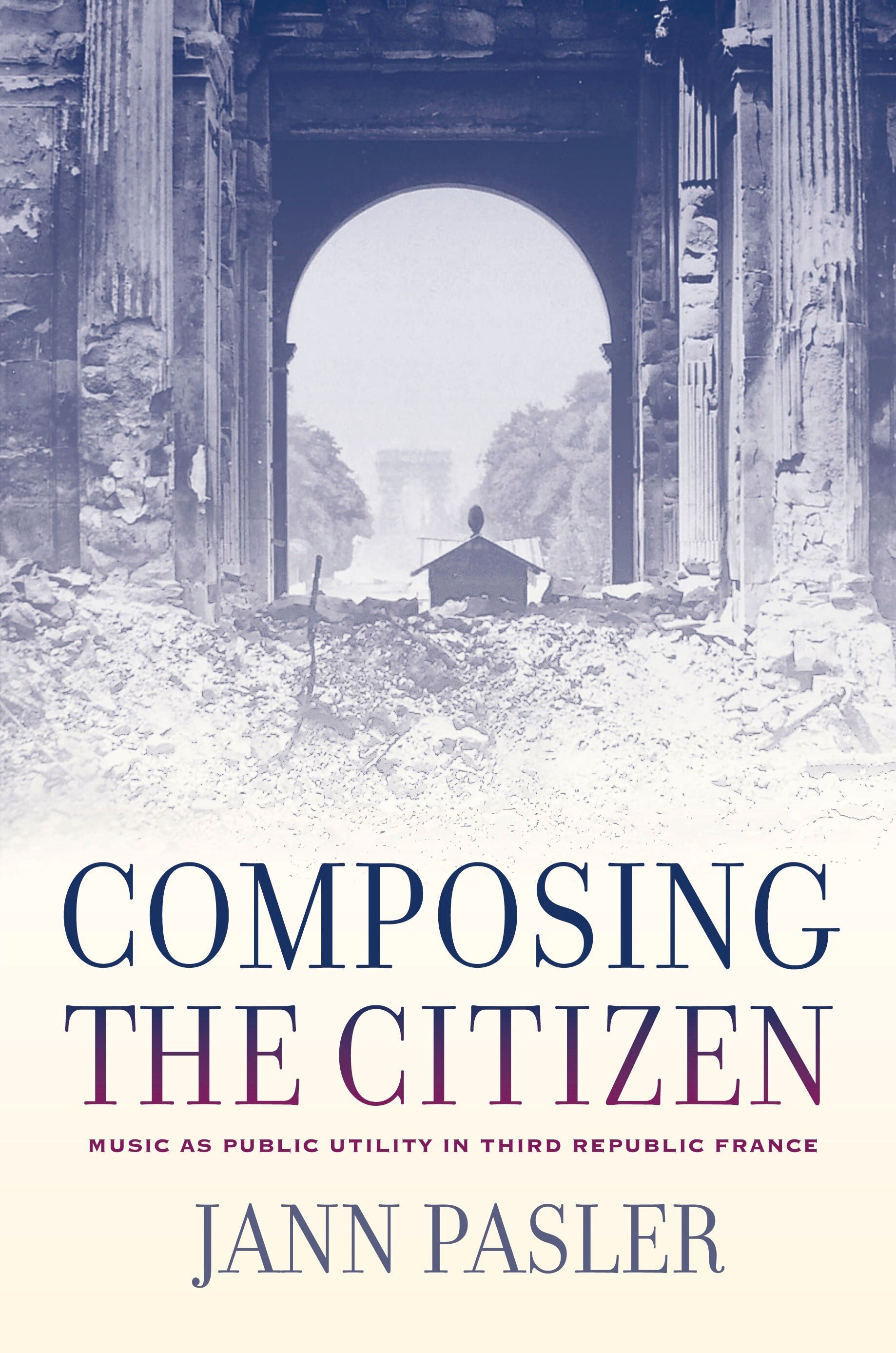
Composing the Citizen
In a book that challenges modernist ideas about the value and role of music in Western society, Composing the Citizen demonstrates how music can help forge a nation. Deftly exploring the history of Third Republic France, Jann Pasler shows how French people from all classes and political persuasions looked to music to revitalize the country after the turbulent crises of 1871. Embraced not as a luxury but for its \"public utility,\" music became an object of public policy as integral to modern life as power and water, a way to teach critical judgment and inspire national pride. It helped people to forget the past, voice conflicting aspirations, and imagine a shared future. Based on a dazzling survey of archival material, Pasler's rich interdisciplinary work looks beyond elites and the histories their agendas have dominated to open new windows onto the musical tastes and practices of amateurs as well as professionals. A fascinating history of the period emerges, one rooted in political realities and the productive tensions between the political and the aesthetic. Highly evocative and deeply humanistic, Composing the Citizen ignites broad debates about music's role in democracy and its meaning in our lives.
eBook

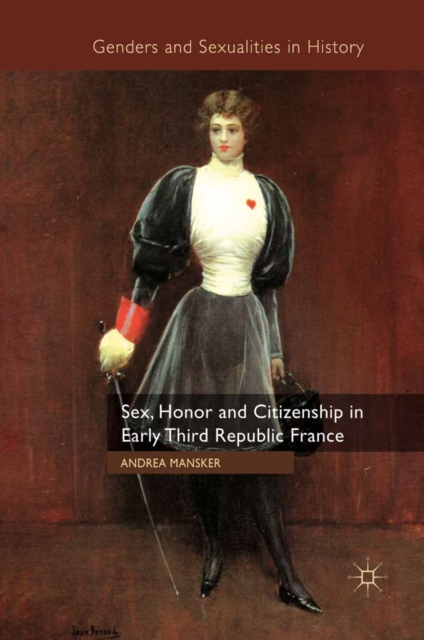
Sex, honor and citizenship in early Third Republic France
A repositioning of French women's struggle for suffrage within the distinct cultural landscape of the masculine honour system. Whether activists demanded admission to the popular ritual of the duel or publicly shamed men for their extramarital sexual behaviour, they appropriated extralegal honour codes to enact new civic and familial identities.
eBook