
Catalogue Search | MBRL


Are you sure you want to remove the book from the shelf?

{{itemTitle}}
7
result(s) for
"France. fast (OCoLC)fst01204289"
Sort by:

Africa's Last Colonial Currency
Colonialism persists in many African countries due to the continuation of imperial monetary policy. This is the little-known account of the CFA Franc and economic imperialism. The CFA Franc was created in 1945, binding fourteen African states and split into two monetary zones. Why did French colonial authorities create it and how does it work? Why was independence not extended to monetary sovereignty for former French colonies? Through an exploration of the genesis of the currency and an examination of how the economic system works, the authors seek to answer these questions and more. As protests against the colonial currency grow, the need for myth-busting on the CFA Franc is vital and this exposé of colonial infrastructure proves that decolonisation is unfinished business.
eBook
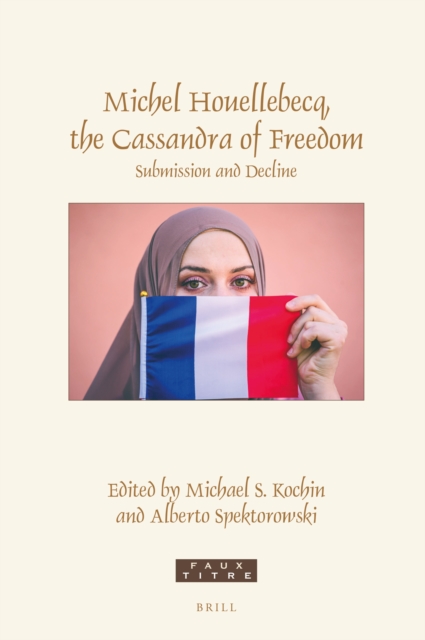
Michel Houellebecq, the Cassandra of freedom : submission and decline
When fiction and reality meet: Probably no contemporary novel has shaped reality as powerfully Houellebeck's Submission. No previous analysis of Submission is as deep and encompassing as this volume written by experts on politics and literature.
eBook

Muslims and Citizens
A groundbreaking study of the role of Muslims in eighteenth†'century France From the beginning, French revolutionaries imagined their transformation as a universal one that must include Muslims, Europe's most immediate neighbors. They believed in a world in which Muslims could and would be French citizens, but they disagreed violently about how to implement their visions of universalism and accommodate religious and social difference. Muslims, too, saw an opportunity, particularly as European powers turned against the new French Republic, leaving the Muslim polities of the Middle East and North Africa as France's only friends in the region. InMuslims and Citizens, Coller examines how Muslims came to participate in the political struggles of the revolution and how revolutionaries used Muslims in France and beyond as a test case for their ideals. In his final chapter, Coller reveals how the French Revolution's fascination with the Muslim world paved the way to Napoleon's disastrous invasion of Egypt in 1798.
eBook
The algerian war in French-language comics
The decolonization of Algeria represents a turning point in world history, marking the end of France's colonial empire, the birth of the Algerian republic, and the appearance of the Third World and pan-Arabism.Algeria emerged from colonial domination to negotiate the release of American hostages in Iran during the Carter administration.
eBook

The National Habitus
Stories about border crossers, illegal aliens, refugees that regularly appear in the press everywhere point to the crucial role national identity plays in human beings' lives today. The National Habitus seeks to understand how and why national belonging became so central to a person's identity and sense of identity. Centered on the acquisition of the national habitus, the process that transforms subjects into citizens when a state becomes a nation-state, the book examines this transformation at the individual level in the case of nineteenth century France. Literary texts serve as primary material in this study of national belonging, because, as Germaine de Staël pointed out long ago, literature has the unique ability to provide access to \"inner feelings.\" The term \"habitus,\" in the title of this book, signals a departure from traditional approaches to nationalism, a break with the criteria of language, race, and ethnicity typically used to examine it. It is grounded instead in a sociology that deals with the subjective dimension of life and is best exemplified by the works of Norbert Elias (1897–1990) and Pierre Bourdieu (1931–2002), two sociologists who approach belief systems like nationalism from a historical, instead of an ethical vantage point. By distinguishing between two groups of major French writers, three who experienced the 1789 Revolution firsthand as adults (Olympe de Gouges, François René de Chateaubriand and Germaine de Staël) and three who did not (Stendhal, Prosper Mérimée, and George Sand), the book captures evolving understandings of the nation, as well as thoughts and emotions associated with national belonging over time. Le Hir shows that although none of these writers is typically associated with nationalism, all of them were actually affected by the process of nationalization of feelings, thoughts, and habits, irrespective of aesthetic preferences, social class, or political views. By the end of the nineteenth century, they had learned to feel and view themselves as French nationals; they all exhibited the characteristic features of the national habitus: love of their own nation, distrust and/or hatred of other nations. By underscoring the dual contradictory nature of the national habitus, the book highlights the limitations nation-based identities impose on the prospect for peace.
eBook
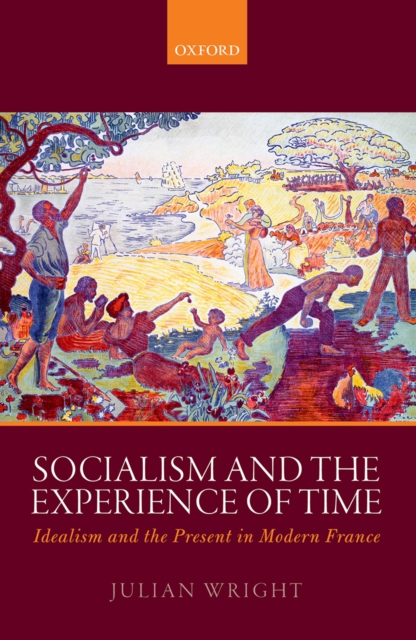
Socialism and the experience of time : idealism and the present in modern France
How do we make social democracy? Should we seize the unknown possibilities offered by the future, or does lasting change really occur when we focus our attention on the immediate present in which we live? These arguments are fundamental to the divisions within left-wing politics in particular. The modernist vision of revolution suggests that the present is precisely the time that needs to be surpassed. But can society change without putting today’s experience of social injustice at the heart of our programme?This book asks how, from the mid-nineteenth to the mid-twentieth centuries, socialists in France tried to follow a democratic commitment to political voices in the present. The debate about time and modernity that emerged in French socialism sat beneath the surface of political arguments within the left. Socialists reflected on how political programmes of change connected with social experience. But how did this focus on the present relate to the tradition of revolution in France? And in particular, what did socialism have to say about the human experience of the present?The book examines French socialism’s fascination with modern history, through a new reading of the multi-authored project to write a ‘socialist history’ of France since 1789, led by Jean Jaurès. Then, in four interlocking biographical essays, it analyses the search for a new timeframe of social transformation, by uncovering the reformist and idealist socialism of the Third Republic, long side-lined in the historical literature. With an intimate and emotional focus on the present-times of Benoit Malon, Georges Renard, Marcel Sembat and Léon Blum, a personal history of socialist thought emerges that allows us to revisit the story of left-wing intellectual life and modern socialism through the ‘human scale’ of time—that of the present.
eBook

The french right between the wars
During the interwar years France experienced severe political polarization. At the time many observers, particularly on the left, feared that the French right had embraced fascism, generating a fierce debate that has engaged scholars for decades, but has also obscured critical changes in French society and culture during the 1920s and 1930s. This collection of essays shifts the focus away from long-standing controversies in order to examine various elements of the French right, from writers to politicians, social workers to street fighters, in their broader social, cultural, and political contexts. It offers a wide-ranging reassessment of the structures, mentalities, and significance of various conservative and extremist organizations, deepening our understanding of French and European history in a troubled yet fascinating era.
eBook