
Catalogue Search | MBRL


Are you sure you want to remove the book from the shelf?

{{itemTitle}}
94
result(s) for
"Fredsbyggande."
Sort by:


The trouble with the Congo : local violence and the failure of international peacebuilding
The Trouble with the Congo suggests a new explanation for international peacebuilding failures in civil wars. Local rivalries motivated widespread violence during the Congolese transition from war to peace. However, a dominant peacebuilding culture shaped the intervention strategy in a way that precluded action on local conflicts.
eBook

Maintaining peace and security? : the United Nations in a changing world
\"The security concerns of the United Nations today extend far beyond what the writers of the 1945 Charter could have imagined. As a result, the UN has been compelled to reconsider the parameters of what constitutes a threat to international peace and security, and what it means to be safe and secure in the twenty-first century. This text critically assesses the capacity of the UN to evolve in response to changing notions of security, and examines the complex history of people, places and politics that have helped shape this important global actor\"-- Provided by publisher.
Book
A liberal peace? the problems and practices of peacebuilding
A Liberal Peace? is a timely and much-needed critical volume that takes a fresh look at the often-polarised debate over the 'liberal peace' approach to international intervention. Using a multitude of case studies, from Afghanistan to Somalia and Sri Lanka to Kosovo, it examines contemporary peacebuilding and statebuilding practice, investigating the assumptions underlying it and interrogating the arguments critiquing it. In doing so, the collection provides new theoretical propositions for understanding current interventions. Written by some of the most prominent scholars in the field alongside several new scholars making cutting-edge contributions, this is an essential addition to a rapidly growing interdisciplinary area of study.
eBook


UN ideas that changed the world
Ideas and concepts have been a driving force in human progress, and they
may be the most important legacy of the United Nations. UN ideas have set past,
present, and future international agendas in many global economic and social arenas
and have also led to initiatives and actions that have improved the quality of human
life. This capstone volume draws upon findings of the other 14 books in the
acclaimed United Nations Intellectual History Project Series. The authors not only
assess the development and implementation of UN ideas regarding sustainable economic
development and human security, but also apply lessons learned to suggest ways in
which the United Nations can play a fuller role in confronting the challenges of
human survival with dignity in the 21st century.
eBook
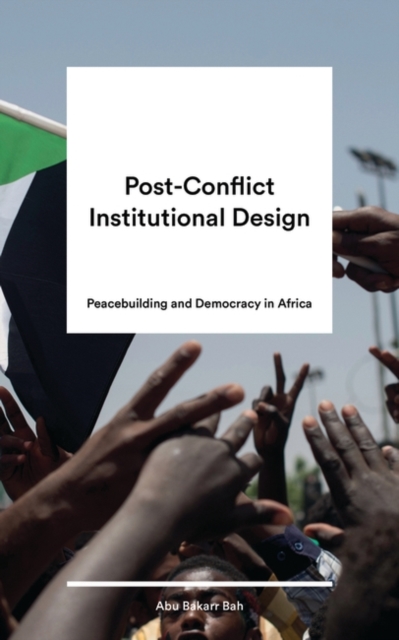
Post-Conflict Institutional Design: Building Peace and Democracy in Africa
Since gaining independence from colonial rule, most African countries have been struggling to build democratic and peaceful states. While African multiparty politics may be viewed as a democratic system of governance, in reality it is plagued by ethnic and regional political grievances that undermine meaningful democracy.By examining post-conflict institutional reforms in several African countries, this book sheds light on the common causes of violent conflicts and how institutional design can affect the conditions for peace and democracy in Africa. Focussing on conceptual and practical questions of designing ethnically and regionally inclusive state institutions and the way institutions are perceived by the citizenry Post-Conflict Institutional Design addresses political autonomy and control over resources, issues which are often key sources of ethnic and regional grievances. Crucially, it examines the meanings of institutional reforms as well ethnic and regional representation.
eBook

African conflicts and informal power
In the aftermath of an armed conflict in Africa, the international community both produces and demands from local partners a variety of blueprints for reconstructing state and society. The aim is to re-formalize the state after what is viewed as a period of fragmentation. In reality, African economies and polities are very much informal in character, with informal actors, including so-called Big Men, often using their positions in the formal structure as a means to reach their own goals. Through a variety of in-depth case studies, including the DRC, Sierra Leone and Liberia, this comprehensive volume shows how important informal political and economic networks are in many of the continent’s conflict areas. Moreover, it demonstrates that without a proper understanding of the impact of these networks, attempts to formalize African states, particularly those emerging from wars, will be in vain.
eBook

Youth Peacebuilding
This book highlights the important role youth can play in processes of peacebuilding by examining music as a tool for engaging youth in such activities. As Lesley J. Pruitt discusses throughout the book, music—as expression, as creation, as inspiration—can provide many unique insights into transforming conflicts, altering our understandings, and achieving change. She offers detailed empirical work on two youth peacebuilding programs in Australia and Northern Ireland, countries that appear overtly peaceful, but where youth still face structural violence and related direct violence at the community level. She also pays careful attention to the ways in which gender norms might influence young people's participation in music-based peacebuilding activities. Ultimately, the book defines a new research area linking youth cultures and music with peacebuilding practice and policy.
eBook

Alternatives to Neoliberal Peacebuilding and Statebuilding in Africa
This book critically interrogates the neoliberal peacebuilding and statebuilding model and proposes a popular progressive model centred around the lived realities of African societies.
The neoliberal interventionist model assumed prominence and universal hegemony following the demise of state socialism at the end of the Cold War. However, this book argues that it is a primarily short-term, top-down approach that imposes Western norms and values on conflict and post-conflict societies. By contrast, the popular progressive model espoused by this book is based on stringent examination and analysis of the reality of the socio-economic development, structures, institutions, politics and cultures of developing societies. In doing so, it combines bottom-up and top-down, popular and elite, and long-term evolutionary processes of societal construction as a requisite for enduring peacebuilding and statebuilding.
By comparing and contrasting the dominant neoliberal peacebuilding and statebuilding model with a popular progressive model, the book seeks to empower locals (both elites and masses) to sit in the driver’s seat and construct their own societies. As such, it is an important contribution to scholars, activists, policymakers, civil society organisations, NGOs and all those who are concerned with peace, stability and development across Africa and other developing countries.
eBook