
Catalogue Search | MBRL


Are you sure you want to remove the book from the shelf?

{{itemTitle}}
242,090
result(s) for
"Freedom of speech"
Sort by:

Free speech : ten principles for a connected world
\"Drawing on a lifetime of writing about dictatorships and dissidents, Timothy Garton Ash argues that in this connected world that he calls cosmopolis, the way to combine freedom and diversity is to have more but also better free speech. Across all cultural divides we must strive to agree on how we disagree. He draws on a thirteen-language global online project freespeechdebate.com conducted out of Oxford University and devoted to doing just that. With vivid examples, from his personal experience of China's Orwellian censorship apparatus to the controversy around Charlie Hebdo to a very English court case involving food writer Nigella Lawson, he proposes a framework for \"civilized\" conflict in a world where we are all becoming neighbors.\"--Provided by publisher.
Book

Cheap speech : how disinformation poisons our politics--and how to cure it
An informed and practical road map for controlling disinformation, embracing free speech, saving American elections, and protecting democracy \"A fresh, persuasive and deeply disturbing overview of the baleful and dangerous impact on the nation of widely disseminated false speech on social media. Richard Hasen, the country's leading expert about election law, has written this book with flair and clarity.\"-Floyd Abrams, author of The Soul of the First Amendment What can be done consistent with the First Amendment to ensure that American voters can make informed election decisions and hold free elections amid a flood of virally spread disinformation and the collapse of local news reporting? How should American society counter the actions of people like former President Donald J. Trump, who used social media to convince millions of his followers to doubt the integrity of U.S. elections and helped foment a violent insurrection? What can we do to minimize disinformation campaigns aimed at suppressing voter turnout? With piercing insight into the current debates over free speech, censorship, and Big Tech's responsibilities, Richard L. Hasen proposes legal and social measures to restore Americans' access to reliable information on which democracy depends. In an era when quack COVID treatments and bizarre QAnon theories have entered mainstream, this book explains how to assure both freedom of ideas and a commitment to truth.
eBook

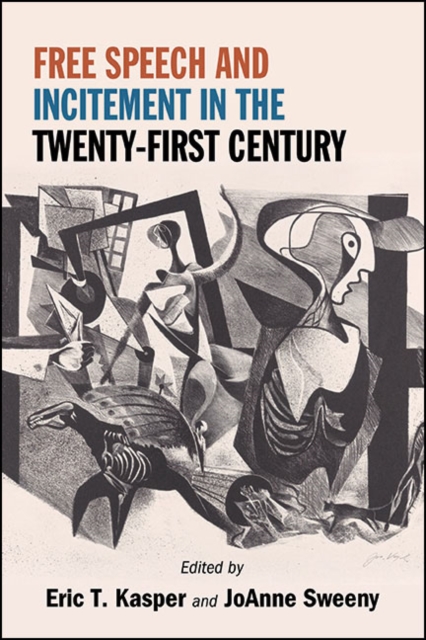
Free Speech and Incitement in the Twenty-First Century
Explores the line between free speech protected by the
First Amendment and unprotected incitement to imminent lawless
action.
Free Speech and Incitement in the Twenty-First Century
explores the line between free speech and incitement, which is
a form of expression not protected by the First Amendment.
Incitement occurs when a person intentionally provokes their
audience to engage in illegal or violent action that is likely
to, or will, occur imminently. This doctrine evolved from World
War I through the Cold War and the civil rights movement era,
culminating in a test announced by the US Supreme Court in
Brandenburg v. Ohio (1969). Since the 1970s, this
doctrine has remained largely unchanged by the Supreme Court
and, as such, has received relatively little academic or media
attention. Since the late 2010s, however, violence at political
rallies, armed protests around Confederate statues, social
unrest associated with demonstrations against police, and an
attack on the US Capitol have led to new incitement cases in
the lower courts and an opportunity to examine how incitement
is defined and applied. Authors from different perspectives in
Free Speech and Incitement in the Twenty-First Century
help the reader understand the difference between free speech
and incitement.
eBook

When the state speaks, what should it say? : how democracies can protect expression and promote equality
How should a liberal democracy respond to hate groups and others that oppose the ideal of free and equal citizenship? Avoiding the familiar yet problematic responses to this issue, political theorist Corey Brettschneider proposes a new approach called value democracy.
Book

Brave New Neighborhoods
Fighting for First Amendment rights is as popular a pastime as ever, but just because you can get on your soapbox doesn't mean anyone will be there to listen. Town squares have emptied out as shoppers decamp for the megamalls; gated communities keep pesky signature gathering activists away; even most internet chatrooms are run by the major media companies. Brave New Neighborhood s considers what can be done to protect and revitalize our public spaces.
Margaret Kohn is Assistant Professor of Political Science at the University of Florida. She is the author of Radical Spaces , and she has published articles in Dissent , Polity , Political Theory , Constellations , and IPSR.
\"A very fine book... it raises profoundly important issues about the accessibility and availability of public space outside of corporate power and market relationships.\" - Jamin Raskin
eBook


Theoterrorism v. Freedom of Speech
The Rushdie Affair, the Danish Cartoon Affair, the assault on Charlie Hebdo, and the earlier Carrell Affair, are examples of religious fanatics' extreme reactions to religious satire and criticism. Perpetrators of these actions consider themselves as true believers. This book aims to understand their motives by means of the concept of theoterrorism: terrorism grounded in religious zealotry.
eBook

A right to offend
\"Over the past two decades, there have been a series of events that have brought into question the concept and practice of free expression. In this new book, Winston provides an account of the current state of freedom of expression in the western world. He analyses all the most pertinent cases of conflict during the last two decades - including the fatwa against Salman Rushdie, the incident of the Danish cartoons and offended celebrities - examining cultural, legal and journalistic aspects of each case. A Right to Offend offers us a deeper understanding of the increasingly threatening environment in which free speech operates and is defended, as well as how it informs and is central to journalism practice and media freedom more generally. It is important reading for all those interested in freedom of expression in the twenty-first century.\"--Publisher's website.
Book

Free Speech and Hate Speech in the United States
Free Speech and Hate Speech in the United States explores the concept and treatment of hate speech in light of escalating social tensions in the global twenty-first century, proposing a shift in emphasis from the negative protection of individual rights toward a more positive support of social equality.
Drawing on Axel Honneth’s theory of recognition, the author develops a two-tiered framework for free speech analysis that will promote a strategy for combating hate speech. To illustrate how this framework might impact speech rights in the United States, she looks specifically at hate speech in the context of symbolic speech, disparaging speech, Internet speech, and speech on college campuses.
Entering into an ongoing debate about the role of speech in society, this book will be of key importance to First Amendment scholars, and to scholars and students of communication studies, media studies, media law, political science, feminist studies, American studies, and history.
eBook