
Catalogue Search | MBRL


Are you sure you want to remove the book from the shelf?

{{itemTitle}}
19
result(s) for
"Freigelassener."
Sort by:

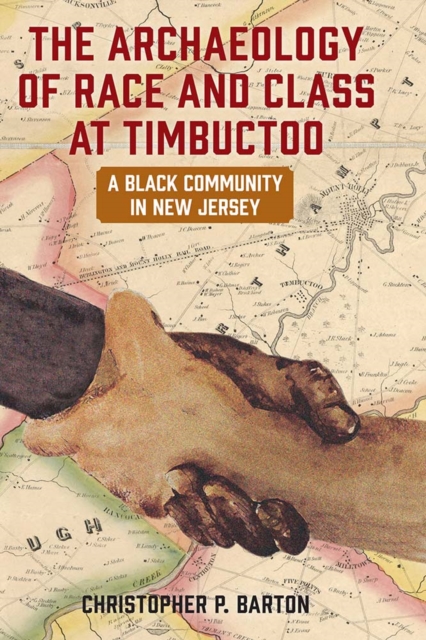
The Archaeology of Race and Class at Timbuctoo
Collaborative archaeology and the lasting character of a
historic Black community
The Archaeology of Race and Class at Timbuctoo is the
first book to examine the historic Black community of Timbuctoo,
New Jersey, which was founded in 1826 by formerly enslaved migrants
from Maryland and served as a stop on the Underground Railroad. In
collaboration with descendants and community members, Christopher
Barton explores the intersectionality of life at Timbuctoo and the
ways Black residents resisted the marginalizing structures of race
and class.
Despite some support from local Quaker abolitionists, the people
of Timbuctoo endured strained relationships with neighboring white
communities, clashes with slave catchers, and hostilities from the
Ku Klux Klan. Through a multiscalar approach that ranges from
landscape archaeology and settlement patterns to analysis of
consumer artifacts, this book demonstrates how residents persevered
to construct their own identities and navigate poverty. Barton
incorporates oral histories from community elders that offer
insights into the racial tensions of the early- to mid-twentieth
century and convey the strong, lasting character of the community
in the face of repression.
Weaving together memories and inherited accounts, current
archaeological investigations, historical records, and comparisons
to nearby Black-established communities of the era, this book
illuminates the everyday impacts of slavery and race relations in a
part of the country that seemed to promise freedom and highlights
the use of archaeology as a medium for social activism.
Publication of this work made possible by a Sustaining
the Humanities through the American Rescue Plan grant from the
National Endowment for the Humanities.
eBook

The Freedman in the Roman World
Freedmen occupied a complex and often problematic place in Roman society between slaves on the one hand and freeborn citizens on the other. Playing an extremely important role in the economic life of the Roman world, they were also a key instrument for replenishing and even increasing the size of the citizen body. This book presents an original synthesis, for the first time covering both Republic and Empire in a single volume. While providing up-to-date discussions of most significant aspects of the phenomenon, the book also offers a new understanding of the practice of manumission, its role in the organisation of slave labour and the Roman economy, as well as the deep-seated ideological concerns to which it gave rise. It locates the freedman in a broader social and economic context, explaining the remarkable popularity of manumission in the Roman world.
eBook

Self-taught
In this previously untold story of African American self-education, Heather Andrea Williams moves across time to examine African Americans' relationship to literacy during slavery, during the Civil War, and in the first decades of freedom.Self-Taughttraces the historical antecedents to freedpeople's intense desire to become literate and demonstrates how the visions of enslaved African Americans emerged into plans and action once slavery ended.Enslaved people, Williams contends, placed great value in the practical power of literacy, whether it was to enable them to read the Bible for themselves or to keep informed of the abolition movement and later the progress of the Civil War. Some slaves devised creative and subversive means to acquire literacy, and when slavery ended, they became the first teachers of other freedpeople. Soon overwhelmed by the demands for education, they called on northern missionaries to come to their aid. Williams argues that by teaching, building schools, supporting teachers, resisting violence, and claiming education as a civil right, African Americans transformed the face of education in the South to the great benefit of both black and white southerners.
eBook

Knights of the razor : black barbers in slavery and freedom
Black barbers, reflected a freed slave who barbered in antebellum St. Louis, may have been the only men in their community who enjoyed, at all times, the privilege of free speech. The reason lay in their temporary—but absolute—power over a client. With a flick of the wrist, they could have slit the throats of the white men they shaved. In Knights of the Razor, Douglas Walter Bristol, Jr., explores this extraordinary relationship in the largely untold story of African American barbers, North and South, from the American Revolution to the First World War. In addition to establishing the modern-day barbershop, these barbers used their skilled trade to navigate the many pitfalls that racism created for ambitious black men. Successful barbers assumed leadership roles in their localities, helping to form a black middle class despite pervasive racial segregation. They advocated economic independence from whites and founded insurance companies that became some of the largest black-owned corporations.
eBook

Emancipation's Diaspora
Most studies of emancipation's consequences have focused on the South. Moving the discussion to the North, Leslie Schwalm enriches our understanding of the national impact of the transition from slavery to freedom.Emancipation's Diasporafollows the lives and experiences of thousands of men and women who liberated themselves from slavery, made their way to overwhelmingly white communities in Iowa, Minnesota, and Wisconsin, and worked to live in dignity as free women and men and as citizens.Schwalm explores the hotly contested politics of black enfranchisement as well as collisions over segregation, civil rights, and the more informal politics of race--including how slavery and emancipation would be remembered and commemorated. She examines how gender shaped the politics of race, and how gender relations were contested and negotiated within the black community. Based on extensive archival research,Emancipation's Diasporashows how in churches and schools, in voting booths and Masonic temples, in bustling cities and rural crossroads, black and white Midwesterners--women and men--shaped the local and national consequences of emancipation.
eBook

Gleanings of Freedom
In the late eighteenth and early nineteenth centuries, farmers and planters in the hinterlands of Baltimore, Maryland, cobbled together workforces from a diverse labor population of black and white apprentices, indentured servants, slaves, and hired workers. The Upper South during this period presents a unique perspective on how free and slave labor systems coexisted and interacted during a time when slavery and free labor were moving apart both geographically and ideologically. Gleanings of Freedom examines the intertwined lives of the poor whites, slaves, and free blacks who lived and worked along the Mason-Dixon Line in the decades preceding the Civil War._x000B__x000B_Max Grivno closely examines a handful of counties in northern Maryland and southern Pennsylvania to illustrate how these rural local communities represented issues of national historical significance, including the dynamic, multifaceted relationship between slave and free labor, the lives of free black and white farmhands, the domestic slave trade's impact on the people of the Upper South, and the struggles of enslaved and free blacks to liberate themselves and their families from bondage through immediate and delayed manumissions. Grivno reconstructs the economy of this wheat-producing region to illustrate how the erratic demand for labor shaped negotiations between employers and their workers. Gleanings of Freedom illuminates the ties between the economies of the Upper and Lower South, showing how the insatiable demand for labor on the cotton and sugar plantations of the Deep South drew thousands of slaves southward and drove those who remained on the sectional border to fight for their freedom through shrewd negotiations and violent resistance._x000B__x000B_Deftly drawing from court records, the diaries, letters, and ledgers of farmers and small planters, travelers' accounts, and testimonies of slaves and their masters, Gleanings of Freedom reconstructs how these poorest of southerners eked out their livings and struggled to maintain their families and their freedom in the often unforgiving rural economy.
eBook


Slavery and Emancipation in Islamic East Africa
Examining the process of abolition on the island of Pemba off the East African coast in the late nineteenth and early twentieth centuries, this book demonstrates the links between emancipation and the redefinition of honour among all classes of people on the island. By examining the social vulnerability of ex-slaves and the former slave-owning elite caused by the abolition order of 1897, this study argues that moments of resistance on Pemba reflected an effort to mitigate vulnerability rather than resist the hegemonic power of elites or the colonial state. As the meaning of the Swahili word heshima shifted from honour to respectability, individuals' reputations came under scrutiny and the Islamic kadhi and colonial courts became an integral location for interrogating reputations in the community. This study illustrates the ways in which former slaves used piety, reputation, gossip, education, kinship and witchcraft to negotiate the gap between emancipation and local notions of belonging.
eBook

Indian Ocean Slavery in the Age of Abolition
While the British were able to accomplish abolition in the trans-Atlantic world by the end of the nineteenth century, their efforts paradoxically caused a great increase in legal and illegal slave trading in the western Indian Ocean. Bringing together essays from leading authorities in the field of slavery studies, this comprehensive work offers an original and creative study of slavery and abolition in the Indian Ocean world during this period. Among the topics discussed are the relationship between British imperialism and slavery; Islamic law and slavery; and the bureaucracy of slave trading.
eBook