
Catalogue Search | MBRL


Are you sure you want to remove the book from the shelf?

{{itemTitle}}
15
result(s) for
"French literature France Colonies History and criticism."
Sort by:


Colonizer or Colonized
Colonizer or Colonizedintroduces two colonial stories into the heart of France's literary and cultural history. The first describes elite France's conflicted relationship to the Ancient World. As much as French intellectuals aligned themselves with the Greco-Romans as an \"us,\" they also resented the Ancients as an imperial \"them,\" haunted by the memory that both the Greeks and Romans had colonized their ancestors, the Gauls. This memory put the elite on the defensive-defending against the legacy of this colonized past and the fear that they were the barbarian other. The second story mirrored the first. Just as the Romans had colonized the Gauls, France would colonize the New World, becoming the \"New Rome\" by creating a \"New France.\" Borrowing the Roman strategy, the French Church and State developed an assimilationist stance towards the Amerindian \"barbarian.\" This policy provided a foundation for what would become the nation's most basic stance towards the other. However, this version of assimilation, unlike its subsequent ones, encouraged the colonized and the colonizer to engage in close forms of contact, such as mixed marriages and communities.
This book weaves these two different stories together in a triangulated dynamic. It asks the Ancients to step aside to include the New World other into a larger narrative in which elite France carved out their nation's emerging cultural identity in relation to both the New World and the Ancient World.
eBook
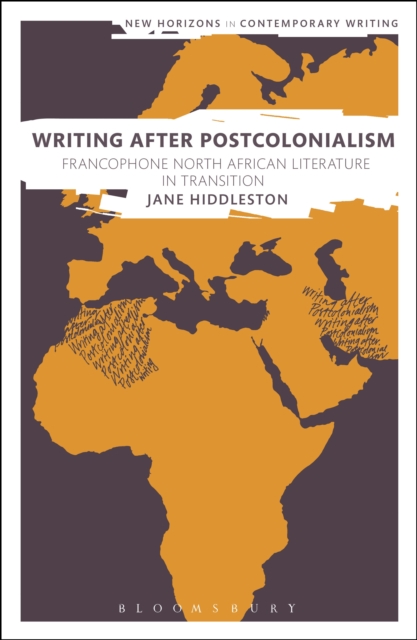
Writing after Postcolonialism
'Focusing on francophone writing from North Africa as it has developed since the 1980s, Writing After Postcolonialism explores the extent to which the notion of 'postcolonialism' is still resonant for literary writers a generation or more after independence, and examines the troubled status of literature in society and politics during this period.
eBook
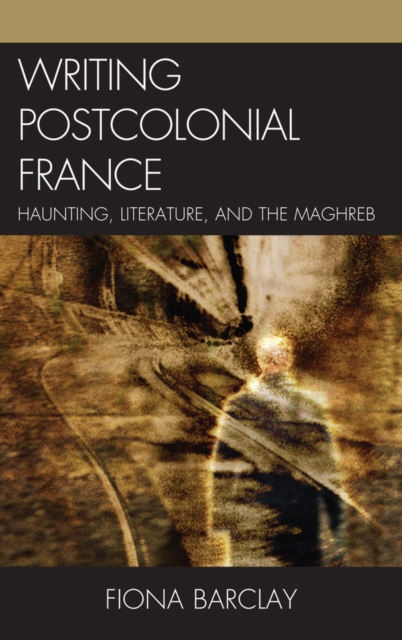
Writing postcolonial France
This book examines the way in which France has failed to come to terms with the end of its empire, and is now haunted by the legacy of its colonial relationship with North Africa. It examines the form assumed by the ghosts of the past in fiction from a range of genres (travel writing, detective fiction, life writing, historical fiction, women's writing) produced within metropolitan France, and assesses whether moments of haunting may in fact open up possibilities for a renewed relational structure of cultural memory. By viewing metropolitan France through the prism of its relationship with its former colonies in North Africa, the book maps the complexities of contemporary France, demonstrating an emerging postcoloniality within France itself.
eBook
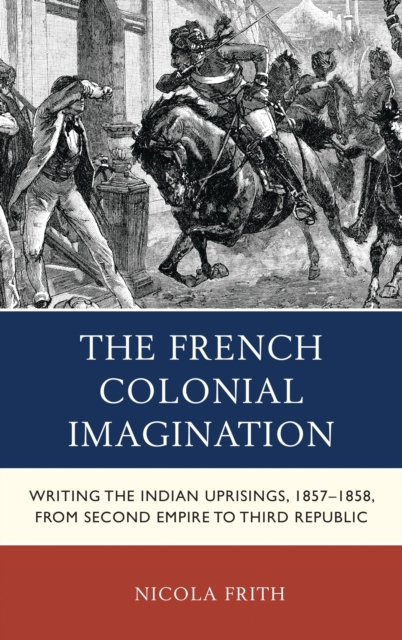
The French Colonial Imagination
The Indian uprisings (1857–58) against British rule in India represent an iconic period within the history of anti-colonial resistance. Numerous works have considered these historical events from British and Indian perspectives, but none have yet questioned how they were viewed by Britain’s foremost colonial rival in India, the French. The French Colonial Imagination examines how the potential for Britain to lose its most lucrative colony at the hands its own colonial “subjects” allowed French writers to envisage a world freed from British dominance. The uprisings offered the attractive possibility that France could undergo a colonial revival in the wake of British defeat, thereby reversing the devastating losses inflicted upon France’s former empire at the end of the Napoleonic Wars. Notable among these losses was Britain’s decision (in the Treaty of 1814) to permanently reduce France’s presence in India to five small trading posts scattered around the periphery of British territory. The extent to which to the French colonial imagination of the nineteenth century was shaped by the memories of such defeats forms a primary concern of this monograph. This investigation into French responses to the Indian uprisings reveals that French colonial discourse was determined as much by its visions of the colonized “other,” as by the dominance of their British rivals. Drawing from journalistic, historical, political, and fictional texts written during Louis Napoleon’s Second Empire (1852–70) and in the early years of the Third Republic (1870–1944), The French Colonial Imagination shows how the uprisings gave French writers the opportunity to speak out against the rapacity of British colonialism and its treatment of colonized Indians, while simultaneously constructing a competing colonial discourse that would justify further expansion in North Africa and South East Asia. Standing at a crossroads between the “loss” of Ancien Régime’s empire and the Third Republic’s ideological investment in overseas expansion, this understudied period of colonial history reveals the centrality of loss, fracture, and political emasculation as core preoccupations haunting the French colonial discourse in its quest to regain cultural and ideological ascendancy over its greatest political enemy.
eBook
Contesting historical divides in Francophone Africa
From Senegal in the west to the Comoros islands in the east, this collection of essays casts a critical eye over fifty years of \"independence\" in former French colonial possessions of Africa and the Indian Ocean. With methods and perspectives that cross traditional disciplinary barriers, Contesting Historical Divides in Francophone Africa proposes fresh insights into the process of decolonisation in this part of the world
eBook
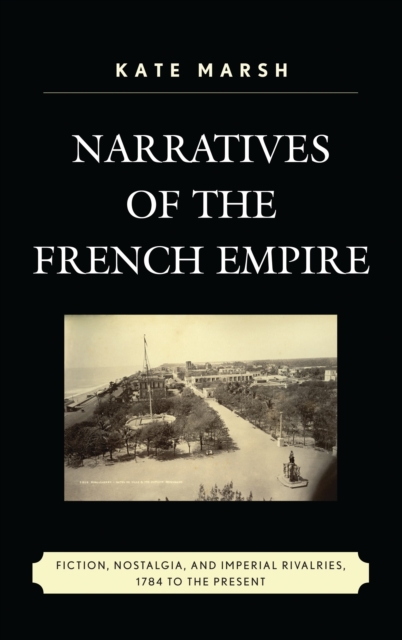
Narratives of the French empire
This study interrogates how the French empire was imagined in three literary representations of French colonialism: the conquest of Tahiti, and the established colonial systems in Martinique and in India. The study is the first in either English or French to demonstrate that representations of power relations, as well as the broader discourses with which they were linked, were as closely concerned with probing the similarities and differences of rival European colonial systems as they were with reinforcing their imagined superiority over the colonized, and that such power relations should not be conceptualized as a dualistic categorization of ‘colonizer’ versus ‘colonized’. In doing so, it aims to go beyond examining the interaction between colonized and colonizer, or between colonial centre and periphery, and to interrogate instead the circulation of ideas and practices across different sites of European colonialism, drawing attention to a historical complexity which has been neglected in the necessary race to recover voices previously occluded from academic analysis. In exploring how the notion of the French empire overseas was construed and how it was infused with meaning at three different historical moments, 1784, 1835 and 1938, it demonstrates how precarious the French empire was perceived to be, in terms of both European rivalry and resistance from the colonized, and how the rhetoric of a French colonisation douce was pitted against the inscribed excesses of the more powerful British empire. Rather than employing the sorts of recuperative agenda which focus on how the colonized were elided (viz., Subaltern Studies) or on the writings of the formerly colonized (viz., Francophone Studies), the study concerns itself specifically with how French colonialism and imperialism were perceived, and thus offers a further corrective to any generalizations about European colonialism and imperialism. More particularly, by examining how the representational strategy of nostalgia is used in these texts, the study demonstrates how perceived loss, and nostalgia for an imperial past, played a role in dynamically shaping the French colonial enterprise across its various manifestations.
eBook

Creole Medievalism
Probing the work of the once famous but little understood cultural figure Joseph Bédier, Creole Medievalism illustrates how postcolonial France and Réunion continue to grapple with histories too varied to meet expectations of national unity. Michelle R. Warren demonstrates that Bédier’s relationship to this multicultural and economically peripheral colony motivates his nationalism in complex ways.
eBook

The Science of Illusion-making in Aimé Césaire's La tragédie du roi Christophe and Une tempête
This essay considers Césaire's theater from the point of view of performance, by focusing on two works from his trilogy on decolonization:
La tragédie du roi Christophe
and
Une tempête
. The ability to create illusions, including the scientific knowledge necessary to do so, is portrayed as a European instrument, which can be used either negatively, to deceive the characters with the objective of exploiting them, or positively, as a means of raising consciousness in a manner that provokes development. The making of illusions by the different characters unlocks a game of
mise en abyme
, which leads to the establishment of a metatheatrical discourse about the role of theater in economic development. Ultimately, the frequent representation of illusion-making as a scientific or technical practice reflects Césaire's views about the transfer of Western cultural elements-including both theater and modern technologies-to the former colonies in the era of decolonization.
Journal Article

Le roman vietnamien francophone
Si la construction de l’Extrême-Orient par les écrivains occidentaux est un fait littéraire largement étudié, bien rares sont les explorations des oeuvres orientalistes d’auteurs eux-mêmes issus des anciennes colonies. Avertissement à qui s’attendrait à découvrir ici une prose subversive, ou simplement une vision plus réaliste du Vietnam de l’époque coloniale : quelques surprises l’attendent. Souvent, en effet, les romanciers ont fait leurs les clichés de l’orientalisme métropolitain. La construction de l’Autre ne se fait pas à sens unique, et l’invention de l’Occident par des auteurs d’Asie est aussi un phénomène fascinant. Là encore, on s’étonnera de voir que les oppositions simplistes entre culture et nature, matérialisme et spiritualité ou vitalité et passivité ne furent pas tant remises en cause que simplement renversées. Certains romans vietnamiens francophones « occidentalistes » se révèlent en cela tout aussi stéréotypés que leurs contre-modèles. Entre la vision de l’Orient comme un continent incapable de survivre sans la présence des Français et celle qui réduit l’Occident à une machine de conquête sans âme, y a-t-il eu une voie médiane ? Oui, et Ching Selao nous convainc sans peine que ces romans de l’entre-deux participent d’une désorientation discursive bien plus féconde pour l’imaginaire et la réflexion critique. Ching Selao est diplômée de l’Université de Montréal, et professeure à l’Université du Vermont, où elle enseigne les littératures francophones et québécoise.
eBook