Catalogue Search | MBRL


Are you sure you want to remove the book from the shelf?

{{itemTitle}}
9
result(s) for
"French-Algeria-History-20th century"
Sort by:
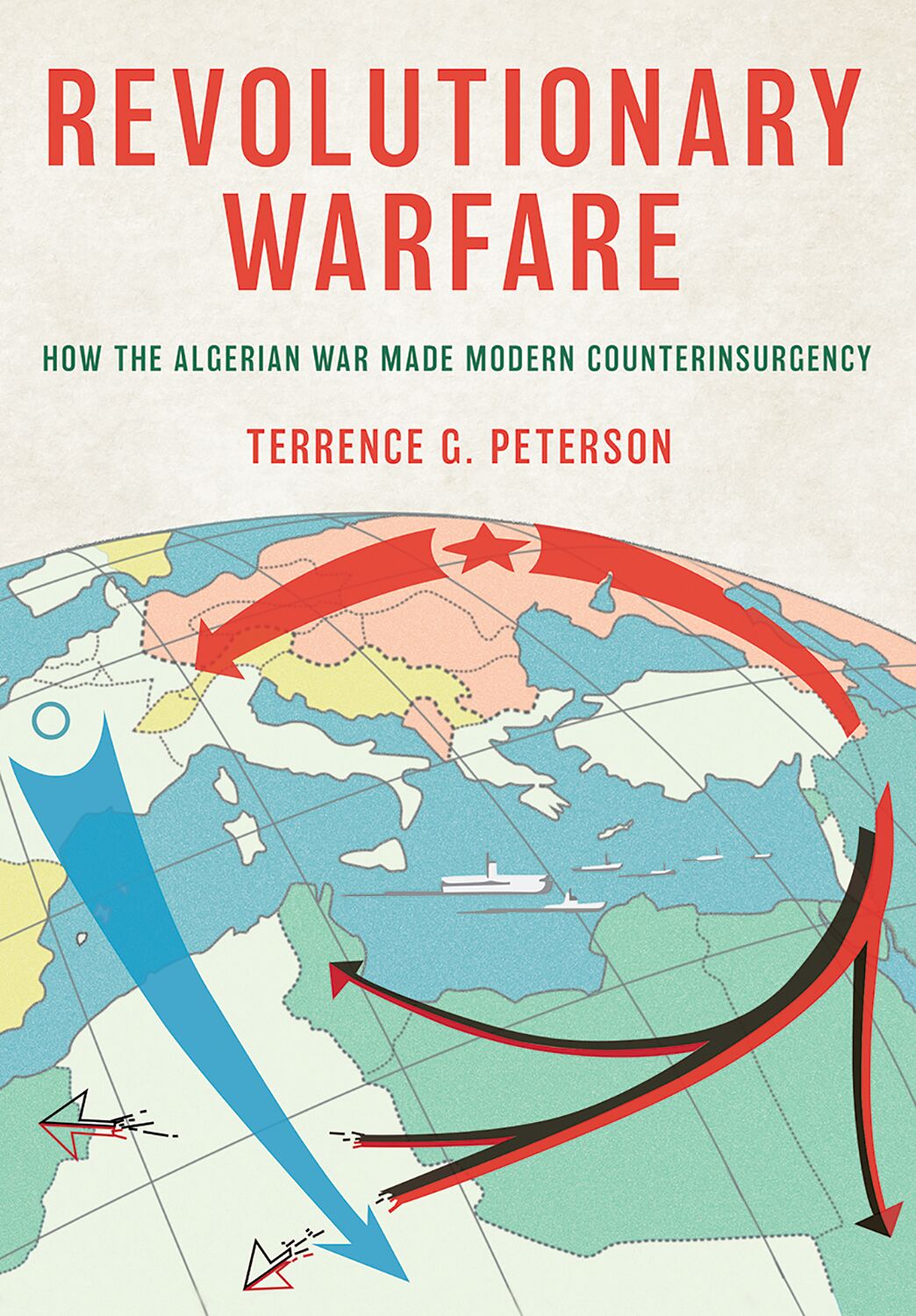
Revolutionary Warfare
Revolutionary Warfare
investigates how efforts to counter a revolution could also
be revolutionary. The Algerian War fractured the French
Empire, destroyed the legitimacy of colonial rule, and helped
launch the Third Worldist movement for the liberation of the Global
South. By tracing how French generals, officers, and civil
officials sought to counter Algerian independence with their own
project of radical social transformation, Terrence G. Peterson
reveals that the conflict also helped to transform the nature of
modern warfare.
The French war effort was never defined solely by repression. As
Peterson details, it also sought to fashion new forms of
surveillance and social control that could capture the loyalty of
Algerians and transform Algerian society. Hygiene and medical aid
efforts, youth sports and education programs, and psychological
warfare campaigns all attempted to remake Algerian social
structures and bind them more closely to the French state. In
tracing the emergence of such programs, Peterson reframes the
French war effort as a project of armed social reform that sought
not to preserve colonial rule unchanged, but to revolutionize it in
order to preserve it against the global challenges of
decolonization.
Revolutionary Warfare demonstrates how French officers'
efforts to transform warfare into an exercise in social engineering
not only shaped how the Algerian War unfolded from its earliest
months, but also helped to forge a paradigm of warfare that
dominated strategic thinking during the Cold War and after:
counterinsurgency.
eBook

Architecture of counterrevolution : the French Army in Northern Algeria
After over 120 years of French colonial rule in Algeria, the growing aspirations for independence culminated in the Algerian Revolution of 1954, which lasted until 1962. In order to combat the uprisings, the French civilian and military authorities reorganised the entire territory of the country, swiftly erected new infrastructures and pursued building policies that were ultimately intended to stabilize French dominance in Algeria.The study describes the architectural responses undertaken in the midst of this protracted and bloody armed conflict. It analyses their origins, evolutions and objectives, identifies the actors involved and reveals the underlying design methods.
Book

From empire to exile
This book explores the memory of the war of independence in France as viewed by the former European settlers (pieds-noirs) and the harkis, those Algerians who worked for the French security forces. It examines how the memorial dynamics of the two groups are related both to each other and to other memories of the war.
eBook

Remembering French Algeria : Pieds-Noirs, identity, and exile
\"Colonized by the French in 1830, Algeria was an important French settler colony that, unlike its neighbors, endured a lengthy and brutal war for independence from 1954 to 1962. The nearly one million Pieds-Noirs (literally \"black-feet\") were former French citizens of Algeria who suffered a traumatic departure from their homes and discrimination upon arrival in France. In response, the once heterogeneous group unified as a community as it struggled to maintain an identity and keep the memory of colonial Algeria alive. Remembering French Algeria examines the written and visual re-creation of Algeria by the former French citizens of Algeria from 1962 to the present. By detailing the preservation and transmission of memory prompted by this traumatic experience, Amy L. Hubbell demonstrates how colonial identity is encountered, reworked, and sustained in Pied-Noir literature and film, with the device of repetition functioning in these literary and visual texts to create a unified and nostalgic version of the past. At the same time, however, the Pieds-Noirs' compulsion to return compromises these efforts. Taking Albert Camus's Le Mythe de Sisyphe and his subsequent essays on ruins as a metaphor for Pied-Noir identity, this book studies autobiographical accounts by Marie Cardinal, Jacques Derrida, Hâelلene Cixous, and Lei;la Sebbar, as well as lesser-known Algerian-born French citizens, to analyze movement as a destabilizing and productive approach to the past. \"-- Provided by publisher.
Book