
Catalogue Search | MBRL


Are you sure you want to remove the book from the shelf?

{{itemTitle}}
47,224
result(s) for
"Fresh water"
Sort by:


Chemical and microbial diversity covary in fresh water to influence ecosystem functioning
Invisible to the naked eye lies a tremendous diversity of organic molecules and organisms that make major contributions to important biogeochemical cycles. However, how the diversity and composition of these two communities are interlinked remains poorly characterized in fresh waters, despite the potential for chemical and microbial diversity to promote one another. Here we exploited gradients in chemodiversity within a common microbial pool to test how chemical and biological diversity covary and characterized the implications for ecosystem functioning. We found that both chemodiversity and genes associated with organic matter decomposition increased as more plant litterfall accumulated in experimental lake sediments, consistent with scenarios of future environmental change. Chemical and microbial diversity were also positively correlated, with dissolved organic matter having stronger effects on microbes than vice versa. Under our experimental scenarios that increased sediment organic matter from 5 to 25% or darkened overlying waters by 2.5 times, the resulting increases in chemodiversity could increase greenhouse gas concentrations in lake sediments by an average of 1.5 to 2.7 times, when all of the other effects of litterfall and water color were considered. Our results open a major new avenue for research in aquatic ecosystems by exposing connections between chemical and microbial diversity and their implications for the global carbon cycle in greater detail than ever before.
Journal Article

Comparing efficiency of literature-based estimation of general biomass using Length-Weight Relationships
Fish biomass estimation is crucial for understanding aquatic ecosystem dynamics and managing fisheries resources effectively. This study evaluated the applicability of estimating fish biomass in Korean aquatic ecosystems using literature-derived General Total Length (GTL) and length-weight relationships (LWRs). We compared the estimated biomasses with measured field biomasses from literatures for freshwater and seawater fish species. Data on individual biomass, habitat, and length-weight coefficients were collected from the literature and databases for 245 fish species. Biomass was estimated using the GTL and representative LWR coefficients and then they were compared to the measured field biomasses from literature. The results showed that this estimation method was applicable only to freshwater species (R² = 0.7133), whereas the estimates for seawater species showed a poor correlation (negative R² values). The removal of outliers (Q > 6) improved the estimation accuracy for the freshwater species. This study demonstrates that literature-based biomass estimation using GTL and LWRs is appropriate for freshwater fish in Korea, but not for seawater species. These findings contribute to the generation of fundamental biomass data for ecosystem modeling and highlight the need for habitat-specific approaches for biomass estimation. Since habitat specific biomass data is deficient, future research should explore biomass estimation through species extrapolation to address data gaps in aquatic ecological studies.
Journal Article

Freshwater governance for the 21st century
\"The objective of this book is to broadly illustrate the key aspects of water governance, mapping the spectrum of decision-making from techno-centric and eco-centric approaches, to hybrid concepts and people-centric approaches. Topics covered include the challenges for water-governance models, the polycentric model, the integration challenge, water in the decision-making hierarchy, and the rise of water-sensitive design, while also taking into account interdependencies between stakeholders, as well as the issue of scale. The book's content is presented in an integrated and comprehensive format, building on detailed case studies from around the world and the authors' working experiences in the water sector\"--Back cover.
Book

High Diversity of the Viral Community from an Antarctic Lake
Viruses are the most abundant biological entities and can control microbial communities, but their identity in terrestrial and freshwater Antarctic ecosystems is unknown. The genetic structure of an Antarctic lake viral community revealed unexpected genetic richness distributed across the highest number of viral families that have been found to date in aquatic viral metagenomes. In contrast to other known aquatic viromes, which are dominated by bacteriophage sequences, this Antarctic virus assemblage had a large proportion of sequences related to eukaryotic viruses, including phycodnaviruses and single-stranded DNA (ssDNA) viruses not previously identified in aquatic environments. We also observed that the transition from an ice-covered lake in spring to an open-water lake in summer led to a change from a ssDNA- to a double-stranded DNA-virus-dominated assemblage, possibly reflecting a seasonal shift in host organisms.
Journal Article

The sea floor : an introduction to marine geology
This textbook deals with the most important items in Marine Geology, including some pioneer work. The list of topics has grown greatly in the last few decades beyond the items identified by Eugen Seibold as central and now includes prominently such things as methane and climate change; that is, the carbon cycle and the Earth system as a whole. Relevant geophysical, geochemical, sedimentological and paleontological methods are shortly described. They should allow the reader to comment on new results about plate tectonics, marine sedimentation from the coasts to the deep sea, climatological aspects, paleoceanology and the use of the sea floor. The text tries to transmit to the reader excitement of marine geological research both aboard and in modern laboratories. Basic mineralogical, geochemical, biological and other relevant data and a detailed list of books and symposia are given in an Appendix. This Introduction builds on the third edition of \"The Sea Floor\" by E. Seibold and W.H. Berger. While much of the original text was written by Seibold, a considerable portion of the material presented in this edition is new, taking into account the recent great shift in marine geological research, some of it with great relevance to human concerns arising in a rapidly changing world.
Book

Terrestrial water fluxes dominated by transpiration
An analysis of the relative effects of transpiration and evaporation, which can be distinguished by how they affect isotope ratios in water, shows that transpiration is by far the largest water flux from Earth’s continents, representing 80 to 90 per cent of terrestrial evapotranspiration and using half of all solar energy absorbed by land surfaces.
Plants dominant in water-flux calculations
Water fluxes from the land surface to the atmosphere are divided between evaporation, and transpiration from leaf stomata. Although a seemingly basic division between the physical and biological, there is still no consensus on the global partitioning between the two fluxes, resulting in uncertainties as to responses to future climate variations. Now, Scott Jasechko and colleagues use the isotopic signatures of transpiration and evaporation from a global data set of large lakes and reveal that enormous quantities of water — as much as 90% of total terrestrial evapotranspiration — are cycled through vegetation via transpiration. One conclusion to be drawn from this study is that the accuracy of biological — rather than physical — fluxes should be prioritized in work to improve climate models.
Renewable fresh water over continents has input from precipitation and losses to the atmosphere through evaporation and transpiration. Global-scale estimates of transpiration from climate models are poorly constrained owing to large uncertainties in stomatal conductance and the lack of catchment-scale measurements required for model calibration, resulting in a range of predictions spanning 20 to 65 per cent of total terrestrial evapotranspiration (14,000 to 41,000 km
3
per year) (refs
1
,
2
,
3
,
4
,
5
). Here we use the distinct isotope effects of transpiration and evaporation to show that transpiration is by far the largest water flux from Earth’s continents, representing 80 to 90 per cent of terrestrial evapotranspiration. On the basis of our analysis of a global data set of large lakes and rivers, we conclude that transpiration recycles 62,000 ± 8,000 km
3
of water per year to the atmosphere, using half of all solar energy absorbed by land surfaces in the process. We also calculate CO
2
uptake by terrestrial vegetation by connecting transpiration losses to carbon assimilation using water-use efficiency ratios of plants, and show the global gross primary productivity to be 129 ± 32 gigatonnes of carbon per year, which agrees, within the uncertainty, with previous estimates
6
. The dominance of transpiration water fluxes in continental evapotranspiration suggests that, from the point of view of water resource forecasting, climate model development should prioritize improvements in simulations of biological fluxes rather than physical (evaporation) fluxes.
Journal Article

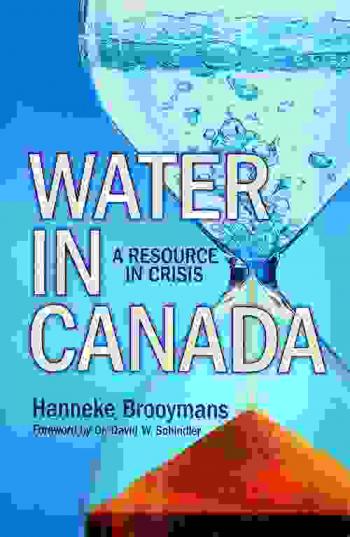
Freshwater politics in Canada
\"Freshwater is in great supply across much of Canada. However, competing and changing demands on its use are leading to ever more complex political arrangements. This volume offers an integrated survey of that complexity, combining historical and contemporary cases in a conceptually-informed exploration of water politics. It offers a set of tools, frameworks, and applications that enable readers to recognize and explore the political dimensions of freshwater.
Book

Contamination of surface, ground, and drinking water from pharmaceutical production
Low levels of pharmaceuticals are detected in surface, ground, and drinking water worldwide. Usage and incorrect disposal have been considered the major environmental sources of these microcontaminants. Recent publications, however, suggest that wastewater from drug production can potentially be a source of much higher concentrations in certain locations. The present study investigated the environmental fate of active pharmaceutical ingredients in a major production area for the global bulk drug market. Water samples were taken from a common effluent treatment plant near Hyderabad, India, which receives process water from approximately 90 bulk drug manufacturers. Surface water was analyzed from the recipient stream and from two lakes that are not contaminated by the treatment plant. Water samples were also taken from wells in six nearby villages. The samples were analyzed for the presence of 12 pharmaceuticals with liquid chromatography‐mass spectrometry. All wells were determined to be contaminated with drugs. Ciprofloxacin, enoxacin, cetirizine, terbinafine, and citalopram were detected at more than 1 μg/L in several wells. Very high concentrations of ciprofloxacin (14 mg/L) and cetirizine (2.1 mg/L) were found in the effluent of the treatment plant, together with high concentrations of seven additional pharmaceuticals. Very high concentrations of ciprofloxacin (up to 6.5 mg/L), cetirizine (up to 1.2 mg/L), norfloxacin (up to 0.52 mg/L), and enoxacin (up to 0.16 mg/L) were also detected in the two lakes, which clearly shows that the investigated area has additional environmental sources of insufficiently treated industrial waste. Thus, insufficient wastewater management in one of the world's largest centers for bulk drug production leads to unprecedented drug contamination of surface, ground, and drinking water. This raises serious concerns regarding the development of antibiotic resistance, and it creates a major challenge for producers and regulatory agencies to improve the situation.
Journal Article