
Catalogue Search | MBRL


Are you sure you want to remove the book from the shelf?

{{itemTitle}}
32,218
result(s) for
"Friendly fire"
Sort by:
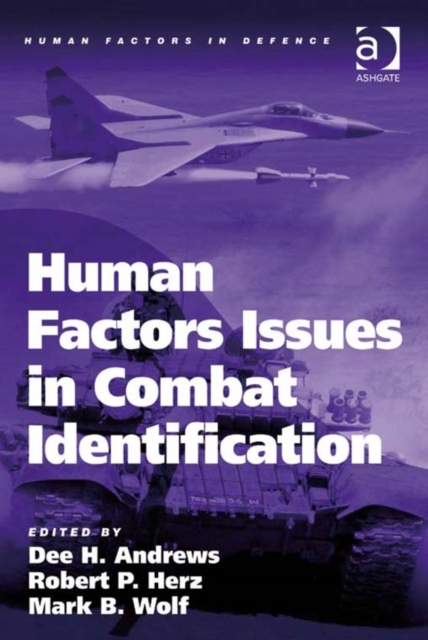
Human Factors Issues in Combat Identification
This book presents approaches on how human factors theory and research addresses the challenges associated with combat identification, with emphasis on reducing human error that leads to fratricide. To reduce fratricide, it is important to apply human factors principles to the advances in technological approaches that enhance combat identification. The book brings together authors from academic and military researchers to government contractors and commercial developers in a single volume with broad appeal.
eBook

Peripheral Macrophages Promote Tissue Regeneration in Zebrafish by Fine-Tuning the Inflammatory Response
The role of macrophages during regeneration in zebrafish has been well-documented. Nevertheless, new evidence indicates that zebrafish macrophages are a heterogeneous population of cells, and that they can play different roles during immune responses and in tissue restoration after damage and infection. In this work, we first aimed to classify zebrafish macrophages according to their distribution in the larva during homeostasis and after tissue damage, distinguishing peripheral, and hematopoietic tissue resident macrophages. We discovered differences between the migratory behavior of these two macrophage populations both before and after tissue damage, triggered by the amputation of the tail fin. Further, we found a specific role for peripheral tissue-resident macrophages, and we propose that these cells contribute to tail fin regeneration by down-regulating inflammatory mediators such as interleukin-1b (
) and by diminishing reactive oxygen species (ROS) in the damage site. Our work suggests that specific macrophage populations recruited after tissue damage in zebrafish larvae can display different functions during both inflammation and tissue regeneration.
Journal Article

Exosomes in cancer nanomedicine: biotechnological advancements and innovations
Exosomes, as natural intercellular messengers, are gaining prominence as delivery vehicles in nanomedicine, offering a superior alternative to conventional synthetic nanoparticles for cancer therapeutics. Unlike lipid, polymer, or metallic nanoparticles, which often face challenges related to immunogenicity, targeting precision, and off-tumor toxicity, exosomes can effectively encapsulate a diverse range of therapeutic agents while exhibiting low toxicity, favorable pharmacokinetics, and organotropic properties. This review examines recent advancements in exosome bioengineering over the past decade. Innovations such as microfluidics-based platforms, nanoporation, fusogenic hybrids, and genetic engineering have significantly improved loading efficiencies, production scalability, and pharmacokinetics of exosomes. These advancements facilitate tumor-specific cargo delivery, resulting in substantial improvements in retention and efficacy essential for clinical success. Moreover, enhanced biodistribution, targeting, and bioavailability—through strategies such as cell selection, surface modifications, membrane composition alterations, and biomaterial integration—suggests a promising future for exosomes as an ideal nanomedicine delivery platform. We also highlight the translational impact of these strategies through emerging clinical trials. Additionally, we outline a framework for clinical translation that focuses on: cargo selection, organotropic cell sourcing, precision loading methodologies, and route-specific delivery optimization. In summary, this review emphasizes the potential of exosomes to overcome the pharmacokinetic and safety challenges that have long impeded oncology drug development, thus enabling safer and more effective cancer treatments.
Journal Article

Friendly fire
Economic sanctions are a frequently used instrument of foreign policy. In a diplomatic conflict, they aim to elicit a change in the policies of a foreign government by damaging their economy. Sanctions, however, are also likely to affect the sanctioning country. This paper evaluates these costs, in terms of export losses, for the diplomatic crisis between the Russian Federation and 37 countries over the conflict in Ukraine that started in 2014. We first gauge the impact of the diplomatic conflict using a traditional trade framework and quantify the trade losses in a general equilibrium counterfactual analysis. Losses for the Russian Federation amount to US$53 billion or 7.4% of predicted total exports from 2014 until the end of 2015. Western sanctioning countries, however, have also been impacted with an estimated loss of US$42 billion, 0.3% of their total exports. Interestingly, we find that the bulk of the impact stems from products that are not directly targeted by Russian retaliation, an effect that we coin friendly fire – an unintended, largely self-inflicted cost for Western sanctioning countries. We investigate the underlying mechanism at the product- and firm-level data. Results indicate that the drop of Western exports has not been driven by a change in Russian consumers’ preferences, but mainly by an increase in country risk affecting international transactions with Russia.
Journal Article

Design and implementation of high-rigidity and high-precision satellite antenna rotating unit
The satellite antenna rotating unit is an important component that drives the satellite antenna to rotate in orbit, mainly composed of a stepper motor, harmonic reducer, and rotating transformer. This type of rotating unit has the advantages of small size, lightweight, high-rated output torque, and long rotating life. The high-stiffness and high-precision satellite antenna rotation unit is based on the existing antenna rotation unit. Through comprehensive improvement design, the measured closed-loop control has a rotation accuracy of better than 0.005°, a torsional stiffness of better than 6.5 Nm/(Å), a rotation accuracy of 6 times higher than the existing antenna rotation unit, a torsional stiffness increase of 13 times, and a rated output torque increase of 2.4 times. The article introduces the development of components, measurement of torsional stiffness, and measurement of rotational accuracy for the high-stiffness and high-precision satellite antenna rotating unit. Finally, the development conclusion is given. The successful development of a high-stiffness and high-precision satellite-borne antenna rotation unit can not only meet the precise pointing control requirements of the mechanical movable antennas and terahertz antennas of the narrow beam with a width of 0.2° but also solve practical problems such as jitter in ground testing of data transmission or relay antennas and unstable pointing of point beam antennas in orbit.
Journal Article

Inter-functional value co-creation as an antecedent of supply chain performance: a study based on the coordination theory
Purpose
The purpose of this study is twofold. First, this study proposes to investigate the impact of inter-functional value co-creation (VCC) in a manufacturing firm’s value chain on supply chain performance, considering the moderating role of external integration. Second, this study proposes to validate a modified version of the VCC considering the inter-functional interaction context.
Design/methodology/approach
Quantitative data were collected using survey approach from 129 managers from 51 departments of 22 manufacturing firms performing roles in several areas, such as procurement, logistics, sales, marketing and production. This study uses a PLS-SEM to analyze the model measurement, through confirmatory factor analysis.
Findings
The empirical data supported the proposition of this study that the VCC degree (i.e. value co-production/value in use) between functions of the firm has significant positive effects on the performance of the supply chain, in customer service and flexibility.
Practical implications
This study could be exceedingly useful for practitioners suggesting them to improve inter-functional integration by adopting VCC practices grounded on “value co-production” and “value in use.” Such practices may help to maximize supply chain performance.
Originality/value
The coordination theory was useful to deepen the analysis of its quadrant named “participatory design,” considering the relationship between VCC and inter-functional integration. This paper extended the knowledge about the relationship between the participatory design quadrant and the quadrant referring to organizational structures and processes.
Journal Article
Research on Red Force and Blue Force Confront Simulation System of Navy Surface Warship
All the world's military powers attach great importance to the training of Imaginary Enemy Force, and the high level of simulation of fighting between red force and blue force has become an important mode of military exercise. On the basis of introducing the function of red force and blue force fighting simulation system of naval surface warship, this paper analyzes the structure of the system and the logical relationship between its parts, puts forward 10 key steps of the system operation flow, and finally looks forward to the impact of the new technology. The structural design and process steps proposed in this paper can be applied to the development of other analog countermeasure systems.
Journal Article

Consistency of Galileo satellite antenna phase center offsets
Information about satellite antenna phase center offsets (PCOs) is indispensable for high-precision applications of global navigation satellite systems. Pre-flight manufacturer calibrations of the PCOs are available for all individual Galileo satellites and each frequency. So far, geodetic usage of Galileo is focused on the ionosphere-free linear combination of the E1 and E5a signals. In view of the growing number of E5b- and E6-capable receivers and upcoming multi-frequency applications, the consistency of the PCO values for different frequencies becomes a topic of increasing importance. Galileo satellite antenna PCOs have been estimated from the ionosphere-free linear combinations of E1/E5a, E1/E5b, and E1/E6. The mean horizontal PCOs of the different frequencies agree on the few millimeter level. The X-PCOs show a bias of about 1 cm compared to the manufacturer calibrations, whereas the Y-PCOs are free of such a bias. The Z-PCOs have a systematic offset of
-
11
to
-
15
cm w.r.t. the manufacturer calibrations due to scale inconsistencies of the current version of the International Terrestrial Reference Frame (ITRF2020) and the manufacturer calibrations. The maximum Z-PCO difference between the various linear combinations amounts to 4 cm and provides a measure of the presently achieved consistency of ground and space antenna calibrations across different frequencies. This inconsistency would translate into height differences of about 1.6 mm and associated scale differences of the terrestrial reference frame of 0.25 ppb, when adjusting station coordinates with manufacturer calibrated Galileo PCOs for different frequency pairs.
Journal Article


CD38‐Specific CAR Integrated into CD38 Locus Driven by Different Promoters Causes Distinct Antitumor Activities of T and NK Cells
The robust and stable expression of CD38 in T‐cell acute lymphoblastic leukemia (T‐ALL) blasts makes CD38 chimeric antigen receptor (CAR)‐T/natural killer (NK) a potential therapy for T‐ALL. However, CD38 expression in normal T/NK cells causes fratricide of CD38 CAR‐T/NK cells. Here a “2‐in‐1” gene editing strategy is developed to generate fratricide‐resistant locus‐specific CAR‐T/NK cells. CD38‐specific CAR is integrated into the disrupted CD38 locus by CRISPR/Cas9, and CAR is placed under the control of either endogenous CD38 promoter ( CD38 KO/KI ) or exogenous EF1α promoter ( CD38 KO/KI EF1α). CD38 knockout reduces fratricide and allows the expansion of CAR‐T cells. Meanwhile, CD38 KO/KI EF1α results in higher CAR expression than CD38 KO/KI in both CAR‐T and CAR‐NK cells. In a mouse T‐ALL model, CD38 KO/KI EF1α CAR‐T cells eradicate tumors better than CD38 KO/KI CAR‐T cells. Surprisingly, CD38 KO/KI CAR‐NK cells show superior tumor control than CD38 KO/KI EF1α CAR‐NK cells. Further investigation reveals that endogenous regulatory elements in NK cells lead to higher expression of CD38 CAR than in T cells, and the expression levels of CAR affect the therapeutic outcome of CAR‐T and CAR‐NK cells differently. Therefore, these results support the efficacy of CD38 CAR‐T/NK against T‐ALL and demonstrate that the “2‐in‐1” strategy can resolve fratricide and enhance tumor eradication, paving the way for clinical translation.
Journal Article