
Catalogue Search | MBRL


Are you sure you want to remove the book from the shelf?

{{itemTitle}}
1,980
result(s) for
"Fuller, Buckminster"
Sort by:

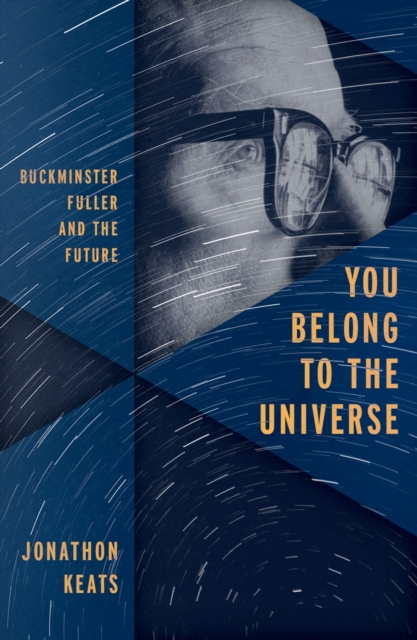
You Belong to the Universe
You Belong to the Universe documents Buckminster Fuller's six-decade quest to \"make the world work for one hundred percent of humanity.\" Jonathon Keats sets out to restore Fuller's good name, placing Fuller's philosophy in a modern context. Keats argues that Fuller's life and ideas, namely doing \"the most with the least\" is now more relevant than ever as we struggle to meet the demands of an exploding world population with finite resources.
eBook


Ana Rewakowicz
Ana Rewakowicz is a renowned artist known for her interactive projects that merge architecture, the environment, and the human body. She bridges the gap between science, art, and social ecology to address global humanitarian and climate crises. Rewakowicz's multidisciplinary and collaborative approach utilizes advanced technology and materials to create holistic experiences that blend imagination with environmental activism. Inspired by concepts from Richard Buckminster Fuller and Karen Barad, she has recently focused on water as a vehicle for relationalities. Through installations created in collaboration with physicists, Rewakowicz explores the depletion of fresh water sources and proposes a sustainable solution: the collection of fog. Her installations, such as Misty Way and Nephelograph, highlight the hydrophilic potential of textile fibers to capture microscopic water droplets in fog. These works magnify the harvesting of water in minimalist and sensitive ways, evoking a sense of awe and highlighting the vital yet mysterious nature of water. Rewakowicz's exploration of water opens the door to a new awareness that transcends anthropocentric considerations.
Journal Article

Inventor of the future : the visionary life of Buckminster Fuller
\"From Alec Nevala-Lee, the author of the Hugo and Locus Award finalist Astounding, comes a revelatory biography of the visionary designer who defined the rules of startup culture and shaped America's idea of the future. During his lifetime, Buckminster Fuller was hailed as one of the greatest geniuses of the twentieth century. As the architectural designer and futurist best known for the geodesic dome, he enthralled a vast popular audience, inspired devotion from both the counterculture and the establishment, and was praised as a modern Leonardo da Vinci. To his admirers, he exemplified what one man could accomplish by approaching urgent design problems using a radically unconventional set of strategies, which he based on a mystical conception of the universe's geometry. His views on sustainability, as embodied in the image of Spaceship Earth, convinced him that it was possible to provide for all humanity through the efficient use of planetary resources. From Epcot Center to the molecule named in his honor as the buckyball, Fuller's legacy endures to this day, and his belief in the transformative potential of technology profoundly influenced the founders of Silicon Valley. Inventor of the Future is the first authoritative biography to cover all aspects of Fuller's career. Drawing on meticulous research, dozens of interviews, and thousands of unpublished documents, Nevala-Lee has produced a riveting portrait that transcends the myth of Fuller as an otherworldly generalist. It reconstructs the true origins of his most famous inventions, including the Dymaxion Car, the Wichita House, and the dome itself; his fraught relationships with his students and collaborators; his interactions with Frank Lloyd Wright, Isamu Noguchi, Clare Boothe Luce, John Cage, Steve Jobs, and many others; and his tumultuous private life, in which his determination to succeed on his own terms came at an immense personal cost. In an era of accelerating change, Fuller's example remains enormously relevant, and his lessons for designers, activists, and innovators are as powerful and essential as ever\"-- Provided by publisher.
BOOK

Tensegrity Applications to Architecture, Engineering and Robotics: A Review
Tensegrity structures are prestressed and self-stable pin-connected frameworks built up mainly from two kind of elements, in compression (bars) and in tension (tendons). It has been 75 years since the first official appearance of tensegrity, although the present paper includes proof that states that they are in fact more than 100 years old. Throughout these years, tensegrity structures have been capturing engineers?, architects? and artists? attention with their peculiar properties. In the last decade, new applications have been found based on tensegrity, although there are not any compilations about them. This paper aims to fill this gap by giving an overview of all the recent real applications that tensegrity has had during its short life, at the same time exposing its potential in all the fields it has contributed to (AEC, robotics, space, etc.) The methodology for performing this review has been revisiting the most relevant publications in several scientific databases. This has led to a new discovery: the first cable-dome by Snelson. As a conclusion, tensegrity has been providing useful solutions to previous problems since they have appeared, but their potential can still grow in an exponential way due to the new technologies and discoveries of the last decade.
Journal Article


The nano-revolution spawned by carbon
In 1985, scientists reported the discovery of the cage-like carbon molecule C
60
. The finding paved the way for materials such as graphene and carbon nanotubes, and was a landmark in the emergence of nanotechnology.
The discovery of a remarkable cage-like carbon molecule.
Journal Article