
Catalogue Search | MBRL


Are you sure you want to remove the book from the shelf?

{{itemTitle}}
14,381
result(s) for
"Functional Food - analysis"
Sort by:

The effects of flavanone-rich citrus juice on cognitive function and cerebral blood flow: an acute, randomised, placebo-controlled cross-over trial in healthy, young adults
A plausible mechanism underlying flavonoid-associated cognitive effects is increased cerebral blood flow (CBF). However, behavioural and CBF effects following flavanone-rich juice consumption have not been explored. The aim of this study was to investigate whether consumption of flavanone-rich juice is associated with acute cognitive benefits and increased regional CBF in healthy, young adults. An acute, single-blind, randomised, cross-over design was applied with two 500-ml drink conditions – high-flavanone (HF; 70·5 mg) drink and an energy-, and vitamin C- matched, zero-flavanone control. A total of twenty-four healthy young adults aged 18–30 years underwent cognitive testing at baseline and 2-h after drink consumption. A further sixteen, healthy, young adults were recruited for functional MRI assessment, whereby CBF was measured with arterial spin labelling during conscious resting state at baseline as well as 2 and 5 h after drink consumption. The HF drink was associated with significantly increased regional perfusion in the inferior and middle right frontal gyrus at 2 h relative to baseline and the control drink. In addition, the HF drink was associated with significantly improved performance on the Digit Symbol Substitution Test at 2 h relative to baseline and the control drink, but no effects were observed on any other behavioural cognitive tests. These results demonstrate that consumption of flavanone-rich citrus juice in quantities commonly consumed can acutely enhance blood flow to the brain in healthy, young adults. However, further studies are required to establish a direct causal link between increased CBF and enhanced behavioural outcomes following citrus juice ingestion.
Journal Article
Carotenoids are more bioavailable from papaya than from tomato and carrot in humans: a randomised cross-over study
Carrot, tomato and papaya represent important dietary sources of β-carotene and lycopene. The main objective of the present study was to compare the bioavailability of carotenoids from these food sources in healthy human subjects. A total of sixteen participants were recruited for a randomised cross-over study. Test meals containing raw carrots, tomatoes and papayas were adjusted to deliver an equal amount of β-carotene and lycopene. For the evaluation of bioavailability, TAG-rich lipoprotein (TRL) fractions containing newly absorbed carotenoids were analysed over 9·5 h after test meal consumption. The bioavailability of β-carotene from papayas was approximately three times higher than that from carrots and tomatoes, whereas differences in the bioavailability of β-carotene from carrots and tomatoes were insignificant. Retinyl esters appeared in the TRL fractions at a significantly higher concentration after the consumption of the papaya test meal. Similarly, lycopene was approximately 2·6 times more bioavailable from papayas than from tomatoes. Furthermore, the bioavailability of β-cryptoxanthin from papayas was shown to be 2·9 and 2·3 times higher than that of the other papaya carotenoids β-carotene and lycopene, respectively. The morphology of chromoplasts and the physical deposition form of carotenoids were hypothesised to play a major role in the differences observed in the bioavailability of carotenoids from the foods investigated. Particularly, the liquid-crystalline deposition of β-carotene and the storage of lycopene in very small crystalloids in papayas were found to be associated with their high bioavailability. In conclusion, papaya was shown to provide highly bioavailable β-carotene, β-cryptoxanthin and lycopene and may represent a readily available dietary source of provitamin A for reducing the incidence of vitamin A deficiencies in many subtropical and tropical developing countries.
Journal Article

Anti-inflammatory and antiviral activities of compounds from the fruit of Pouteria caimito
Pouteria caimito is a commercially valuable tropical fruit tree and has medicinal effects in Brazilian folklore. In this thesis, thirteen compounds were isolated for the first time from the fruit of P. caimito by ethanol extraction and various chromatographic column chromatography methods. The thirteen compounds were identified by NMR, HR-ESI-MS and various physicochemical data to contain nine triterpenoids. The results of activity screening experiments showed that compounds 2, 3 and 5 exhibited anti-inflammatory activity, while most of the triterpenoids exhibited anti-RSV, and anti-HSV activity to varying degrees. Based on these results, the content of compound 5 was determined due to its good pharmacological activity to be 13.3250 mg/kg in the fresh fruit. This study scientifically demonstrated the health benefits of consuming P. caimito fruits and also provided new ideas for further development and utilization of P. caimito. It not only has good potential as an anti-inflammatory or antiviral functional food but also can be considered a natural source of triterpenoids.
Journal Article

The Effects of a Functional Food Breakfast on Gluco-Regulation, Cognitive Performance, Mood, and Satiety in Adults
A whole diet which combines multiple functional foods benefits metabolic risk factors and cognition, but evidence supporting meal to meal benefits, which individuals may find easier to implement, is limited. This study developed a functional food breakfast (FB), using polyphenol-rich ingredients selected for their gluco-regulating and cognitive-enhancing properties, and compared it to a control breakfast (CB). For study 1, total polyphenols were determined using the Folin–Ciocalteu method, and sugar release by in vitro digestion, in frozen and fresh samples. In study 2, healthy adults (n = 16) consumed an FB, CB and ready-to-eat breakfast cereal (RTEC) in a randomised crossover design. Glucose (GR) and insulin response (IR), satiety, mood and memory were measured over 180 min. The FB was a rich source of polyphenols (230 mg) compared to the CB (147 mg) (p < 0.05), and using frozen muffins did not compromise the polyphenol content or sugar release. Peak GR was highest after the RTEC (p < 0.05), and the insulin area under the curve (AUC) was lowest in the FB at 60, 120, 180 min and peak (p < 0.05). There were no effects on GR AUC, mood, satiety or memory. Reductions in GR peak and IR following consumption of the FB support the inclusion of functional ingredients at breakfast.
Journal Article
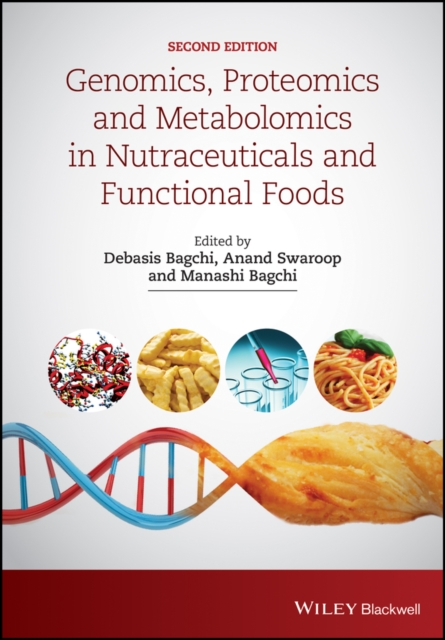
Genomics, Proteomics and Metabolomics in Nutraceuticals and Functional Foods
Functional foods and nutraceuticals have received considerable interest in the past decade largely due to increasing consumer awareness of the health benefits associated with food. Diet in human health is no longer a matter of simple nutrition: consumers are more proactive and increasingly interested in the health benefits of functional foods and their role in the prevention of illness and chronic conditions. This, combined with an aging population that focuses not only on longevity but also quality of life, has created a market for functional foods and nutraceuticals. A fully updated and revised second edition, Genomics, Proteomics and Metabolomics in Nutraceuticals and Functional Foods reflects the recent upsurge in \"omics\" technologies and features 48 chapters that cover topics including genomics, proteomics, metabolomics, epigenetics, peptidomics, nutrigenomics and human health, transcriptomics, nutriethics and nanotechnology. This cutting-edge volume, written by a panel of experts from around the globe reviews the latest developments in the field with an emphasis on the application of these novel technologies to functional foods and nutraceuticals.
eBook
The Role of Plant-Based Protein Functional Food in Preventing Acute Respiratory Disease: A Case Study
The Kaliningrad region is known for its specific climate, which can negatively affect the adaptive potential of the body. This manifests in an increased incidence of respiratory diseases and skin conditions. To prevent high morbidity, a plant protein product was included in the diet of first-year university students. This study aimed to assess the effectiveness of this food intervention in preventing the most common diseases among Kaliningrad students. Two groups of university students took part in the food trial. In the control group, catabolic processes prevailed in nutrient metabolism. Disadaptation manifested itself in the metabolism of proteins, vitamins, minerals, hematopoiesis and humoral immunity. Inflammation was indicated by α1- and α2-globulins, a weak immune response, and IgM and IgG. High oxidative stress and low antioxidative ability of blood serum were observed. The plant-based protein product (FP) helped preserve testosterone level and prevent an increase in catabolic reactions. Moreover, it had a positive effect on both red blood cell hematopoiesis (a smaller increase in the average volume of erythrocytes, the same average concentration and content of hemoglobin, an increased relative red cell distribution width (RDW) and white blood cell hematopoiesis (a beneficial effect for the immune system: lymphocytes, the relative content of neutrophils, monocytes, basophils and eosinophils). The stimulation of humoral immunity was evidenced by beta- and gamma-globulins, an active immune response, the level of IgM and IgG, antioxidant protection, reduction of peroxides and an increase in antioxidant activity of blood serum. The 34-week observation showed a 1.7-fold decrease in the incidence of respiratory illnesses and a 5.7-fold decrease in skin and subcutaneous tissue diseases. Acute respiratory infections were reduced 1.8-fold. There were no cases of community-acquired pneumonia in the treatment group, compared with 55.1‰ in the control group. The incidence of respiratory diseases was 3.3–10.6 times lower in the treatment group than in the control group in weeks 6–19. The findings testify to the prophylactic effect of functional food during social adaptation and acclimatization of students.
Journal Article

Consumption of cranberry polyphenols enhances human γδ-T cell proliferation and reduces the number of symptoms associated with colds and influenza: a randomized, placebo-controlled intervention study
BACKGROUND: Our main objective was to evaluate the ability of cranberry phytochemicals to modify immunity, specifically γδ-T cell proliferation, after daily consumption of a cranberry beverage, and its effect on health outcomes related to cold and influenza symptoms. METHODS: The study was a randomized, double-blind, placebo-controlled, parallel intervention. Subjects drank a low calorie cranberry beverage (450 ml) made with a juice-derived, powdered cranberry fraction (n = 22) or a placebo beverage (n = 23), daily, for 10 wk. PBMC were cultured for six days with autologous serum and PHA-L stimulation. Cold and influenza symptoms were self-reported. RESULTS: The proliferation index of γδ-T cells in culture was almost five times higher after 10 wk of cranberry beverage consumption (p <0.001). In the cranberry beverage group, the incidence of illness was not reduced, however significantly fewer symptoms of illness were reported (p = 0.031). CONCLUSIONS: Consumption of the cranberry beverage modified the ex vivo proliferation of γδ-T cells. As these cells are located in the epithelium and serve as a first line of defense, improving their function may be related to reducing the number of symptoms associated with a cold and flu. TRIAL REGISTRATION: ClinicalTrials.gov Identifier: NCT01398150 .
Journal Article

Effects of 3 g of soluble fiber from oats on lipid levels of Asian Indians - a randomized controlled, parallel arm study
Background
Cardiovascular diseases are more prevalent and severe in Asian Indians. Simple diet-based strategies are important for prevention of cardiovascular diseases.The aim of the present study was to evaluate the effects of oats consumption on lipid parameters in mildly hypercholesterolemic Asian Indians living in India.
Methods
A short-term, prospective, open-labeled, randomized controlled, parallel group study was conducted. Mildly hypercholesterolemic (total cholesterol >200 mg/dL and <240 mg/dL) subjects (
n
= 80) were randomized into two groups: intervention (
n
= 40) and usual diet (
n
= 40). Sample size was calculated for a two-group parallel superiority randomized control trial. Out of 80 enrolled subjects 69 subjects completed the study; 33 in the control group and 36 in the intervention group. In the intervention group, patients were served 70 g of oats twice a day in the form of porridge and
upma
(A thick porridge from oats with seasonings and vegetables) under observation at the study site. Lipid parameters were assessed at baseline and after 4 weeks of intervention.
Results
There was a reduction of 3.1% in total cholesterol levels in the control group as against 8.1% reduction in the intervention group (
p
< 0.02). Greater reductions were also seen in low-density lipoprotein cholesterol in the intervention group (11.6%) as compared to control group (4.1%,
p
< 0.04) over a period of 28 days.
Conclusion
Daily consumption of 3 g of soluble fiber from 70 g of oats leads to beneficial effects on the lipid parameters, specifically total cholesterol and low-density lipoprotein cholesterol in hypercholesterolemic Asian Indians. Large scale studies over a longer period of intervention are required to further establish the cholesterol-lowering effect of oat fiber.
Trial registration
The study was retrospectively registered at
clinicaltrials.gov
(dated: 25th Februrary.2015) with registration number
NCT02376660
.
Journal Article
Randomized controlled trial of oatmeal consumption versus noodle consumption on blood lipids of urban Chinese adults with hypercholesterolemia
Background
Cardiovascular disease (CVD) is the leading cause of death in China and worldwide. Whole grain oats can reduce risk of CVD by reducing total and LDL-cholesterol, major risk factors for CVD. While this association has been established in many populations, data from Asian populations is limited. Thus, this study investigated the impact of oat consumption on cholesterol levels in Chinese adults. Male and female data from this work were previously published separately in mandarin in two Chinese journals. The combined male and female data were reanalyzed and are presented here.
Methods
A randomized, controlled, parallel-arm study was conducted at Beijing Hospital, Beijing china. Subjects were adults (men and women) with mild to moderate hypercholesterolemia. The oat group (n=85) consumed 100grams of instant oat cereal versus the control group (n=81) who consumed 100grams of wheat flour-based noodles daily for 6weeks. Laboratory and anthropometric measurements were conducted at baseline and at the end of the 6-week intervention.
Results
Dietary fiber intake increased significantly in the oat group compared to the control group at the end of the 6-week intervention. Total-, LDL-cholesterol and waist circumference decreased significantly in the oat group compared to the control. HDL-cholesterol decreased significantly in the control group versus the oat group. There were no significant changes in blood pressure, other anthropometric or laboratory measures between the two groups at the end of the intervention.
Conclusions
Instant oatmeal consumed daily for 6 weeks significantly increased fiber intake and decreased major risk factors for CVD in Chinese adults with hypercholesterolemia. Increased consumption of whole grains, including oats, should continue to be encouraged.
Journal Article
The effect of lutein- and zeaxanthin-rich foods v. supplements on macular pigment level and serological markers of endothelial activation, inflammation and oxidation: pilot studies in healthy volunteers
The aim of the present study was to compare the effect of lutein- and zeaxanthin-rich foods and supplements on macular pigment level (MPL) and serological markers of endothelial activation, inflammation and oxidation in healthy volunteers. We conducted two 8-week intervention studies. Study 1 ( n 52) subjects were randomised to receive either carrot juice (a carotene-rich food) or spinach powder (a lutein- and zeaxanthin-rich food) for 8 weeks. Study 2 subjects ( n 75) received supplements containing lutein and zeaxanthin, β-carotene, or placebo for 8 weeks in a randomised, double-blind, placebo-controlled trial. MPL, serum concentrations of lipid-soluble antioxidants, inter-cellular adhesion molecule 1, vascular cell adhesion molecule 1, C-reactive protein and F 2 -isoprostane levels were assessed at baseline and post-intervention in both studies. In these intervention studies, no effects on MPL or markers of endothelial activation, inflammation or oxidation were observed. However, the change in serum lutein and zeaxanthin was associated or tended to be associated with the change in MPL in those receiving lutein- and zeaxanthin-rich foods (lutein r 0·40, P = 0·05; zeaxanthin r 0·30, P = 0·14) or the lutein and zeaxanthin supplement (lutein r 0·43, P = 0·03; zeaxanthin r 0·22, P = 0·28). In both studies, the change in MPL was associated with baseline MPL (food study r − 0·54, P < 0·001; supplement study r − 0·40, P < 0·001). We conclude that this 8-week supplementation with lutein and zeaxanthin, whether as foods or as supplements, had no significant effect on MPL or serological markers of endothelial activation, inflammation and oxidation in healthy volunteers, but may improve MPL in the highest serum responders and in those with initially low MPL.
Journal Article