
Catalogue Search | MBRL


Are you sure you want to remove the book from the shelf?

{{itemTitle}}
674
result(s) for
"Furniture design History."
Sort by:


Design By Ikea
Sara Kristoffersson's compelling study provides the first sustained critical history of IKEA. Kristoffersson argues that the company's commercial success has been founded on a neat alignment of the brand with a particular image of Swedish national identity – one that is bound up with ideas of social democracy and egalitarianism - and its material expression in a pared-down, functional design aesthetic. Employing slogans such as “Design for everyone” and “Democratic design”, IKEA signals a rejection of the stuffy, the 'chintzy', and the traditional in both design practices and social structures. Drawing on original research in the IKEA company archive and interviews with IKEA personnel, Design by IKEA traces IKEA's symbolic connection to Sweden, through its design output and its promotional materials, to examine how the company both promoted and profited from the concept of Scandinavian Design.
eBook

Furnitecture : furniture that transforms space
Presents a wave of designers who are applying architectural techniques to create innovative new furnishing options, including bookshelves that can dynamically divide and reshape a room, chairs that create intimate room-like enclosures, and self-contained, expandable kitchen cubes.
Book
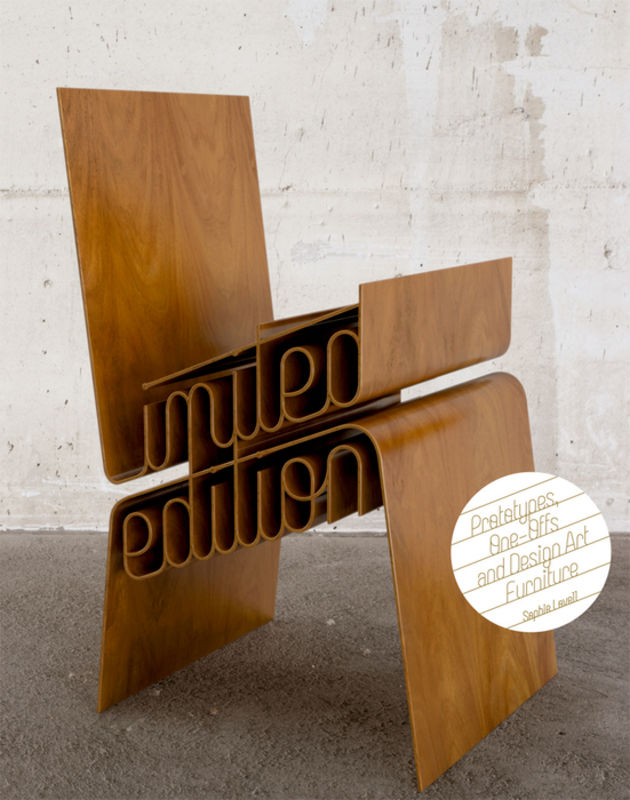
Limited Edition
Limited Edition is the new buzzword in furniture design.The demand for unique pieces is steadily increasing.With prototypes, one-offs and limited product lines, designers are celebrating a cult of individuality for all price classes.
eBook

Mid-century modern furniture
The ultimate collector's resource, including hundreds of pieces by both well- and lesser-known designers from around the world. From armchairs and chaises longues to cabinets and nightstands, the period between the late 1930s and early 1970s was one of the most productive, inventive and exciting eras for objects and furniture in the home. Post-war optimism combined with new manufacturing methods and material techniques to create an explosion of new design and objects of desire. The appetite for mid-century modern remains as strong as ever, both for classic designs - many still in production since they were launched - and for rare, hard-to-find or out-of-production pieces from lesser-known designers.
BOOK

Corporate America and the International Style: The Transnational Network of Knoll Associates between Europe and the United States
The chapter uses the furniture company Knoll International as a case study for the reciprocal transnational design transfers in mid-century consumer marketing between the United States and Europe. Knoll’s approach was different from the mass-market design work of industrial designers such as Raymond Loewy and Walter Landor with regard to the consumer segments they targeted. Market research and consumer surveys do not feature prominently with Knoll’s designs, where the artist’s vision rather than anticipated consumer reactions set the tone. Yet, with corporate and institutional clients making up a sizeable share of its sales, Knoll, too, incorporated professional research and a thorough understanding of client needs into its design jobs, as the emergence of its “planning unit” headed by Florence Knoll shows. Knoll’s case also shines a light on the return of commercial modernism back to Europe after World War II. Here, Knoll acted as an American company, promoting “American” or “international” design forms with obvious “European” roots.The history of Knoll, finally, provides a powerful example of immigrant entrepreneurship.
Book Chapter

Walter Knoll : the furniture brand of modernity
When the Thomas Mann House in Los Angeles was recently bought by the Federal Republic of Germany and transformed into a representative 'transatlantic meeting place', it was Walter Knoll furnishings that defined its interior design and showcased German creativity and economic-cultural performance. Based in Herrenberg, near Stuttgart, the more than 150-year-old business is one of the most successful furniture companies of the modern era and a global leader in the high end furnishings segment. Walter Knoll's impressively long history dates back to Wilhelm Knoll, the founding father of the Knoll dynasty, who first set up a leather shop in Stuttgart in 1865. Knoll rose from being a cobbler to the court purveyor to the House of Wèurttemberg. When his sons, Willy and Walter, took over the company in 1907, they began producing seating - introducing the first club armchair to Germany and becoming the industry's first exporter. Their advances marked a revolution in upholstered furniture. After founding his own company in the 1920s, Walter Knoll was a breakout sensation in the avant-garde interior design world with a landmark exhibition at the Weissenhof Estate in Stuttgart, under the direction of Mies van der Rohe, in 1927. His son Hans Knoll went to the U.S. in the 1930s and founded his own company, Knoll Inc., which re-wrote design history. In 1993, Markus Benz, the son of Rolf Benz, joined the Knoll ranks, continuing the successful cooperation with internationally-renowned architects and designers.
Book

Interior decorating in nineteenth-century France
This book explores the beginnings of the interior design profession in nineteenth-century France. Drawing on a wealth of visual sources, from collecting and advice manuals to pattern books and department store catalogues, it demonstrates how new forms of print media were used to 'sell' the idea of the unified interior as a total work of art, enabling the profession of interior designer to take shape. In observing the dependence of the trades on the artistic and public visual appeal of their work, the book establishes crucial links between the fields of art history, material and visual culture, and design history.
eBook


Ethno-baroque
In post-1991 Macedonia,Barokfurniture came to represent affluence and success during a period of transition to a new market economy. This furniture marked the beginning of a larger Baroque style that influenced not only interior decorations in people's homes but also architecture and public spaces. By tracing the signifier Baroque, the book examines the reconfiguration of hierarchical relations among (ethnic) groups, genders, and countries in a transnational context. Investigating how Baroque has come to signify larger social processes and transformations in the current rebranding of the country, the book reveals the close link between aesthetics and politics, and how ethno-national conflicts are reflected in visually appealing ornamentation.
eBook