
Catalogue Search | MBRL


Are you sure you want to remove the book from the shelf?

{{itemTitle}}
21,975
result(s) for
"GARDENING / Garden Design."
Sort by:

The Country in the City
Winner of the Western History Association's 2009 Hal K. Rothman Award
Finalist in the Western Writers of America Spur Award for the Western Nonfiction Contemporary category (2008).
The San Francisco Bay Area is one of the world's most beautiful cities. Despite a population of 7 million people, it is more greensward than asphalt jungle, more open space than hardscape. A vast quilt of countryside is tucked into the folds of the metropolis, stitched from fields, farms and woodlands, mines, creeks, and wetlands. In The Country in the City, Richard Walker tells the story of how the jigsaw geography of this greenbelt has been set into place.
The Bay Area s civic landscape has been fought over acre by acre, an arduous process requiring popular mobilization, political will, and hard work. Its most cherished environments--Mount Tamalpais, Napa Valley, San Francisco Bay, Point Reyes, Mount Diablo, the Pacific coast--have engendered some of the fiercest environmental battles in the country and have made the region a leader in green ideas and organizations.
This book tells how the Bay Area got its green grove: from the stirrings of conservation in the time of John Muir to origins of the recreational parks and coastal preserves in the early twentieth century, from the fight to stop bay fill and control suburban growth after the Second World War to securing conservation easements and stopping toxic pollution in our times. Here, modern environmentalism first became a mass political movement in the 1960s, with the sudden blooming of the Sierra Club and Save the Bay, and it remains a global center of environmentalism to this day.
Green values have been a pillar of Bay Area life and politics for more than a century. It is an environmentalism grounded in local places and personal concerns, close to the heart of the city. Yet this vision of what a city should be has always been informed by liberal, even utopian, ideas of nature, planning, government, and democracy. In the end, green is one of the primary colors in the flag of the Left Coast, where green enthusiasms, like open space, are built into the fabric of urban life.
Written in a lively and accessible style, The Country in the City will be of interest to general readers and environmental activists. At the same time, it speaks to fundamental debates in environmental history, urban planning, and geography.
eBook

Diagrid Structures
Diagrids are load-bearing structures made of steel diagonal grids.They were first used in the great buildings of the turn of the millennium, such as the Swiss Re Tower in London (\"The Gherkin\") and the Hearst Magazine Tower in New York City.
eBook


Marie-Antoinette's Legacy
Challenging the established historiography that frames the French picturesque garden movement as an international style, this book contends that the French picturesque gardens from 1775 until 1867 functioned as liminal zones at the epicenter of court patronage systems.
eBook

Drawing the Ground - Landscape Urbanism Today
Founded in 1990, Palmbout Urban Landscapes is now one of the leading urban planning offices in the Netherlands.It exemplifies current practices of urban planning in that country.Its approach is characterized by a constant search for a new relationship between urban planning, architecture, and landscape architecture.
eBook

Sites Unseen
Sites Unseen challenges conventions for viewing and interpreting the landscape, using visual theory to move beyond traditional practices of describing and classifying objects to explore notions of audience and context. While other fields, such as art history and geography, have engaged poststructuralist theory to consider vision and representation, the application of such inquiry to the natural or built environment has lagged behind. This book, by treating landscape as a spatial, psychological, and sensory encounter, aims to bridge this gap, opening a new dialogue for discussing the landscape outside the boundaries of current art criticism and theory.
As the contributors reveal, the landscape is a widely adaptable medium that can be employed literally or metaphorically to convey personal or institutional ideologies. Walls, gates, churchyards, and arches become framing devices for a staged aesthetic experience or to suit a sociopolitical agenda. The optic stimulation of signs, symbols, bodies, and objects combines with physical acts of climbing and walking and sensory acts of touching, smelling, and hearing to evoke an overall \\u201cvision\\u201d of landscape.
Sites Unseen considers a variety of different perspectives, including ancient Roman visions of landscape, the framing techniques of a Moghul palace, and a contemporary case study of Christo's The Gates, as examples of human attempts to shape our sensory, cognitive, and emotional experiences in the landscape.
eBook

The Wildest Place on Earth
This is the ironic story of how Italian Renaissance and Baroque gardens encouraged the preservation of the American wilderness and ultimately fostered the creation of the world's first national park system. Told via Mitchell's sometimes disastrous and humorous travels-from the gardens of southern Italy up through Tuscany and the lake island gardens-the book is filled with history, folklore, myths, and legends of Western Europe, including a detailed history of the labyrinth, a common element in Renaissance gardens. In his attempt to understand the Italian garden in detail, Mitchell set out to create one on his own property-with a labyrinth.
eBook
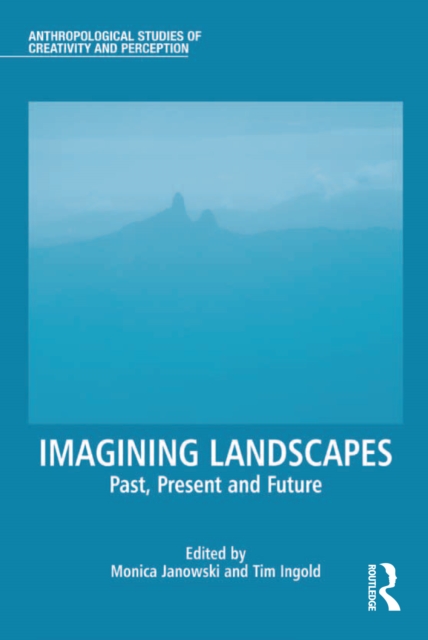
Imagining landscapes
The landscapes of human habitation are not just perceived; they are also imagined. What part, then, does imagining landscapes play in their perception? The contributors to this volume, drawn from a range of disciplines, argue that landscapes are 'imagined' in a sense more fundamental than their symbolic representation in words, images and other media. Less a means of conjuring up images of what is 'out there' than a way of living creatively in the world, imagination is immanent in perception itself, revealing the generative potential of a world that is not so much ready-made as continually on the brink of formation. Describing the ways landscapes are perpetually shaped by the engagements and practices of their inhabitants, this innovative volume develops a processual approach to both perception and imagination. But it also brings out the ways in which these processes, animated by the hopes and dreams of inhabitants, increasingly come into conflict with the strategies of external actors empowered to impose their own, ready-made designs upon the world. With a focus on the temporal and kinaesthetic dynamics of imagining, Imagining Landscapes foregrounds both time and movement in understanding how past, present and future are brought together in the creative, world-shaping endeavours of both inhabitants and scholars. The book will appeal to anthropologists, sociologists and archaeologists, as well as to geographers, historians and philosophers with interests in landscape and environment, heritage and culture, creativity, perception and imagination.
eBook

Sustainable Landscape Planning
This book takes as its starting point the need to examine critically the case for landscape reconnection. It looks at alleged disconnections and their supposed consequences. It explores the arguments about reconnecting the natural and human elements of whole landscapes. More broadly, it considers landscape as an arena within which science, humanities and professions can find common ground, and in which vivid social learning can occur about key social and environmental issues. It takes a dynamic view of landscape, in contrast to the popular image of timeless, traditional scenery. It accepts that even the most cherished cultural landscapes will change and, indeed, it views 'change drivers' as a potentially positive means of creating new connectivities between people and place. It recognises the growing interest in promoting resilience and ecosystem services across extensive landscapes - such as by creating new 'space' for water and wildlife.
eBook

Landscape and Change in Early Medieval Italy
This innovative environmental history of the long-lived European chestnut tree and its woods offers valuable new perspectives on the human transition from the Roman to the medieval world in Italy. Integrating evidence from botanical and literary sources, individual charters and case studies of specific communities, the book traces fluctuations in the size and location of Italian chestnut woods to expose how early medieval societies changed their land use between the fourth and eleventh centuries, and in the process changed themselves. As the chestnut tree gained popularity in late antiquity and became a valuable commodity by the end of the first millennium, this study brings to life the economic and cultural transition from a Roman Italy of cities, agricultural surpluses and markets to a medieval Italy of villages and subsistence farming.
eBook