
Catalogue Search | MBRL


Are you sure you want to remove the book from the shelf?

{{itemTitle}}
33,904
result(s) for
"GOVERNMENT OWNERSHIP"
Sort by:
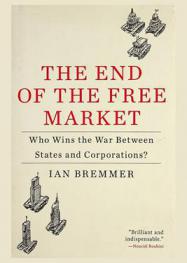
The end of the free market : who wins the war between states and corporations ?
This work details the growing phenomenon of state capitalism, a system in which governments drive local economies through ownership of market-dominant companies. This trend, Bremmer argues, threatens America's competitive edge and the conduct of free markets everywhere.
Book

Reclaiming public ownership
As the environmental limits and socially destructive tendencies of the current profit-driven economic model become daily more self-evident, Cumbers argues that a reconstituted public ownership is central to the creation of a more just and sustainable society.
eBook


Managing the Commanding Heights
Revolutions have often occurred in poor countries. Although triumphant revolutionaries may lack the resources to assume complete responsibility for their country's economy, they do tend to nationalize what Lenin called the \"commanding heights\"--those enterprises that meet the strategic needs of the polity. How these enterprises are administered is consequential, and at times decisive, for the course of revolutionary change. In Managing the Commanding Heights, Forrest D. Colburn explores the Sandinistas' management of Nicaragua's state enterprises, with an emphasis on the critical agrarian sector. Central to the book are three lively and instructive case studies that provide a penetrating glimpse into life in post-revolutionary Nicaragua. In analyzing these cases, Colburn explains the intentions of the Sandinista elite and links them with choices made at individual enterprises. Colburn argues that state enterprises have been politically useful but economically unsuccessful. Even with the unseen political advantages of state enterprises, the pronounced financial losses of nationalized farms and factories exacerbate the economic--and ultimately political--vulnerability of a regime already weakened by counterrevolution. The evidence demonstrates trenchant limitations to a revolutionary state's capacity to improve popular welfare. State capacity is undermined by multiple factors: international constraints on the autonomy of post-revolutionary regimes, sheer poverty, the unintended but inevitable political manipulation of the economy, the lack of managerial ability among even well-intentioned elites, and a revolutionary mentalité that erodes rationality. These same difficulties have bedeviled other post-revolutionary regimes, notably those in Africa. Managing the Commanding Heights is essential reading for anyone interested in the dynamics of
revolutionary regimes and the possibilities for radical change in poor countries. This title is part of UC Press's Voices Revived program, which commemorates University of California Press's mission to seek out and cultivate the brightest minds and give them voice, reach, and impact. Drawing on a backlist dating to 1893, Voices Revived makes high-quality, peer-reviewed scholarship accessible once again using print-on-demand technology. This title was originally published in 1990. Many titles in the Voices Revived program are also newly available as ebooks, offered at a discounted price to support wider access to scholarly work.
eBook


A Public Empire
\"Property rights\" and \"Russia\" do not usually belong in the same sentence. Rather, our general image of the nation is of insecurity of private ownership and defenselessness in the face of the state. Many scholars have attributed Russia's long-term development problems to a failure to advance property rights for the modern age and blamed Russian intellectuals for their indifference to the issues of ownership.A Public Empirerefutes this widely shared conventional wisdom and analyzes the emergence of Russian property regimes from the time of Catherine the Great through World War I and the revolutions of 1917. Most importantly,A Public Empireshows the emergence of the new practices of owning \"public things\" in imperial Russia and the attempts of Russian intellectuals to reconcile the security of property with the ideals of the common good.
The book analyzes how the belief that certain objects-rivers, forests, minerals, historical monuments, icons, and Russian literary classics-should accede to some kind of public status developed in Russia in the mid-nineteenth century. Professional experts and liberal politicians advocated for a property reform that aimed at exempting public things from private ownership, while the tsars and the imperial government employed the rhetoric of protecting the sanctity of private property and resisted attempts at its limitation.
Exploring the Russian ways of thinking about property,A Public Empirelooks at problems of state reform and the formation of civil society, which, as the book argues, should be rethought as a process of constructing \"the public\" through the reform of property rights.
eBook


Amtrak, America's Railroad
Discover the story of Amtrak, America's Railroad, 50
years in the making .
In 1971, in an effort to rescue essential freight
railroads, the US government founded Amtrak. In the post-World War
II era, aviation and highway development had become the focus of
government policy in America. As rail passenger services declined
in number and in quality, they were simultaneously driving many
railroads toward bankruptcy. Amtrak was intended to be the
solution.
In Amtrak, America's Railroad: Transportation's Orphan and
Its Struggle for Survival , Geoffrey H. Doughty, Jeffrey T.
Darbee, and Eugene E. Harmon explore the fascinating history of
this popular institution and tell a tale of a company hindered by
its flawed origin and uneven quality of leadership, subjected to
political gamesmanship and favoritism, and mired in a perpetual
philosophical debate about whether it is a business or a public
service. Featuring interviews with former Amtrak presidents, the
authors examine the current problems and issues facing Amtrak and
their proposed solutions.
Created in the absence of a comprehensive national
transportation policy, Amtrak manages to survive despite inherent
flaws due to the public's persistent loyalty. Amtrak, America's
Railroad is essential reading for those who hope to see
another fifty years of America's railroad passenger service,
whether they be patrons, commuters, legislators, regulators, and
anyone interested in railroads and transportation history.
eBook


Governing Death, Making Persons
Governing Death, Making Persons
tells the story of how economic reforms and changes in the
management of death in China have affected the governance of
persons . The Chinese Communist Party has sought to channel
the funeral industry and death rituals into vehicles for reshaping
people into \"modern\" citizens and subjects. Since the Reform and
Opening period and the marketization of state funeral parlors, the
Party has promoted personalized funerals in the hope of promoting a
market-oriented and individualistic ethos. However, things have not
gone as planned.
Huwy-min Lucia Liu writes about the funerals she witnessed and
the life stories of two kinds of funeral workers: state workers who
are quasi-government officials and semilegal private funeral
brokers. She shows that end-of-life commemoration in urban China
today is characterized by the resilience of social conventions and
not a shift toward market economy individualization. Rather than
seeing a rise of individualism and the decline of a socialist self,
Liu sees the durability of socialist, religious, communal, and
relational ideas of self, woven together through creative ritual
framings in spite of their contradictions.
eBook