
Catalogue Search | MBRL


Are you sure you want to remove the book from the shelf?

{{itemTitle}}
17
result(s) for
"Gangster films -- United States -- History and criticism"
Sort by:

The gangster film : fatal success in American cinema
This volume examines the gangster film in its historical context with an emphasis on the ways the image of the gangster has adapted and changed as a result of socio-cultural circumstances. From its origins in Progressive-era reforms to its use as an indictment of corporate greed, the gangster film has often provided a template for critiquing American ideas and values concerning individualism, success, and business acumen. The gangster genre has also been useful in critically examining race and ethnicity in American culture in terms of 'otherness'.--Provided by publisher
Book

Dreams and Dead Ends
The second edition of this classic study provides a reintroduction to some of the major films and theoretical considerations of film noir and gangster films in twentieth-century America. Ranging from Little Caesar (1930) to Things to Do in Denver When You’re Dead (1995), Shadoian guides the reader through twenty classic movies of the genre. His approach is to use brief introductions to introduce distinct eras of the gangster films in each of seven chapters. Moving chronologically, he offers plot synopses and close readings of such definitive examples as Bonnie and Clyde, The Public Enemy, D.O.A. and The Godfather, each accompanied by photographs and author’s critiques. Compenendia of facts on each film are also provided. This updated version looks a newer films as well as how the genre has moved into the new century. Appendices look at the movie Criss Cross as an epitome of the genre while others offer different lists of gangster films, including the author’s top fourteen alltime, fifty post-Godfather films worth seeing, and fifty vintage films.
eBook

Mafia movies : a reader
\"The mafia has always fascinated filmmakers and television producers. Al Capone, Salvatore Giuliano, Lucky Luciano, Ciro Di Marzio, Roberto Saviano, Don Vito and Michael Corleone, and Tony Soprano are some of the historical and fictional figures that contribute to the myth of the Italian and Italian-American mafias perpetuated onscreen. This collection looks at mafia movies and television over time and across cultures, from the early classics to the Godfather trilogy and contemporary Italian films and television series. The only comprehensive collection of its type, Mafia Movies treats over fifty films and TV shows created since 1906, while introducing Italian and Italian-American mafia history and culture. The second edition includes new original essays on essential films and TV shows that have emerged since the publication of the first edition, such as Boardwalk Empire and Mob Wives, as well as a new roundtable section on Italy's \"other\" mafias in film and television, written as a collaborative essay by more than ten scholars. The edition also introduces a new section called \"Double Takes\" that elaborates on some of the most popular mafia films and TV shows (e.g. The Godfather and The Sopranos) organized around themes such as adaptation, gender and politics, urban spaces, and performance and stardom.\"-- Provided by publisher.
Book
Public enemies, public heroes
In this study of Hollywood gangster films, Jonathan Munby examines their controversial content and how it was subjected to continual moral and political censure. Beginning in the early 1930s, these films told compelling stories about ethnic urban lower-class desires to \"make it\" in an America dominated by Anglo-Saxon Protestant ideals and devastated by the Great Depression. By the late 1940s, however, their focus shifted to the problems of a culture maladjusting to a new peacetime sociopolitical order governed by corporate capitalism. The gangster no longer challenged the establishment; the issue was not \"making it,\" but simply \"making do.\" Combining film analysis with archival material from the Production Code Administration (Hollywood's self-censoring authority), Munby shows how the industry circumvented censure, and how its altered gangsters (influenced by European filmmakers) fueled the infamous inquisitions of Hollywood in the postwar '40s and '50s by the House Committee on Un-American Activities. Ultimately, this provocative study suggests that we rethink our ideas about crime and violence in depictions of Americans fighting against the status quo.
eBook

Crime Films
This book surveys the entire range of crime films, including important subgenres such as the gangster film, the private eye film, film noir, as well as the victim film, the erotic thriller, and the crime comedy. Focusing on ten films that span the range of the twentieth century, Thomas Leitch traces the transformation of the three leading figures that are common to all crime films: the criminal, the victim and the avenger. Analyzing how each of the subgenres establishes oppositions among its ritual antagonists, he shows how the distinctions among them become blurred throughout the course of the century. This blurring, Leitch maintains, reflects and fosters a deep social ambivalence towards crime and criminals, while the criminal, victim and avenger characters effectively map the shifting relations between subgenres, such as the erotic thriller and the police film, within the larger genre of crime film that informs them all.
eBook

Public Enemies, Public Heroes
In this study of Hollywood gangster films, Jonathan Munby examines their controversial content and how it was subjected to continual moral and political censure.
Beginning in the early 1930s, these films told compelling stories about ethnic urban lower-class desires to \"make it\" in an America dominated by Anglo-Saxon Protestant ideals and devastated by the Great Depression. By the late 1940s, however, their focus shifted to the problems of a culture maladjusting to a new peacetime sociopolitical order governed by corporate capitalism. The gangster no longer challenged the establishment; the issue was not \"making it,\" but simply \"making do.\"
Combining film analysis with archival material from the Production Code Administration (Hollywood's self-censoring authority), Munby shows how the industry circumvented censure, and how its altered gangsters (influenced by European filmmakers) fueled the infamous inquisitions of Hollywood in the postwar '40s and '50s by the House Committee on Un-American Activities. Ultimately, this provocative study suggests that we rethink our ideas about crime and violence in depictions of Americans fighting against the status quo.
eBook

Making a Promised Land
Making a Promised Landexamines the interconnected histories of African American representation, urban life, and citizenship as documented in still and moving images of Harlem over the last century. Paula J. Massood analyzes how photography and film have been used over time to make African American culture visible to itself and to a wider audience and charts the ways in which the \"Mecca of the New Negro\" became a battleground in the struggle to define American politics, aesthetics, and citizenship. Visual media were first used as tools for uplift and education. With Harlem's downturn in fortunes through the 1930s, narratives of black urban criminality became common in sociological tracts, photojournalism, and film. These narratives were particularly embodied in the gangster film, which was adapted to include stories of achievement, economic success, and, later in the century, a nostalgic return to the past. Among the films discussed areFights of Nations(1907),Dark Manhattan(1937),The Cool World(1963),Black Caesar(1974),Malcolm X(1992), andAmerican Gangster(2007). Massood asserts that the history of photography and film in Harlem provides the keys to understanding the neighborhood's symbolic resonance in African American and American life, especially in light of recent urban redevelopment that has redefined many of its physical and demographic contours.
eBook

The Cool and the Crazy
Explosive! Amazing! Terrifying! You won't believe your eyes!
Such movie taglines were common in the 1950s, as Hollywood churned out a variety of low-budget pictures that were sold on the basis of their sensational content and topicality. While a few of these movies have since become canonized by film fans and critics, a number of the era's biggest fads have now faded into obscurity.The Cool and the Crazyexamines seven of these film cycles, including short-lived trends like boxing movies, war pictures, and social problem films detailing the sordid and violent life of teenagers, as well as uniquely 1950s takes on established genres like the gangster picture.
Peter Stanfield reveals how Hollywood sought to capitalize upon current events, moral panics, and popular fads, making movies that were \"ripped from the headlines\" on everything from the Korean War to rock and roll. As he offers careful readings of several key films, he also considers the broader historical and commercial contexts in which these films were produced, marketed, and exhibited. In the process, Stanfield uncovers surprising synergies between Hollywood and other arenas of popular culture, like the ways that the fashion trend for blue jeans influenced the 1950s Western.
Delivering sharp critical insights in jazzy, accessible prose,The Cool and the Crazyoffers an appreciation of cinema as a \"pop\" medium, unabashedly derivative, faddish, and ephemeral. By studying these long-burst bubbles of 1950s \"pop,\" Stanfield reveals something new about what films do and the pleasures they provide.
eBook

The Crime Films of Anthony Mann
Anthony Mann (1906-1967) is renowned for his outstanding 1950s
westerns starring James Stewart (Winchester '73, The
Naked Spur, The Man from Laramie). But there is more
to Mann's cinematic universe than those tough Wild West action
dramas featuring conflicted and secretive heroes. This brilliant
Hollywood craftsman also directed fourteen electrifying crime
thrillers between 1942 and 1951, among them such towering
achievements in film noir as T-Men, Raw Deal, and
Side Street. Mann was as much at home filming dark urban
alleys in black-and-white as he was the prairies and mountains in
Technicolor, and his protagonists were no less conflicted and
secretive than his 1950s cowboys.
In these Mann crime thrillers we find powerful stories of sexual
obsession (The Great Flamarion), the transforming images
of women in wartime and postwar America (Strangers in the
Night, Strange Impersonation), exploitation of
Mexican immigrants (Border Incident), studies of the
criminal mind (He Walked by Night), and Civil War bigotry
(The Tall Target). Mann's forceful camera captured such
memorable and diverse stars as Erich von Stroheim, Farley Granger,
Dennis O'Keefe, Claire Trevor, Richard Basehart, Ricardo Montalbán,
Ruby Dee, and Raymond Burr.
The Crime Films of Anthony Mann features analysis of
rare documents, screenplays, story treatments, and studio memoranda
and reveals detailed behind-the-scenes information on preproduction
and production on the Mann thrillers. Author Max Alvarez uses rare
and newly available sources to explore the creation of these noir
masterworks. Along the way, the book exposes secrets and solves
mysteries surrounding the mercurial director and his remarkable
career, which also included Broadway and early live television.
eBook
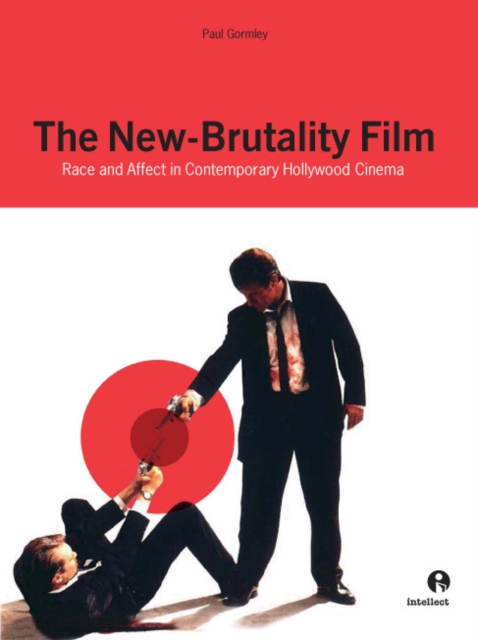
The new brutality film
The 1990s saw the emergence of a new kind of American cinema, which this book calls the \"newbrutality film.\" Violence and race have been at the heart of Hollywood cinema since its birth, but the newbrutality film was the first kind of popular American cinema to begin making this relationship explicit. The rise of this cinema coincided with the rebirth of a longneglected strand of film theory, which seeks to unravel the complex relations of affect between the screen and the viewer. This book analyses and connects both of these developments, arguing that films like Falling Down, Reservoir Dogs, Se7en and Strange Days sought to reanimate the affective impact of white Hollywood cinema by miming the power of AfricanAmerican and particularly hiphop culture. The book uses several films as casestudies to chart these developments:
eBook