
Catalogue Search | MBRL


Are you sure you want to remove the book from the shelf?

{{itemTitle}}
843
result(s) for
"Gangsters."
Sort by:


Murder, Inc., and the Moral Life
Murder, Inc. and the Moral Life: Gangsters and Gangbusters in La Guardia's New York focuses on the dramatic trials of a group of Brooklyn gangsters in 1940 and 1941. The media nicknamed the gangsters \"Murder, Inc.,\" and that nickname quickly became a kind of free-floating \"meme,\" linked at various times to criminals in general; to a record label; and even to a Bruce Springsteen song. The 1940-1941 trials inspired a wave of media coverage, several books and memoirs, and a sub-genre of the gangster film. The trials concluded with a notorious and unsolved murder mystery. Murder, Inc. narrates the life and times of the Brooklyn gang, and also relates their lives both to New York's Roaring Twenties and Depression era gangs and to the wider \"gangster\" culture expressed especially in the film. At the same time, Murder, Inc., is a moral reflection on the gangsters; the gangbusters, like Fiorello La Guardia and Thomas Dewey, who opposed them; and popular culture's fascination with \"gangsterism.\" It is especially this combination of crime story and moral reflection that makes Murder, Inc. unique.
eBook
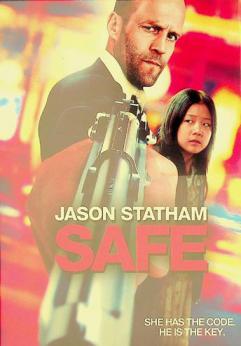
Safe
When a second-rate cage fighter, Luke Wright, is tormented by the Russian Mafia and wanders the streets of New York, he witnesses a young Chinese girl, Mei, being pursued by the same mafia who want her for a priceless numerical code that they would kill for.
DVD
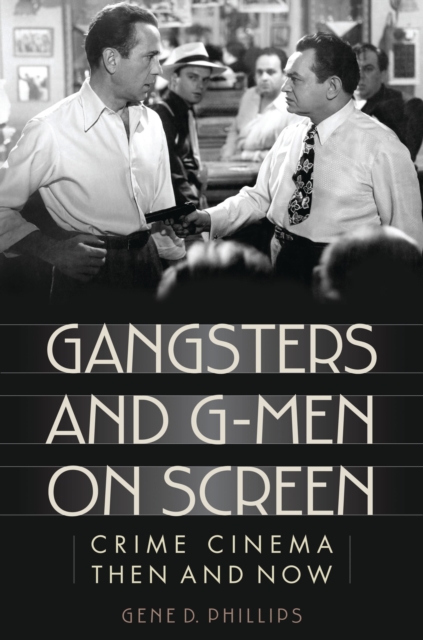
Gangsters and G-men on screen
While the gangster film may have enjoyed its heyday in the 1930s and ’40s, it has remained a movie staple for almost as long as cinema has existed. From the early films of Humphrey Bogart, James Cagney, and Edward G. Robinson to modern versions like Bugsy, Public Enemies, and Gangster Squad, such films capture the brutality of mobs and their leaders. In Gangsters and G-Men on Screen: Crime Cinema Then and Now, Gene D. Phillips revisits some of the most popular and iconic representations of the genre. While this volume offers new perspectives on some established classics—usual suspects like Little Caesar, Bonnie and Clyde, and The Godfather Part II—Phillips also calls attention to some of the unheralded but no less worthy films and filmmakers that represent the genre. Expanding the viewer’s notion of what constitutes a gangster film, Phillips offers such unusual choices as You Only Live Once, Key Largo, The Lady from Shanghai, and even the 1949 version of The Great Gatsby. Also included in this examination are more recent ventures, such as modern classics The Grifters and Martin Scorsese’s The Departed. In his analyses, Phillips draws on a number of sources, including personal interviews with directors and other artists and technicians associated with the films he discusses. Of interest to film historians and scholars, Gangsters and G-Men on Screen will also appeal to anyone who wants to better understand the films that represent an important contribution to crime cinema.
eBook

To kill for
A poignant thriller about love, revenge and redemption set in the savage ganglands of East London.
Book

Maneuvering between Resistance and Collaboration: Wartime Violence and the Informal Economy at the Margins during the Japanese Occupation of the Philippines
This study explores one of the untold histories at the margins in Philippine society during the Japanese occupation, focusing on the informal economic activities of marginalized people. Most works on the social history of the Philippines during the Japanese occupation tend to highlight the sufferings that Filipinos went through due to the wartime violence inflicted by Japanese soldiers. But it is important to point out that some people at the margins accumulated their wealth navigating between resistance and collaboration. Their activities in the informal wartime economy have long been ignored in Philippine historiography even though these activities contributed to transformations in local society after the war. Although many works of broader economic history have been published on the wartime economy in Japanese-occupied Southeast Asia, analysis of the activities of minor players in the microeconomic sphere—such as the black market, buy-and-sell activities, local gambling, and outlaw activities (including the organization of gangs)—remains fragmented and underexplored. The present study examines two cases during the Japanese occupation to show how marginalized individuals rose to prominence in local society, often through violent means—whether by collaborating with the Japanese or through contacts with guerrilla forces.
Journal Article

Bad dad
Dads come in all sorts of shapes and sizes. There are fat ones and thin ones, tall ones and short ones. There are young ones and old ones, clever ones and stupid ones. There are silly ones and serious ones, loud ones and quiet ones. Of course, there are good dads, and bad dads. A high-speed cops and robbers adventure with heart and soul about a father and son taking on the villainous Mr Big - and winning! This riches-to-rags story will have you on the edge of your seat and howling with laughter! Bad Dad is a fast and furious, heart-warming story of a father and son on an adventure - and a thrilling mission to break an innocent man into prison!
BOOK
Public enemies, public heroes
In this study of Hollywood gangster films, Jonathan Munby examines their controversial content and how it was subjected to continual moral and political censure. Beginning in the early 1930s, these films told compelling stories about ethnic urban lower-class desires to \"make it\" in an America dominated by Anglo-Saxon Protestant ideals and devastated by the Great Depression. By the late 1940s, however, their focus shifted to the problems of a culture maladjusting to a new peacetime sociopolitical order governed by corporate capitalism. The gangster no longer challenged the establishment; the issue was not \"making it,\" but simply \"making do.\" Combining film analysis with archival material from the Production Code Administration (Hollywood's self-censoring authority), Munby shows how the industry circumvented censure, and how its altered gangsters (influenced by European filmmakers) fueled the infamous inquisitions of Hollywood in the postwar '40s and '50s by the House Committee on Un-American Activities. Ultimately, this provocative study suggests that we rethink our ideas about crime and violence in depictions of Americans fighting against the status quo.
eBook
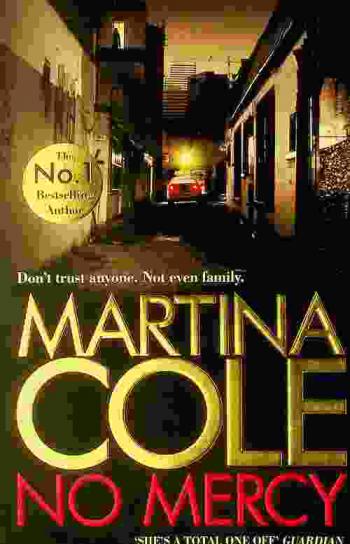
No mercy
\"Diana Davies has been head of the family business since the death of her husband, an infamous bank robber. She's a woman in a man's world, but no one messes with her. Her only son, Angus, is a natural born villain, but he needs to earn Diana's trust before she'll allow him into the business. Once he's proved he has the brains to run their clubs in Marbella, he is given what he's always wanted. It's the beginning of a reign of terror that knows no bounds. But Angus has a blind spot: his wife, Lorna, and their three kids, Angus Junior, Sean and Eilish. And as the next generation enters the business, Angus has a painful truth to learn. Even when it comes to family, he must show no mercy.
