
Catalogue Search | MBRL


Are you sure you want to remove the book from the shelf?

{{itemTitle}}
1,803
result(s) for
"Garcia Lorca, Federico (1898-1936)"
Sort by:
سيميائية يرما : مسرحية لفديريكو غارثيا لوركا : دراسة سيميائية
يتناول الكتاب النقدي عن \"مسرحية يرما\" من أهم المسرحيات في تاريخ المسرح، واستحقت من الأستاذ حسين نهابة الكثير من التأويل والتحليل ولاحق الشخوص كلها وحتى الشخوص ذات الأدوار الثانوية. ولأن الممثل كبير ومهم مما قدمه على المسرح فيها كثير من خفايا النص والالتماعات الجوهرية لشخوصه ؛ الكتاب من المصادر الفنية المهمة جدا عن المسرح.
Book
Lorca's Poet in New York
Written in 1929--1930, when Federico García Lorca was visiting Columbia University,Poet in New Yorkstands as one of the great Waste Land poems of the 20th century. It expresses, as Betty Jean Craige writes in this volume,\"a sudden radical estrangement of the poet from his universe\" -- an an estrangement graphically delineated in the dissonant, violent imagery which the poet derives from the technological world of New York.
Craige here describes -- through close analysis of the structure, style, and themes of individual works inPoet in New York-- the chaos into which this world plunges the poet, and the process whereby he is able, gradually, to recover his identity with the regenerative forces of nature. Her study demonstrates that, though seemingly unique in form and motifs,Poet in New Yorkis integral with Lorca's overall poetic achievement.
eBook
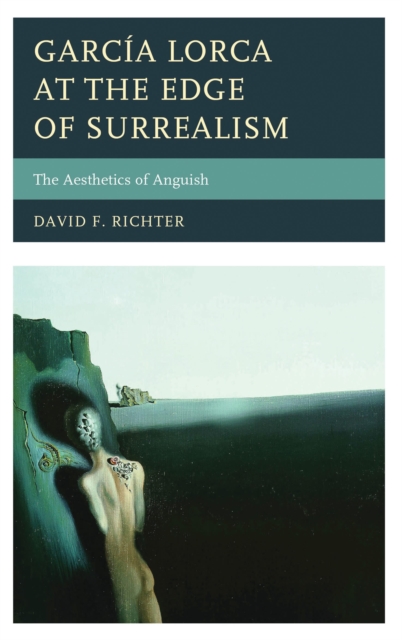
García Lorca at the Edge of Surrealism
García Lorca at the Edge of Surrealism: The Aesthetics of Anguish examines the variations of surrealism and surrealist theories in the Spanish context, studied through the poetry, drama, and drawings of Federico García Lorca (1898–1936). In contrast to the idealist and subconscious tenets espoused by surrealist leader André Breton, which focus on the marvelous, automatic creative processes, and sublimated depictions of reality, Lorca's surrealist impulse follows a trajectory more in line with the theories of French intellectuals such as Georges Bataille (1897–1962), who was expelled from Breton's authoritative group. Bataille critiques the lofty goals and ideals of Bretonian surrealism in the pages of the cultural and anthropological review Documents (1929–1930) in terms of a dissident surrealist ethno-poetics. This brand of the surreal underscores the prevalence of the bleak or darker aspects of reality: crisis, primitive sacrifice, the death drive, and the violent representation of existence portrayed through formless base matter such as blood, excrement, and fragmented bodies. The present study demonstrates that Bataille's theoretical and poetic expositions, including those dealing with l'informe (the formless) and the somber emptiness of the void, engage the trauma and anxiety of surrealist expression in Spain, particularly with reference to the anguish, desire, and death that figure so prominently in Spanish texts of the 1920s and 1930s often qualified as \"surrealist.\" Drawing extensively on the theoretical, cultural, and poetic texts of the period, García Lorca at the Edge of Surrealism offers the first book-length consideration of Bataille's thinking within the Spanish context, examined through the work of Lorca, a singular proponent of what is here referred to as a dissident Spanish surrealism. By reading Lorca's \"surrealist\" texts (including Poetaen Nueva York,Viaje a la luna, and El público) through the Bataillean lens, this volume both amplifies our understanding of the poetry and drama of one of the most important Spanish writers of the twentieth century and expands our perspective of what surrealism in Spain means.
eBook

Lorca in Tune with Falla
Federico García Lorca (1889-1936) is widely regarded as the greatest Spanish poet of the twentieth century; Manuel de Falla (1876-1946) is Spain’s most performed composer of the same period. The two were very different – Lorca was gay, liberal, and a member of the avant garde , while Falla was a devout Catholic – yet they had a profound mutual influence. The two developed an intimate friendship, which ended when Lorca was shot by Nationalist forces at the beginning of the Spanish Civil War.
Lorca in Tune with Falla is the first book to trace Lorca’s impact on Falla’s music, and Falla’s influence on Lorca’s writings. Nelson R. Orringer explores the music underlying Poem of Deep Song , Gypsy Ballads , and Lament for Ignacio Sánchez Mejías , bringing out the analogous sounds and ideas that emerge in the active, ongoing connection between the artworks of both creators. The book emphasizes how this harmony increases knowledge and appreciation of both artists.
eBook

Lorca after Life
A reflection on Federico Garcia Lorca's life, his haunting death, and the fame that reinvigorated the marvelous in the modern world \"A galaxy of critical insights into the cultural shock waves circling and crisscrossing Lorca's execution and his unknown resting place, there is not a single book on Lorca like this one.\"-Andres Zamora, Vanderbilt University There is something fundamentally unfinished about the life and work of Federico Garcia Lorca (1898-1936), and not simply because his life ended abruptly. Noel Valis reveals how this quality gives shape to the ways in which he has been continuously re-imagined since his death. Lorca's execution at the start of the Spanish Civil War was not only horrific but transformative, setting in motion many of the poet's afterlives. He is intimately tied to both an individual and a collective identity, as the people's poet, a gay icon, and fabled member of a dead poets' society. The specter of his violent death continues to haunt everything connected to Lorca, fueling the desire to fill in the gaps in the poet's biography.
eBook
Love, Desire and Identity in the Theatre of Federico García Lorca
A dialectical tension between physical desire and metaphysical love lies at the heart of the theatre works of Federico García Lorca, and the deployment of queer theory's critique of gender and identity is surprisingly effective in this discussion of love versus desire. Seldom is enough attention paid to the poet's early works, and so this book offers a timely review of the 'religious tragedy' Cristo, as well as Mariana Pineda, uncovering in these early offerings an explicit proposal of the supremacy of love over desire. A meditation on the fragmentary and challenging El público yields a vivid panorama of identity in crisis, and a paradigmatic Lorcan sacrifice of self for love. The ostensibly more conventional tragedies of Amor de Don Perlimplín con Belisa en su jardín and Yerma are also reassessed in terms of self-sacrifice and self-love. The study concludes with an argument for a practical re-reading of La casa de Bernarda Alba, which emphasises how the play might be saved from po-faced realism with music, humour and drag performance. PAUL McDERMID lectures in Spanish at Queen's University Belfast.
eBook

Lorca, una escritura en trance
Lorca's poetry is founded upon a complex symbolical system of recurring motifs. This book analyses a number of those motifs as poetic signs through a contextual reading of Libro de poemas (1921) and Diván del Tamarit (1940) as the initial and final stages of Lorca's career. The sexual and religious crisis voiced in Libro de poemas achieves poetic articulation through the sign of the star, while the betrayal of childhood's fairytale is evidenced in the sign of the moon. Diván del Tamarit exemplifies the trancelike writing of the poetry of \"opening up one's veins\" as an activity developing between the desire for a word that will capture plenitude and the word's impenetrability to fix an impulse that, in itself, resists any determinacy.
eBook
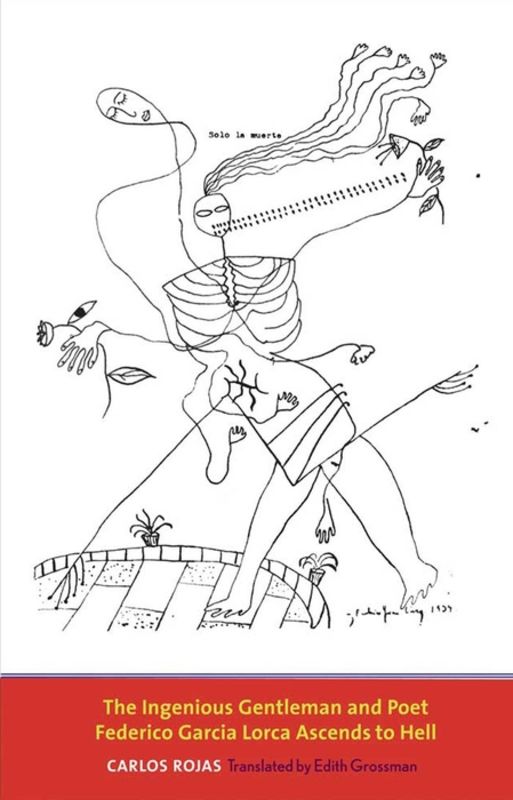
The Ingenious Gentleman and Poet Federico García Lorca Ascends to Hell
In Carlos Rojas's imaginative novel, the Spanish poet Federico García Lorca, murdered by Francoist rebels in August 1936, finds himself in an inferno that somehow resembles Breughel's Tower of Babel. He sits alone in a small theater in this private hell, viewing scenes from his own life performed over and over and over. Unexpectedly, two doppelgängers appear, one a middle-aged Lorca, the other an irascible octogenarian self, and the poet faces a nightmarish confusion of alternative identities and destinies.
Carlos Rojas uses a fantastic premise-García Lorca in hell-to reexamine the poet's life and speculate on alternatives to his tragic end. Rojas creates with a surrealist's eye and a moral philosopher's mind. He conjures a profoundly original world, and in so doing earns a place among such international peers as Gabriel García Márquez, Philip Roth, J. M. Coetzee, and José Saramago.
eBook
Over-Abundance and Ineffability: Flamenco, Mysticism and the Joyful Language-Game
[...]the term has been universalized and projected beyond the ambit of flamenco in some instances, while in others, it has been unequivocally affixed to the physical and social sphere of the music's conveyance, thereby remaining internal to Gitano culture. Scholarship that touches on this topic generally locates itself along a linear spectrum ranging from a treatment of duende as a universal and universally translatable aesthetic phenomenon to a view of duende as an occurrence that is entirely embodied within the everyday vicissitudes of practice and determined by very particular cultural and socio-economic conditions. [...]relying on Ludwig Wittgenstein's insights in Philasophical Investigation and On Certainty regarding the relationship between knowledge and finguistic use, I will approach duende armed with the idea that words do not 'mean' or 'name' so much as create conceptual categories based on the accumulation of their use within linguistic communities. [...]in order to determine what kind of conceptual category duende discloses (i.e. what it 'means,' in anti-Wit tgen stei nian parlance), I will treat it non-normatively (which is to say that rather than adhering to the norms of its use, I will consider the factors that condition them) and take stock of its use history, discussing the early-modern ideological mixture from which it arose and the etymological combinations by which it gained its current significance. Scholars in the first camp,3 who believe that duende is disclosed by the particularity of performance even as it exists on a more generalized scale, often claim that it is a concept that can either be transported outside of the realm of flamenco culture or be mapped directly onto similar concepts in other cultural, artistic, or religious traditions.
Journal Article