
Catalogue Search | MBRL


Are you sure you want to remove the book from the shelf?

{{itemTitle}}
2,223
result(s) for
"Garden pests Control"
Sort by:

Cómo Defender el Jardín de Parásitos y Otras Enfermedades
Las plagas constituyen una obsesión para todos los jardineros.Además de sus efectos antiestéticos causan, a menudo, daños irreparables que comprometen la cosecha de verduras y hortalizas, de los árboles frutales o la floración de los rosales.La autora describe en esta obra los parásitos del jardín.
eBook

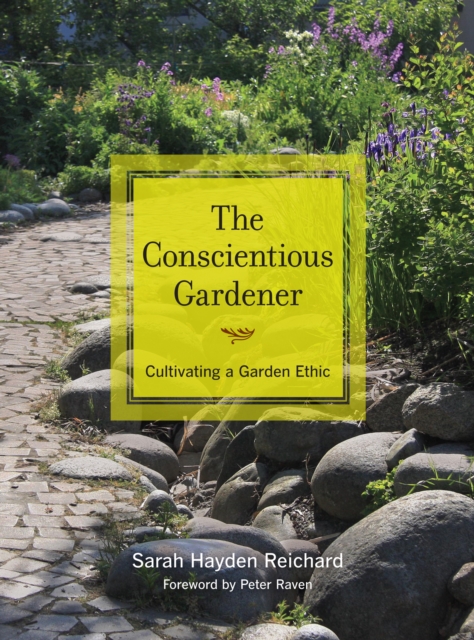
conscientious gardener
In his influential A Sand County Almanac, published at the beginning of the environmental movement in 1949, Aldo Leopold proposed a new ecological ethic to guide our stewardship of the planet. In this inspiring book, Sarah Hayden Reichard tells how we can bring Leopold's far-reaching vision to our gardens to make them more sustainable, lively, and healthy places. Today, gardening practices too often damage the environment: we deplete resources in our own soil while mining for soil amendments in far away places, or use water and pesticides in ways that can pollute lakes and rivers. Drawing from cutting edge research on urban horticulture, Reichard explores the many benefits of sustainable gardening and gives straightforward, practical advice on topics such as pest control, water conservation, living with native animals, mulching, and invasive species.
eBook


Local and landscape drivers of predation services in urban gardens
In agroecosystems, local and landscape features, as well as natural enemy abundance and richness, are significant predictors of predation services that may result in biological control of pests. Despite the increasing importance of urban gardening for provisioning of food to urban populations, most urban gardeners suffer from high pest problems, and have little knowledge about how to manage their plots to increase biological control services. We examined the influence of local, garden scale (i.e., herbaceous and arboreal vegetation abundance and diversity, ground cover) and landscape (i.e., landscape diversity and surrounding land use types) characteristics on predation services provided by naturally occurring predators in 19 urban gardens in the California central coast. We introduced sentinel pests (moth eggs and larvae and pea aphids) onto greenhouse-raised plants taken to gardens and assigned to open or bagged (predator exclosure) treatments. We found high predation rates with between 40% and 90% of prey items removed in open treatments. Predation services varied with local and landscape factors, but significant predictors differed by prey species. Predation of eggs and aphids increased with vegetation complexity in gardens, but larvae predation declined with vegetation complexity. Smaller gardens experienced higher predation services, likely due to increases in predator abundance in smaller gardens. Several ground cover features influenced predation services. In contrast to patterns in rural agricultural landscapes, predation on aphids declined with increases in landscape diversity. In sum, we report the relationships between several local management factors, as well as landscape surroundings, and implications for garden management.
Journal Article

Moth and wasp, soil and ocean : remembering Chinese scientist Pu Zhelong's work for sustainable farming
Moth and Wasp, Soil and Ocean tells its story through the memories of a farm boy who, inspired by Pu Zhelong, became a scientist himself.
Book

Exploring the potential of synthetic and biological fungicides for managing the fungus-farming ambrosia beetle Xylosandrus compactus
Little is known about effective control strategies targeting the invasive ambrosia beetle Xylosandrus compactus . This fungus-farming beetle is highly dependent on its primary nutritional fungal mutualist Ambrosiella xylebori . Traditionally, insect pest control programs target the pest directly. Here, we tested the potential of synthetic and microbial based fungicides to suppress the fungal mutualist, consequently hampering the beetle development. Thiophanate-methyl application to bay laurel ( Laurus nobilis L.) stem sections proved to be effective in reducing the mutualist fungus occurrence in infested galleries, as well as to reduce the mean X. compactus brood size. Thiophanate-methyl and azoxystrobin significantly reduced the mean beetle brood size in extended laboratory conditions. Similarly, these two fungicides were the most effective in reducing the fungal lesion length, both when tested by soil or spray applications. Overall, thiophanate-methyl showed the highest reduction of the X. compactus brood size by spray application. No or low impact on X. compactus infestations was observed when testing the triazole mefentrifuconazole. Among tested microbial based fungicides, Trichoderma asperellum T34 was the only one causing a reduction of the fungal lesion length. To the best of our knowledge, this study provides, for the first time, baseline data on the potential of fungicides for disrupting the mutualistic interaction between X. compactus and its primary mutualist A. xylebori . These findings will help in developing novel and effective integrated pest management approaches based on the mycobiome alteration and targeting X. compactus in its invaded range.
Journal Article

Identifying native plants for coordinated habitat management of arthropod pollinators, herbivores and natural enemies
Providing noncrop flowering resources in agricultural landscapes is widely promoted as a strategy to support arthropods that deliver pollination and pest control services. However, management options have largely been developed separately for pollinators and natural enemies, whereas possible effects on insect herbivores, such as crop pests, have often been overlooked. A first critical step for design and implementation of multifunctional plantings that promote beneficial arthropods while controlling insect pests is to identify suitable plant species to use. We aimed to identify California native plants and, more generally, plant traits suitable for the coordinated management of pollinators (wild bees and honeybees), insect herbivores and arthropod natural enemies (predators and parasitic wasps). We established 43 plant species in a common garden experiment and sampled arthropods by weekly netting (wild bees), observations (honeybees), or vacuum sampling (insect herbivores, arthropod predators, and parasitic wasps) during peak bloom of each plant species over 2 years. Plant species differed in attractiveness for each arthropod functional group. Floral area of the focal plant species positively affected honeybee, predator, and parasitic wasp attractiveness. Later bloom period was associated with lower numbers of parasitic wasps. Flower type (actinomorphic, composite, or zygomorphic) predicted attractiveness for honeybees, which preferred actinomorphic over composite flowers and for parasitic wasps, which preferred composite flowers over actinomorphic flowers. Across plant species, herbivore, predator, and parasitic wasp abundances were positively correlated, and honeybee abundance correlated negatively to herbivore abundance. Synthesis and applications. We use data from our common garden experiment to inform evidence‐based selection of plants that support pollinators and natural enemies without enhancing potential pests. We recommend selecting plant species with a high floral area per ground area unit, as this metric predicts the abundances of several groups of beneficial arthropods. Multiple correlations between functionally important arthropod groups across plant species stress the importance of a multifunctional approach to arthropod habitat management. We use data from our common garden experiment to inform evidence‐based selection of plants that support pollinators and natural enemies without enhancing potential pests. We recommend selecting plant species with a high floral area per ground area unit, as this metric predicts the abundances of several groups of beneficial arthropods. Multiple correlations between functionally important arthropod groups across plant species stress the importance of a multifunctional approach to arthropod habitat management.
Journal Article

Current status of the invasive species, Orosanga Japonica (Melichar, 1898) (Hemiptera: Ricaniidae) under natural enemy pressure in Türkiye
Background
Invasive species are alien ones that are not a significant pest in their origin under the pressure of natural enemies; however, they cause economic damages by increasing their population in the introduced region. In areas newly introduced to invasive species, population growth leads to ecological imbalance and significant economic losses, particularly in agriculture and natural ecosystems.
Orosanga japonica
, Melichar, 1898) (Hemiptera: Ricaniidae) being one of invasive species, was introduced to the Black Sea Region of Türkiye from the neighbouring country Georgia in the early 2000s and became an agenda item as both an agricultural pest and an urban pest until 2020.
Results
Orosanga japonica
has been on the agenda in the Black Sea Region of Türkiye between 2010 and 2020, especially in July and August. However, despite public pressure, chemical control was not carried out against the pest, and cultural control methods were applied. In October 2019,
Beauveria bassiana
, an important entomopathogen fungus, was detected on nymphs and adults of
O. japonica
on leaves and shoots of kiwi plants in the Kemalpaşa district of the Artvin province. It spread throughout the region within three years of detection. It reduced the population of the pest and eliminated it as a concern for the region.
Conclusion
Orosanga japonica
was firstly recorded in Türkiye in 2009, and many research studies have been carried out on the pest with the increase in the pest’s spread and population. Almost all of these studies are related to biology, cultural, mechanical, and biological control of the pest in addition to chemical control. The most important reason for this is that tea is intensively cultivated in the Eastern Black Sea Region of Türkiye, where the pest is transmitted and spread. Chemical pesticides are not used on tea plantations; only chemical fertilizers are applied. In addition, the abundant rain and humidity of the region create suitable conditions for entomopathogens in biological control. In this review, the process of avoiding chemical control against this species, placing the pest under natural enemy pressure, and several suggestions for these processes are given. It is thought that this study, which includes some suggestions based on experience, can be an important model for the development of control strategies that should be applied against similar invasive pest species.
Journal Article