
Catalogue Search | MBRL


Are you sure you want to remove the book from the shelf?

{{itemTitle}}
3,255
result(s) for
"Gardeners"
Sort by:

Dear friend and gardener : letters on life and gardening
In this exchange of personal letters two of Britain's leading gardeners - Christopher Lloyd and Beth Chatto - share their successes and failures, and learn from each other's experiences in their two very different gardens.
Book

Lady Gardeners
The Lady Gardeners to whom the chapters of this book
are devoted are those women who, from the eighteenth century to the
present day, have been working in a garden, from imagining and
creating it, to sowing, planting, pruning, painting and
photographing plants, and moving from garden design to more urgent
themes such as landscape conservation and environmental issues.
However, and this is the reason why this collection differs from
other excellent models that deal with women and gardens, the essays
also dwell on the personal lives and experiences of women who have
lived in gardens, and enjoyed landscape, jotting simple notes in
their diaries or working as landscape architects, describing it in
stories for children, portraying strange exotic plants in their
paintings, assembling bunches of flowers to decorate their home,
and defending such spaces with their strong commitment to
preservation. From England, and its long well-documented garden
history, they have moved to Africa, the Americas, Australia, New
Zealand, the Far East: the chapters in this book thus also confirm
the vocation of the English garden that can enlarge its boundaries,
transform and adapt itself to modern times and distant climates
without foregoing its old roots.
eBook

Women garden designers : 1900 to the present
Women Designers and Their Gardens presents twenty-seven of the most important and influential women garden designers and their gardens from around the world, showing both their finest commissions as well as the gardens they designed for themselves, in their own space. The carefully researched text examines their influences and their legacy to garden design. Beginning with the remarkable Gertrude Jekyll and Beatrix Farrand, who were working simultaneously, though on different sides of the Atlantic, the book then moves on into the 20th century, featuring international designers as diverse as Florence Yoch - who created gardens for film sets and for glamorous Hollywood homes - and Vita Sackville-West - whose regular gardening column in the Observer, along with her own garden at Sissinghurst, influenced those in Britain. In Australia, Edna Walling supplemented her income from her practice with regular articles in life-style magazines. Increasingly with picture-led articles, designers found a way to publicize and advertise their work, thus gaining new clients in emancipated women who were in a position to place their own commissions. Women designers were more likely and quicker to embrace the ecological garden movement particularly in Germany and Sweden in the middle of the 20th century. They are represented by Herta Hammerbacher and Rosemary Weisse, who created the glorious perennial plantings in Munich's West Park and Ulla Bodorff in Sweden, as well as Isabelle Greene in California with her dry native plantings. The modern movement includes Monica Gora and Topher Delaney, for whom spirituality and landscape as works of art are important. The more conventional structured approach is represented by Penelope Hobhouse and Rosemary Verey, who began creating gardens later in their lives, following motherhood. Haruko Seki from Japan and Isabel du Prat from Brazil express their own special cultural qualities in their trans-global practices.
Book

Community Vegetable Gardens in Teresina: connected lives in urban environments
Abstract Thinking of urban gardens as an alternative for socio-environmental development in large cities leads to questioning which aspects of people’s lives are most significantly affected by activities in urban vegetable gardens in Teresina/Piauí. The objective of the article is to analyze how the social institutional, economic, and productive aspects are dynamized in the experiences of the gardeners inserted in the Community Gardens Project in Teresina. The research is exploratory and qualitative, based on a bibliographical, documental, and field study. 12 vegetable gardeners were interviewed in depth. Data treatment was based on textual analysis. As some of the results, it was evident that the gardens favor social ties and the expansion of income, as well as entrepreneurship, but even with the support of the city hall, there is a need for greater access to equipment and infrastructure elements, such as water and toilets, as well as training. Resumo Pensar as hortas urbanas como alternativa de desenvolvimento socioambiental em grandes cidades leva a questionar quais aspectos da vida das pessoas são afetados de forma mais relevante pelas atividades em hortas urbanas, em Teresina/Piauí. O objetivo do artigo é analisar como os aspectos sociais, institucionais, econômicos e produtivos são dinamizados nas experiências dos hortelões inseridos no Projeto Hortas Comunitárias em Teresina. A pesquisa é exploratória e qualitativa, baseada em estudo bibliográfico, documental e de campo. Foram entrevistados em profundidade 12 hortelões. O tratamento dos dados foi baseado na análise textual. Como alguns dos resultados, evidenciou-se que as hortas favorecem laços sociais e a ampliação da renda, assim como o empreendedorismo, mas, mesmo com o apoio da prefeitura, há necessidade se maior acesso a equipamentos e a elementos de infraestrutura, como água e banheiros, assim como de capacitação. Resumen Pensar los huertos urbanos como una alternativa de desarrollo socioambiental en las grandes ciudades lleva a cuestionar qué aspectos de la vida de las personas se ven más afectados por las actividades en huertos urbanos en Teresina/Piauí. El objetivo de este artículo es analizar cómo se dinamizan los aspectos sociales, institucionales, económicos y productivos en las experiencias de los hortelanos insertados en el Proyecto Huertos Comunitarios en Teresina. La investigación es exploratoria y cualitativa, basada en estudios bibliográficos, documentales y de campo. 12 hortelanos fueron entrevistados en profundidad. El procesamiento de los datos se basó en el análisis textual. Como algunos de los resultados, se evidenció e los huertos favorecen los lazos sociales y la expansión de los ingresos, así como el emprendimiento, pero incluso con el apoyo de lo ayuntamiento, existe la necesidad de un mayor acceso a equipos de infraestructura, como agua y baños, bien como capacitación.
Journal Article

The Night Gardener
Everyone on Grimloch Lane enjoys the trees and shrubs clipped into animal masterpieces after dark by the Night Gardener, but William, a lonely boy, spots the artist, follows him, and helps with his special work.
Book

Planting gardens to support insect pollinators
Global insect pollinator declines have prompted habitat restoration efforts, including pollinator-friendly gardening. Gardens can provide nectar and pollen for adult insects and offer reproductive resources, such as nesting sites and caterpillar host plants. We conducted a review and meta-analysis to examine how decisions made by gardeners on plant selection and garden maintenance influence pollinator survival, abundance, and diversity. We also considered characteristics of surrounding landscapes and the impacts of pollinator natural enemies. Our results indicated that pollinators responded positively to high plant species diversity, woody vegetation, garden size, and sun exposure and negatively to the separation of garden habitats from natural sites. Within-garden features more strongly influenced pollinators than surrounding landscape factors. Growing interest in gardening for pollinators highlights the need to better understand how gardens contribute to pollinator conservation and how some garden characteristics can enhance the attractiveness and usefulness of gardens to pollinators. Further studies examining pollinator reproduction, resource acquisition, and natural enemies in gardens and comparing gardens with other restoration efforts and to natural habitats are needed to increase the value of human-made habitats for pollinators.
La declinación mundial de insectos polinizadores ha dado pie a esfuerzos de restauración, incluyendo la jardinería amigable con los polinizadores. Los jardines pueden proporcionar néctar y polen para los insectos adultos y también pueden ofrecer recursos reproductivos, como sitios de anidación y plantas hospederas para las orugas. Realizamos una revisión y un meta-análisis para examinar cómo las decisiones que toman los jardineros relacionadas a la selección de plantas y el mantenimiento del jardín influyen se la supervivencia, abundancia y diversidad de los polinizadores. También consideramos las características de los paisajes vecinos y los impactos de los enemigos naturales de los polinizadores. Nuestros resultados indicaron que los polinizadores respondieron positivamente a la alta diversidad de especies de plantas, la vegetación leñosa, eltamaño del jardín y la exposición al sol, mientras que respondieron negativamente a la separación entre los jardines y los sitios naturales. Las características intrínsecas de los jardines tuvieron una mayor influencia sobre los polinizadores que los factores del paisaje vecino. El creciente interés por la jardinería para polinizadores resalta la necesidad de entender como los jardines contribuyen a la conservación y como algunas características de los jardines pueden incrementar lo útil y atractivo de los jardines para los polinizadores. Se requieren estudios más profundos que examinen la reproducción de los polinizadores, la adquisición de recursos y los enemigos naturales en los jardines, y también que comparen a los jardines con otros esfuerzos de restauración y con los hábitats naturales para incrementar el valor de los hábitats para polinizadores creados por humanos.
为应对全球昆虫传粉者的減少, 人们发起了生境恢复工作, 如培植传粉者友好的花园。花园不仅为成体 昆虫提供了花蜜和花粉, 还能提供繁殖资源,如筑巢地和毛虫的寄主植物。 我们通过文献综述和荟萃分析,研 究了花园管理者在植物选择和花园维护方面的决策如何影响传粉者的生存、丰度及多祥性,并将周围景观特征 及传粉者天敌的影响纳入考虑。结果表明,较高的植物物种多样性、木本植被覆盖、较大的花园面积和阳光照 射对传粉者有积极作用,而花园生境与 然环境的分隔则对传粉者有负面影响。花园内部特征比周围景观因素 对传粉者的影响更大。人们对为传粉者建造花园的日益浓厚的兴趣, 突显了我们需要更好地理解花园如何促进 对传粉者的保护以及花园的ー些特征如何提高其对传粉者的吸引力和有用性。未来仍需进ー步研究传粉者在花 园中的繁殖情況、资源需求及其天敌的影响,并将花园与 然生境和其它恢复顼目比较,以提升传粉者的人工 生境的价僮
Journal Article


EDITOR'S CHOICE: Enhancing gardens as habitats for flower‐visiting aerial insects (pollinators): should we plant native or exotic species?
Domestic gardens typically consist of a mixture of native and non‐native plants which support biodiversity and provide valuable ecosystem services, particularly in urban environments. Many gardeners wish to encourage biodiversity by choosing appropriate plant taxa. The value of native and non‐native plants in supporting animal biodiversity is, however, largely unknown. The relative value of native and non‐native garden plants to invertebrates was investigated in a replicated field experiment. Plots (deliberately akin to garden borders) were planted with one of three treatments, representing assemblages of plants based on origin (native, near‐native and exotic). Invertebrates and resource measurements were recorded over four years. This paper reports the abundance of flower‐visiting aerial insects (‘pollinators’) associated with the three plant assemblages. For all pollinator groups on all treatments, greater floral resource resulted in an increase in visits. There was, however, a greater abundance of total pollinators recorded on native and near‐native treatments compared with the exotic plots. Short‐tongued bumblebees followed the same pattern whilst more hoverflies were recorded on the native treatment than the other treatments, and more honeybees on the near‐native treatment. There was no difference between treatments in abundance of long‐tongued bumblebees or solitary bees. The lack of difference in solitary bee abundance between treatments was probably due to a third of individuals from this group being recorded on one exotic plant species. The number of flower visitors corresponded to the peak flowering period of the treatments, that is there were fewer flower visitors to the exotic treatment compared with the other treatments in early summer but relatively more later in the season. Synthesis and applications. This experiment has demonstrated that utilizing plants from only a single region of origin (i.e. nativeness) may not be an optimal strategy for resource provision for pollinating insects in gardens. Gardens can be enhanced as a habitat by planting a variety of flowering plants, biased towards native and near‐native species but with a selection of exotics to extend the flowering season and potentially provide resources for specialist groups.
Journal Article
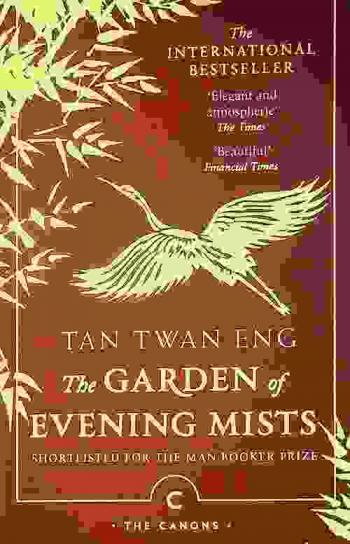
The garden of evening mists
After studying law at Cambrige and time spent helping to prosecute Japanese war criminals, Yun Ling Teoh, herself the scarred lone survivor of a brutal Japanese wartime camp, seeks solace among the jungle fringed plantations of Northern Malaya where she grew up as a child. There she discovers Yugiri, the only Japanese garden in Malaya, and its owner and creator, the enigmatic Aritomo, exiled former gardener of the Emperor of Japan. Despite her hatred of the Japanese, Yun Ling seeks to engage Aritomo to create a garden in Kuala Lumpur, in memory of her sister who died in the camp. Aritomo refuses, but agrees to accept Yun Ling as his apprentice 'until the monsoon comes'. Then she can design a garden for herself. As the months pass, Yun Ling finds herself intimately drawn to her sensei and his art while, outside the garden, the threat of murder and kidnapping from the guerrillas of the jungle hinterland increases with each passing day. But the Garden of Evening Mists is also a place of mystery. Who is Aritomo and how did he come to leave Japan? Why is it that Yun Ling's friend and host Magnus Praetorius, seems to almost immune from the depredations of the Communists? What is the legend of 'Yamashita's Gold' and does it have any basis in fact? And is the real story of how Yun Ling managed to survive the war perhaps the darkest secret of all?

Quantifying variation among garden plants in attractiveness to bees and other flower‐visiting insects
Pollinating insects are globally declining, with one of the main causes being the loss of flowers. With the value of countryside reducing, urban areas, particularly gardens, are increasingly recognized as of benefit to wildlife, including flower‐visiting insects. Many gardeners specifically select plant varieties attractive to wildlife. Given the wide public interest, many lists of recommended varieties have been produced by both amateurs and professional organizations, but appear not to be well grounded in empirical data. These lists, however, are not without merit and are an obvious starting point. There is clearly a need to put the process onto a firmer footing based more on data and less on opinion and general experience. We collected data over two summers by counting flower‐visiting insects as they foraged on 32 popular summer‐flowering garden plant varieties in a specially planted experimental garden, with two smaller additional gardens set up in year two to check the generality of the results. With many thousands of plant varieties available to gardeners in the United Kingdom, and other countries or regions, it would have been an impossible task to make a comprehensive survey resulting in a complete and authoritative list. Our results are valuable and encouraging. Garden flowers attractive to the human eye vary enormously, approximately 100‐fold, in their attractiveness to insects. Insects, especially bees and hover flies, can be attracted in large numbers with clear differences in the distribution of types attracted by different varieties. Our results clearly show that there is a great scope for making gardens and parks more bee‐ and insect‐friendly by plant selection. Horticulturally modified plant varieties created by plant breeding, including hybrids, are not necessarily less attractive to insects and in some cases are more attractive than their wild‐type counterparts. Importantly, all the plants we compared were considered highly attractive to humans, given that they are widely sold as ornamental garden plants. Helping insect pollinators in gardens does not involve extra cost or gardening effort, or loss of aesthetic attractiveness. Furthermore, the methods of quantifying insect‐friendliness of plant varieties trialled in this study are relatively simple and can form the basis of further research, including ‘citizen science’.
Journal Article