
Catalogue Search | MBRL


Are you sure you want to remove the book from the shelf?

{{itemTitle}}
527
result(s) for
"Gardens, Chinese"
Sort by:

Chinese garden pleasures : an appreciation
Celebrating the pleasures of garden living enjoyed by the elite of late imperial China, this book brings together poetry, prose, paintings and prints from imperial China to show the many facets of life and leisure in the Chinese garden.
Book

Ideas of Chinese Gardens
Europeans may be said to have first encountered the Chinese garden in Marco Polo's narrative of his travels through the Mongol Empire and his years at the court of Kublai Khan. His account of a man-made lake abundant with fish, a verdant green hill lush with trees, raised walkways, and a plethora of beasts and birds took root in the European imagination as the description of a kind of Eden. Beginning in the sixteenth century, permanent interaction between Europe and China took form, and Jesuit missionaries and travelers recorded in letters and memoirs their admiration of Chinese gardens for their seeming naturalness. In the eighteenth century, European taste for chinoiserie reached its height, and informed observers of the Far East discovered that sophisticated and codified design principles lay behind the apparent simplicity of the Chinese garden. The widespread appreciation of the eighteenth century gave way to rejection in the nineteenth, a result of tensions over practical concerns such as trade imbalances and symbolized by the destruction of the imperial park of Yuanming yuan by a joint Anglo-French military expedition.In Ideas of Chinese Gardens, Bianca Maria Rinaldi has gathered an unparalleled collection of westerners' accounts, many freshly translated and all expertly annotated, as well as images that would have accompanied the texts as they circulated in Europe. Representing a great diversity of materials and literary genres, Rinaldi's book includes more than thirty-five sources that span centuries, countries, languages, occupational biases, and political aims. By providing unmediated firsthand accounts of the testimony of these travelers and expatriates, Rinaldi illustrates how the Chinese garden was progressively lifted out of the realm of fantasy into something that could be compared with, and have an impact on, European traditions.
eBook


The Classical Gardens of Shanghai
In The Classical Gardens of Shanghai, Shelly Bryant looks at five of Shanghai’s remaining classical gardens through their origins, changing fortunes, restorations, and links to a wider Chinese aesthetic. Shanghai’s classical gardens are as much text as space; they exist in art, poetry, and literature as much as in stone, rock, and earth. But these gardens have not remained static entities. Rather, they have been remodelled constantly since their inception. This book reflects this process within the constancy of traditional Chinese horticulture and reveals Shanghai’s remaining classical gardens as places representing wealth and social status, social and dynastic shifts, through falling family fortunes and political revolutions to search for a recovery of China’s ancient culture in the modern day.
eBook
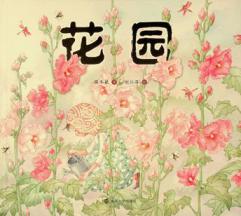
Hua yuan
< hua yuan> yong shui cai ji fa zhan shi le yi nian si ji bu tong zhi wu kai hua de fan sheng,Ye yu yi nü hai de cheng zhang.Quan shu ba shao shu min zu zi ran jiao yu de li nian qian ru qi zhong,Hai zi men zai ba ba de ai de jiao yu zhong,Zai da zi ran de he xie gong sheng zhong,Kuai le xing fu di zhang da.Rong ru zi ran,Ai shang zi ran,Zi ran cheng zhang shi ben shu de nei han,Zhi wu zhi mei zai zhei ce tu hua shu shang cheng wei yu ji jie he nian dai jiao rong zai yi qi,Ye he nü hai na wa er de cheng zhang lian xi zai yi qi,Gong tong bian zhi cheng hao kan de pian zhang.
Book
The Chinese Botanical Gardens
Ce livre fournira des informations de base sur la construction, la gestion et le développement des jardins botaniques chinois. Il peut être utilisé comme matériel de recherche et de référence pour les enseignants et les étudiants professionnels concernés, les institutions d'éducation scientifique et les agences de voyage. Il peut également servir de référence pour la coopération entre les jardins botaniques chinois et étrangers.
eBook
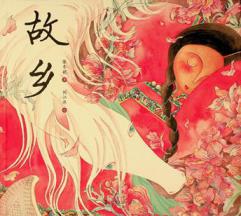
Gu xiang
< gu xiang> zuo pin yong shui cai ji fa,Miao hui le nü hai gu xiang de zi ran feng guang he meng gu zu shao nü dui jia xiang de zan mei he ge chang.Quan shu yong shi ge ti yu tu hua cheng xian le shi yi da mei zi ran de xiu li hua juan.Mei yi ye tu hua,Dou shi dui gu xiang zi ran zhi mei de ou ge,Quan shu chuan qi zi ran mei,Xin ling mei,Shi yi mei,Mei yi ye dou shi yi fu jue mei hua mian,Jiu you ru nü hai de ge chang,Ba xin zhong de zan ge song ji gu xiang.
Book

The Gardens of Suzhou
Suzhou, near Shanghai, is among the great garden cities of the world. The city's masterpieces of classical Chinese garden design, built from the eleventh through the nineteenth centuries, attract thousands of visitors each year and continue to influence international design. In The Gardens of Suzhou, landscape architect and scholar Ron Henderson guides visitors through seventeen of these gardens. The book explores UNESCO world cultural heritage sites such as the Master of the Nets Garden, Humble Administrator's Garden, Lingering Garden, and Garden of the Peaceful Mind, as well as other lesser-known but equally significant gardens in the Suzhou region.Unlike the acclaimed religious and imperial gardens found elsewhere in Asia, Suzhou's gardens were designed by scholars and intellectuals to be domestic spaces that drew upon China's rich visual and literary tradition, embedding cultural references within the landscapes. The elements of the gardens confront the visitor: rocks, trees, and walls are pushed into the foreground to compress and compact space, as if great hands had gathered a mountainous territory of rocky cliffs, forests, and streams, then squeezed it tightly until the entire region would fit into a small city garden.Henderson's commentary opens Suzhou's gardens, with their literary and musical references, to non-Chinese visitors. Drawing on years of intimate experience and study, he combines the history and spatial organization of each garden with personal insights into their rockeries, architecture, plants, and waters. Fully illustrated with newly drawn plans, maps, and original photographs, The Gardens of Suzhou invites visitors, researchers, and designers to pause and observe astonishing works from one of the world's greatest garden design traditions.
eBook
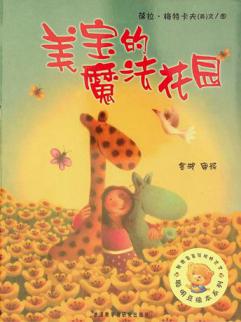
Meibao de mo fa hua yuan
Meibao suspects that her friends steal flowers from her garden. She builds a wall around the garden. Later she realizes that her friends do not steal them. She also understands that true friendship should be based on trust.
Book

Gardens of a Chinese emperor
The Garden of Perfect Brightness (Yuanming Yuan) in the western suburbs of the Qing capital, Beijing, was begun by the great Kangxi (r. 1661–1722) and expanded by his son, Yongzheng (r. 1722–1735) and brought to its greatest glory by his grandson, Qianlong (r. 1736–1796). A lover of literature and art, Qinglong sought an earthly reflection of his greatness in his Yuanming Yuan. For many years he designed and directed an elaborate program of garden arrangements. Representing two generations of painstaking research, this book follows the emperor as he ruled his empire from within his garden. In a landscape of lush plants, artificial mountains and lakes, and colorful buildings, he sought to represent his wealth and power to his diverse subjects and to the world at large. Having been looted and burned in the mid-nineteenth century by western forces, it now lies mostly in ruins, but it was the world’s most elaborate garden in the eighteenth century. The garden suggested a whole set of concepts—religious, philosophical, political, artistic, and popular—represented in landscape and architecture. Just as bonsai portrays a garden in miniature, the imperial Yuanming Yuan at the height of its splendor represented the Qing Empire in microcosm.
eBook