
Catalogue Search | MBRL


Are you sure you want to remove the book from the shelf?

{{itemTitle}}
383
result(s) for
"Gardens, European"
Sort by:

Gardens of Renaissance Europe and the Islamic empires : encounters and confluences
The cross-cultural exchange of ideas that flourished in the Mediterranean during the sixteenth and seventeenth centuries profoundly affected European and Islamic society. Gardens of Renaissance Europe and the Islamic Empires considers the role and place of gardens and landscapes in the broader context of the information sharing that took place among Europeans and Islamic empires in Turkey, Persia, and India.
In illustrating commonalities in the design, development, and people's perceptions of gardens and nature in both regions, this volume substantiates important parallels in the revolutionary advancements in landscape architecture that took place during the era. The contributors explain how the exchange of gardeners as well as horticultural and irrigation techniques influenced design traditions in the two cultures; examine concurrent shifts in garden and urban landscape design, such as the move toward more public functionality; and explore the mutually influential effects of politics, economics, and culture on composed outdoor space. In doing so, they shed light on the complexity of cultures and politics during the Renaissance.
A thoughtfully composed look at the effects of cross-cultural exchange on garden design during a pivotal time in world history, this thought-provoking book points to new areas in inquiry about the influences, confluences, and connections between European and Islamic garden traditions.
In addition to the editor, the contributors include Cristina Castel-Branco, Paula Henderson, Simone M. Kaiser, Ebba Koch, Christopher Pastore, Laurent Paya, D. Fairchild Ruggles, Jill Sinclair, and Anatole Tchikine.
eBook

Gardens of Renaissance Europe and the Islamic empires : encounters and confluences
\"A collection of essays exploring similarities between gardens and designed landscapes in Europe and the Islamic world after the fifteenth century. Essays identify possible direct or indirect influences and examine transcontinental mutual influences in garden design\"--Provided by publisher.
Book

Gardens of Renaissance Europe and the Islamic Empires
The cross-cultural exchange of ideas that flourished in the
Mediterranean during the sixteenth and seventeenth centuries
profoundly affected European and Islamic society. Gardens of
Renaissance Europe and the Islamic Empires considers the role
and place of gardens and landscapes in the broader context of the
information sharing that took place among Europeans and Islamic
empires in Turkey, Persia, and India.
In illustrating commonalities in the design, development, and
people's perceptions of gardens and nature in both regions, this
volume substantiates important parallels in the revolutionary
advancements in landscape architecture that took place during the
era. The contributors explain how the exchange of gardeners as well
as horticultural and irrigation techniques influenced design
traditions in the two cultures; examine concurrent shifts in garden
and urban landscape design, such as the move toward more public
functionality; and explore the mutually influential effects of
politics, economics, and culture on composed outdoor space. In
doing so, they shed light on the complexity of cultures and
politics during the Renaissance.
A thoughtfully composed look at the effects of cross-cultural
exchange on garden design during a pivotal time in world history,
this thought-provoking book points to new areas in inquiry about
the influences, confluences, and connections between European and
Islamic garden traditions.
In addition to the editor, the contributors include Cristina
Castel-Branco, Paula Henderson, Simone M. Kaiser, Ebba Koch,
Christopher Pastore, Laurent Paya, D. Fairchild Ruggles, Jill
Sinclair, and Anatole Tchikine.
eBook

Painting paradise : the art of the garden
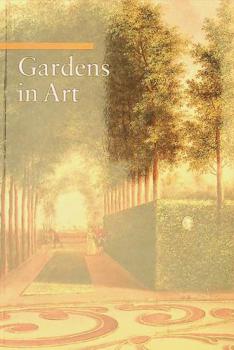
Gardens are where man and nature meet. They change by the hour, day-to-day, and with the seasons. They carry associations about the status, approach to life, and sometimes even the political affiliations of the creator. Gardens can be intended for public enjoyment or private delectation; they can be open to the masses or closed to all but a few. They may be places of scientific study; havens for the solitary thinker; spaces for frolicking and games, for flirtation and for love. Presented with the many faces of the garden, artists in Western Europe have looked at the garden in different ways, extracting and emphasising those facets of the garden unique to their culture and their time. At the same time individual elements drawn from the garden - whether architectural or botanic - have at certain periods come to the fore and taken their place in the decorative arts of Western Europe. This book explores the way in which the garden has inspired artists and craftsmen in Europe between 1500-1900. Exhibition: Royal Collection, London, UK (2015).
Book

Allées in Landscape Architecture and Garden Art—Types, Preservation, and Renewal of the Living Heritage of Baroque Allées in Hungary
Examining the history of garden art since ancient times, we find many examples of linear tree layouts supporting orientation or being used for the purpose of composition. Allées gained special significance during the Baroque as dynamic and grandiose space-forming garden design elements. They mostly consist of trees of taxonomically similar species planted along a regular line equidistant from each other in single or multiple rows. The two-dimensional compositional elements of the layout form three-dimensional longitudinal space forms. During their evolution, both their proportions and openness constantly change. Analyses of the compositional role and functions of allées of exemplary Hungarian Baroque garden complexes in the 18th century provided a basis for setting up a novel typology. Five compositional types have been defined as the primary result of archival research. The significance of the still-subsisting historic Hungarian allées calls for unique protection similar to European heritage protection. Taking a summary of significant, surviving examples of Hungarian Baroque allées into account, methods for allée renewal are defined along with the core question of whether allées are natural landscape elements or strict architectural compositions where authenticity may be an important criterion. The methodological research is partially based on three plans for the renewal of Baroque allées in Hungary that have been worked out by the Author as the chief landscape architect of the projects.
Journal Article

Gardens of Renaissance Europe and the Islamic empires : encounters and confluences / edited by Mohammad Gharipour
\"A collection of essays exploring similarities between gardens and designed landscapes in Europe and the Islamic world after the fifteenth century. Essays identify possible direct or indirect influences and examine transcontinental mutual influences in garden design\"--Provided by publisher.
eBook

Sacred seeds : new world plants in early modern English literature
\"More than five hundred years after the fact, present-day writers still use hyperbolic adjectives to describe the \"discovery\" of the Americas. Columbus's crossing of the Atlantic--and the age of exploration that ensued--dramatically and forever changed the early modern world. The societies, economies, cultures, arts, and burgeoning sciences of Europe were quickly transformed by the ongoing encounter with the New World. The meeting of the New and the Old Worlds, however, was more than a meeting of disparate civilizations. It was also a confluence of exciting and often surprising associations that continually created new interfaces between materials and knowledge. The Western and Eastern Hemispheres, brought together by sailing ships for the first time on a large scale, helped create the global landscape we take for granted today. Central to this formative moment in global history were New World plants. The agriculture of indigenous peoples mythically and materially shaped English society and, subsequently, its literature in new and startling ways. Sacred Seeds examines New World plants--tobacco, amaranth, guaiacum, and the prickly pear cactus--and their associated Native myths as they moved across the Atlantic and into English literature. Edward McLean Test reinstates the contributions of indigenous peoples to European society, charting an alternative cultural history that explores the associations and assemblages of transatlantic multiplicity rather than Eurocentric homogeny\"-- Provided by publisher.
Book

The paper road
This exhilarating book interweaves the stories of two early twentieth-century botanists to explore the collaborative relationships each formed with Yunnan villagers in gathering botanical specimens from the borderlands between China, Tibet, and Burma. Erik Mueggler introduces Scottish botanist George Forrest, who employed Naxi adventurers in his fieldwork from 1906 until his death in 1932. We also meet American Joseph Francis Charles Rock, who, in 1924, undertook a dangerous expedition to Gansu and Tibet with the sons and nephews of Forrest's workers. Mueggler describes how the Naxi workers and their Western employers rendered the earth into specimens, notes, maps, diaries, letters, books, photographs, and ritual manuscripts. Drawing on an ancient metaphor of the earth as a book, Mueggler provides a sustained meditation on what can be copied, translated, and revised and what can be folded back into the earth.
eBook