
Catalogue Search | MBRL


Are you sure you want to remove the book from the shelf?

{{itemTitle}}
1,183
result(s) for
"Gasoline industry -- United States -- Employees"
Sort by:
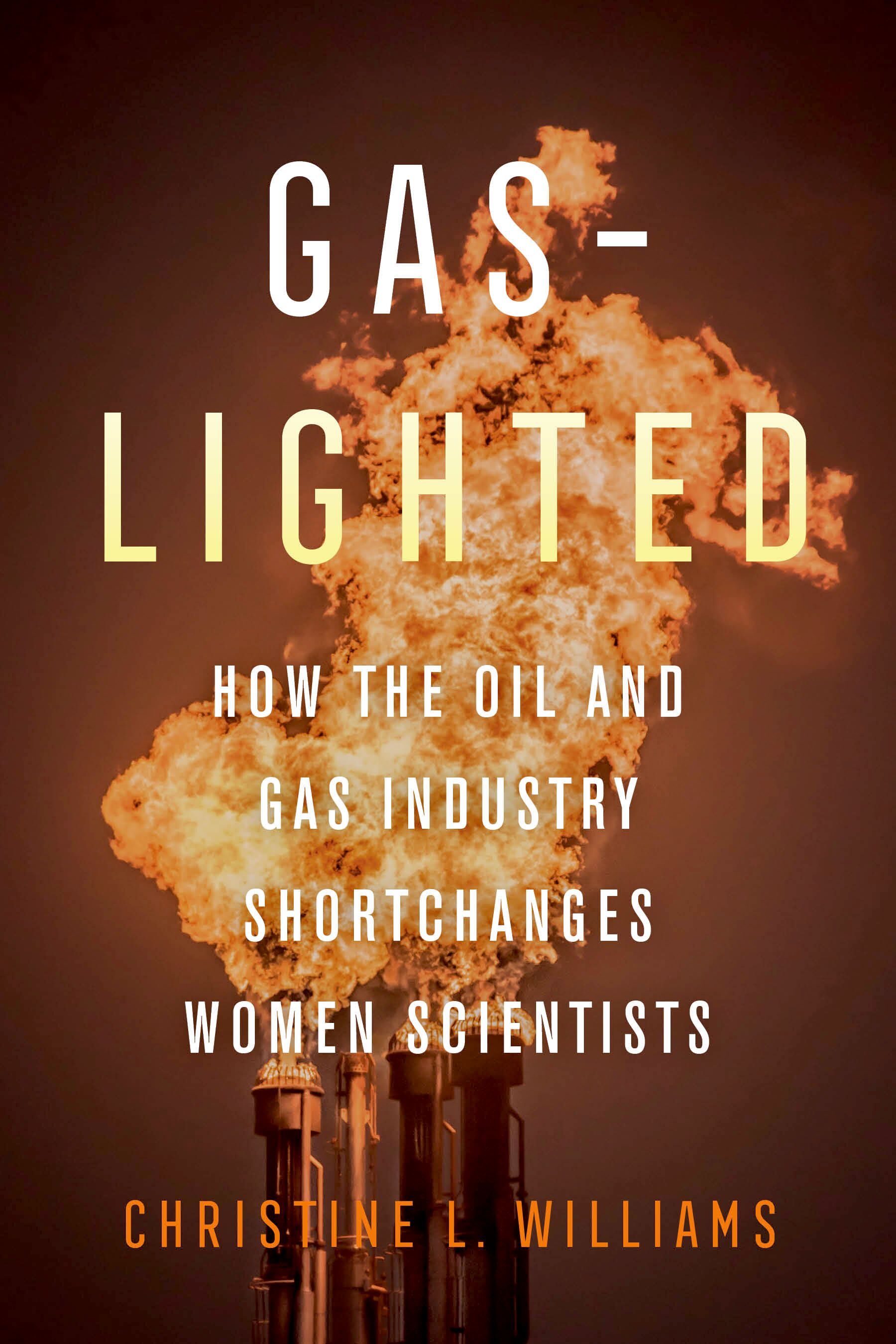
Gaslighted : how the oil and gas industry shortchanges women scientists
The oil and gas industry is one of the richest and most powerful industries in the world. In recent years, company avowals in support of diversity, much-touted programs for \"women in STEM,\" and, most importantly, a tight labor market with near parity in women pursuing geoscience credentials might lead us to expect progress for women in this industry's corporate ranks. Yet, for all the talk of \"the great crew change,\" the industry remains overwhelmingly white and male. Sociologist Christine L. Williams asks, where are the women?
To answer this question, Williams embarked on a decade-long investigation-one involving one hundred in-depth interviews, a longitudinal survey, and ethnographic research-that allowed her to observe the industry in times of boom and bust. She found that when the industry expands, women may be able to walk through the door, but when the industry contracts, the door becomes a revolving one, whirling ever faster, as companies retreat to their white male core. These gendered outcomes are obscured by firms' stated commitments to diversity in hiring and the language of merit. The result is organizational gaslighting, a radical dissonance between language and practice that Williams exposes for all.
eBook

Gaslighted
The oil and gas industry is one of the richest and most powerful industries in the world. In recent years, company avowals in support of diversity, much-touted programs for \"women in STEM,\" and, most importantly, a tight labor market with near parity in women pursuing geoscience credentials might lead us to expect progress for women in this industry's corporate ranks. Yet, for all the talk of \"the great crew change,\" the industry remains overwhelmingly white and male. Sociologist Christine L. Williams asks, where are the women? To answer this question, Williams embarked on a decade-long investigation-one involving one hundred in-depth interviews, a longitudinal survey, and ethnographic research-that allowed her to observe the industry in times of boom and bust. She found that when the industry expands, women may be able to walk through the door, but when the industry contracts, the door becomes a revolving one, whirling ever faster, as companies retreat to their white male core. These gendered outcomes are obscured by firms' stated commitments to diversity in hiring and the language of merit. The result is organizational gaslighting, a radical dissonance between language and practice that Williams exposes for all.
eBook
The MoneyWatch Report
Stocks finished strong yesterday fueled by constructive U.S. economic data and easing COVID-19 infections. The Dow gained two hundred and fifteen points, the NASDAQ set a new record adding one hundred and sixty-four points, the S&P 500 followed suit hitting a new record, too, up twenty-six points.
Transcript

Hurricane reconstruction in the United States Gulf Coast
Purpose - The purpose of this paper is to study construction companies performing reconstruction to better understand the positive and negative effects of hurricanes on the construction industry.Design methodology approach - Construction companies with hurricane reconstruction experience in gulf coast states were surveyed to obtain information about their activities from 1999 to 2008. A wide range of company sizes were represented in the collected data, from less than 15 to more than 100 employees, and from less than five to more than 100 million dollars in annual work volume. Specific points investigated include how hurricane reconstruction affects profitability, scheduling, estimating accuracy, and volume of business (both short term and subsequent). Other factors examined were labour availability, labour costs, material prices, material availability and how insurance company involvement impacted work progress.Findings - While the rewards of additional work are obvious, this study found that labour shortages, availability of materials, and issues with insurance companies are the main risks construction companies face. Construction companies should have a hurricane construction plan to capitalize fully on so much opportunity. The plan should include contingency pricing to combat the rise in job costs, a geographic region to work into keep from getting over extended, a strong labour force, and a plan for displaced employees. A plan will help mitigate risk and increase the probability of success.Originality value - This paper should provide useful information for contractors, government entities and others who are involved with reconstruction efforts after unpredictable disasters, particularly hurricanes.
Journal Article

Selling Gasoline with a Smile: Gas Station Attendants between the United States, Italy, and the Third World, 1945–1970
This article analyzes the ways in which Esso Standard Italiana, the Italian affiliate of Standard Oil (New Jersey), and the state-owned firm Azienda Generale Italiana Petroli (Italian General Oil Company, Agip), redefined the job of gas station attendants in post-war Italy. It argues that, drawing on US scientific management and marketing, the two companies advanced a new understanding of masculinity and class. They promoted the idea that gas station attendants should distance themselves from the forms of male working-class identity that were associated with mechanical work and combine technical expertise with the ability to market products by relying on appearance. It shows how during the 1960s Agip exported such Americanized business practices to the developing world, by organizing a series of training courses for gas station attendants from North Africa and sub-Saharan Africa. This article looks in turn at how attendants challenged the two companies' efforts to standardize and rationalize their services by joining trade associations and organizing strikes, in the name of their rights as shopkeepers and small businessmen.
Journal Article
CBS MoneyWatch
Well, Asian markets closed mostly higher today after President Trump indicated positive momentum with trade talks between the U.S. and China. Yesterday, Mister Trump suggested he is open to easing off the March 1st deadline to complete negotiations. That is when tariffs on Chinese goods are set to increase if a deal isn't reached. Another market mover to keep an eye on today is what the Federal Reserve says when minutes from its January policy meeting are released.
Transcript