
Catalogue Search | MBRL


Are you sure you want to remove the book from the shelf?

{{itemTitle}}
2,378
result(s) for
"Gastronomy"
Sort by:

Modernist cuisine at home
\"This book focuses on cooking equipment, techniques, and recipes\"--P. xvii.
BOOK

National Gastronomy and Gastronomic Tourism of Montenegro on its Way to the European Union
Montenegro, a Mediterranean gem, boasts abundant natural and cultural treasures, forming the bedrock of its thriving tourism industry. Among its various tourism branches – cultural, nautical, health, and MICE – gastronomy stands out as a potent driver. The indigenous gastronomic landscape not only entices foreign tourists but also fuels increased consumption. This paper endeavours to elucidate the justification and potential of Montenegro’s gastronomic tourism by spotlighting its national gastronomy. Gastronomy, intricately linked with destination identity, plays a pivotal role in shaping the destination’s image. Drawing inspiration from the Republic of Slovenia’s successful declaration as a European gastronomic region in 2021, this paper advocates for a similar trajectory for Montenegro to enhance its tourism brand recognition.
Journal Article

An exploratory study on the determination of supply indicators for gastronomy tourism in Turkey
The main purpose of this study is to determine the main indicators of supply related to gastronomic tourism in a destination Turkey. Quantitative research methods were used in this study. The questionnaire format was preferred as a data collection tool. The research has two separate study research universes. For this reason, the data of the research were obtained via two separate questionnaires from two different samples: 1291 questionnaires collected face-to-face and online were included in the final analysis. According to the results of the research, 26 of 40 gastronomy supply sources are gastronomy tourism indicators for Turkey in line with the opinions of gastronomy experts and domestic tourists in Turkey According to the findings and results of the study, among Turkey’s gastronomic tourism supply sources, the elements with the highest importance-performance degree are locality, authenticity, and culture. It is possible to reveal strong elements that will provide competitive advantages from the indicators revealed by the importanceperformance analysis. Likewise, it can be determined which indicators are weak in terms of gastronomy tourism.
El objetivo principal de este estudio es determinar los principales indicadores de oferta relacionados con el turismo gastronómico en un destino. Se utilizaron métodos de investigación cuantitativos. Se prefirió el formato de cuestionario como herramienta de recolección de datos. La investigación tiene dos universos de estudio separados, por este motivo, los datos de la investigación se obtuvieron por medio de dos cuestionarios separados de dos muestras diferentes. En el análisis final se incluyeron 1291 cuestionarios aplicados de manera presencial y en línea. Según los resultados de la investigación, 26 de 40 fuentes de oferta gastronómica son indicadores del turismo gastronómico de Turquía, de acuerdo con las opiniones de los expertos en gastronomía y de los turistas nacionales en dicho país. Según los hallazgos del estudio, entre las fuentes de oferta de turismo gastronómico de Turquía, los elementos con mayor grado de importancia-desempeño son la localidad, la autenticidad y la cultura. Es posible revelar elementos fuertes que podrían proporcionar ventajas competitivas a partir de los indicadores evidenciados por el análisis de importancia-desempeño. Asimismo, se puede determinar cuáles indicadores son débiles en materia de turismo gastronómico.
Journal Article


Edible Experiences
Edible Experiences: The Science and Art of Food Perception provides understanding of food-science-art connections in applying principles of experience design. It is done by involving all five senses in gastronomy, based on the principles of the experience economy and achieving psychological satisfaction of consumers. The text builds on the seminal works on the experience economy (Pine and Gilmore, 1998), neurogastronomy (Shepherd, 2013) and gastrophysics (Spence, 2017). However, it offers a wider picture on food, seeing it also from the perspectives of tourism, arts, anthropological, marketing and diplomacy. In an easily understandable style, the book offers a complement to existing knowledge on the omnipresent topic of food, but seen from different perspectives, offering understanding of the colour, form, symmetry, melody, rhythm, tonality, scale, harmony, etc., used in food experience design. The cause-and-effect relationship between individual visual, auditory, tactile, olfactory, gustatory stimuli and consumer reactions is provided.
eBook

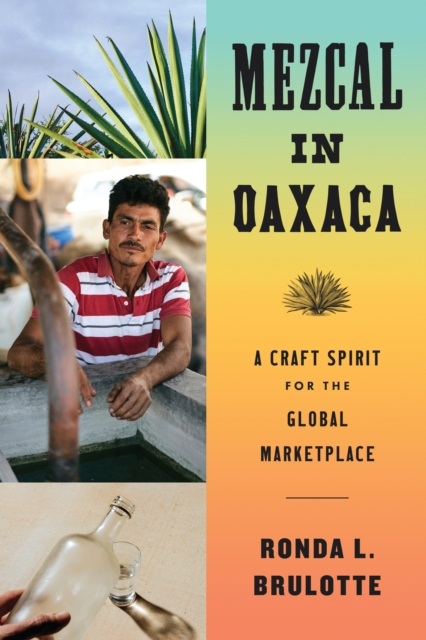
Mezcal in Oaxaca
An ethnography of mezcal and how it has become a global, \"artisanal\" good.Mezcal is booming.Once considered a peasant drink--the rough, lowbrow cousin of the more refined tequila--the smoky spirit is now prized by connoisseurs the world over.
eBook

First bite : how we learn to eat
\"Food historian Bee Wilson delves deep into the latest research from food psychologists, neuroscientists, and nutritionists to reveal that our food habits are shaped by family and culture, memory and gender, hunger and love. We do not come into the world with an innate sense of taste or nutrition as omnivores: we have to learn how and what to eat, how sweet is too sweet, and what food will give us the most energy for the coming day. Drawing on the psychology of eating, she shows that it is possible, despite our dysfunctional food industry and habits, to feed ourselves better\"-- Provided by publisher.
Book

GASTRONOMIC EXPERIENCE AS A MOTIVATION FOR TOURISTS TO CHOOSE TOURIST DESTINATIONS IN INDONESIA AND VIETNAM
Culture-based traditional food experience (gastronomy) has become an exciting topic for tourists worldwide. This is because gastronomic tourism offers a new alternative to a tourist destination. Until now, studies that discuss how the intentions of Vietnamese and Indonesian tourists to choose traditional food for their tourism activities are still limited. Therefore, this study aims to explore the antecedent factors that shape the intention of tourists to choose traditional food as a reason for tourism activities using the Theory of Planned Behavior (TPB) approach. This study involved 345 Vietnamese and Indonesian tourists in providing information on the antecedent factors that shape the intention to choose traditional food. Data were analyzed using structural equation modeling (SEM). The results of the study reveal that the attitude toward consuming traditional food and perceived control towards consuming traditional food influence the intention of tourists to choose gastronomy as the reason for their tourism activities. However, subjective norms towards consuming traditional food have not been able to influence tourists' intention to choose traditional food for travel. These findings provide important implications for the government and tourism practitioners to develop gastronomic tourism as a new alternative. In addition, various gastronomic tourism promotion programs consider tourist behavior need to be carried out.
Journal Article