
Catalogue Search | MBRL


Are you sure you want to remove the book from the shelf?

{{itemTitle}}
29
result(s) for
"Gastronomy Fiction."
Sort by:

Stories from the kitchen
\"Stories from the Kitchen is a one-of-a-kind anthology of classic tales showcasing the culinary arts, from across the centuries and around the world. Here is a mouthwatering smorgasbord of stories with food in the starring role, by a range of masters of fiction--from Dickens and Chekhov to Isaac Bashevis Singer, from Shirley Jackson to Jim Crace and Amy Tan. These richly varied selections offer tastes as decadent as caviar and as humble as cherry pie. They dazzle with the sumptuous extravagance of Isak Dinesen's \"Babette's Feast\" and console with a prisoner's tender final meal in Gunter Grass's The Flounder. Choice tidbits from famous novels make an appearance: the triumphant boeuf en daube served in Virginia Woolf's To the Lighthouse, Marcel Proust's rhapsodic memories of the family cook preparing asparagus in Remembrance of Things Past, & âEmile Zola's outrageously sensual \"cheese symphony\" scene from The Belly of Paris. Here, too, are over-the-top amuse-bouches by Gerald Durrell, Nora Ephron, and T. C. Boyle; a touching short story about food and love by food writer M. F. K. Fisher; and a delightful account of the perfect meal by eighteenth-century epicure Jean Anthelme Brillat-Savarin, who wrote \"Tell me what you eat and I will tell you what you are.\" From a barrel of oysters endowed with powers of seduction to a dish of stewed tripe liberally spiced with vengeance, the literary confections assembled here will tantalize, entice, and satisfy literary gourmands everywhere\"-- Provided by publisher.
Book

Eating Ideally
The astronomical growth in food studies during the last decade as well as technological advances in communication, in food production, and in studies of climate change have contributed to increased diversity in the strands of interest in foodways as they intersect with utopian studies. This introductory essay to the special issue on utopian foodways acknowledges specific details of some of these changes and intersections, explains the origin of the issue in a 2013 workshop at the University of Kansas, and provides an overview of the essays included. These essays range chronologically and geographically from studies of seventeenth-century America (and earlier European influences) through nineteenth-century France, to American locales of the twentieth century, to imagined settings in fictional literature, and finally, to imagined communities created through diet books in the present. Thematically, they include analyses of images of abundance and lack in the past, “real” practices in the past and present, and imagined eating in the future. The essay concludes with a call for “speculative” futures in research, writing, and teaching about utopian food practices.
Journal Article


Food, Consumption and the Body in Contemporary Women's Fiction
This study explores the subtle and complex significance of food and eating in contemporary women's fiction. Sarah Sceats reveals how preoccupations with food, its consumption and the body are central to the work of writers such as Doris Lessing, Angela Carter, Margaret Atwood, Michèle Roberts and Alice Thomas Ellis. Through close analysis of their fiction, Sceats examines the multiple metaphors associated with these themes, making powerful connections between food and love, motherhood, sexual desire, self identity and social behaviour. The activities surrounding food and its consumption (or non-consumption) embrace both the most intimate and the most thoroughly public aspects of our lives. The book draws on psychoanalytical, feminist and sociological theory to engage with a diverse range of issues, including chapters on cannibalism and eating disorders. This lively study demonstrates that feeding and eating are not simply fundamental to life but are inseparable from questions of gender, power and control.
eBook

Culinary diplomacy's role in the immigrant experience : fiction and memoirs of Middle Eastern women
\"Culinary Diplomacy's Role in the Immigrant Experience: Fiction and Memoirs of Middle Eastern Women is the first contribution to literary food study to examine Middle Eastern women's writing. Using twenty-first century transnational theory, the volume establishes books with recipes as tools of culinary diplomacy\"-- Provided by publisher.
Book

Dining Alone
In these short stories the table is a scene of revenge and nostalgic memories, self-realisation and self-indulgence, separations and new beginnings. In turn warm and witty, acerbic and compassionate, sad and joyful, the stories in \"Dining Alone\" demonstrate the rich possibilities that food brings to fiction.
eBook
Charles Fourier Versus the Gastronomes
This article discusses the ways in which Charles Fourier subverted and reelaborated early nineteenth-century gastronomic ideas to develop one of the most important aspects of utopian life in his Harmonic world: the social science and semireligion of gastrosophy. With the reinvention of “good taste” for the postrevolutionary bourgeoisie, freshly codified knowledge about the art and science of gastronomy became an important means of shaping these new consumers—literally and figuratively—via a stream of popular literature, scientific treatises, etiquette handbooks, and gastronomic guides. For Fourier, however, gastronomy was merely superficial and conspicuous overeating, its self-obsessed and selfish consumerism reflecting everything wrong with “civilized” society. His formulation of gastrosophy, in contrast, encapsulated a complete understanding of food production, cookery, and health, using all of these to make the world a better place by pleasurably and harmlessly realizing one's own desires and sharing them with others. This article examines gastrosophy, often skipped over as a frivolous diversion in his work, arguing that Fourier deliberately chose it as a wittily accessible means of both encapsulating his fully realized vision of Harmony and utterly refuting the emerging market-led model of society exemplified by Parisian gastronomy.
Journal Article

MÁS ALLÁ DE LAS FRONTERAS: IDENTIDADES LIMINALES EN LA FICCIÓN TELEVISIVA HANNIBAL, DE BRYAN FULLER
Hannibal is presented as a paradigm of the transformations that contemporary fictions have undergone in recent years by introducing the other, the villain, as the main character of the story. The identity of the cannibal is formed by culturally opposed concepts and is placed in a continuous between: between good and evil, between monstrosity and humanity, between the horror of the crimes he commits and the aestheticization and preciousness of how he presents them, between the recreation of an exquisite high culture (gastronomy) and animality and savagery (cannibalism) that scores each and every one of its episodes.
Journal Article
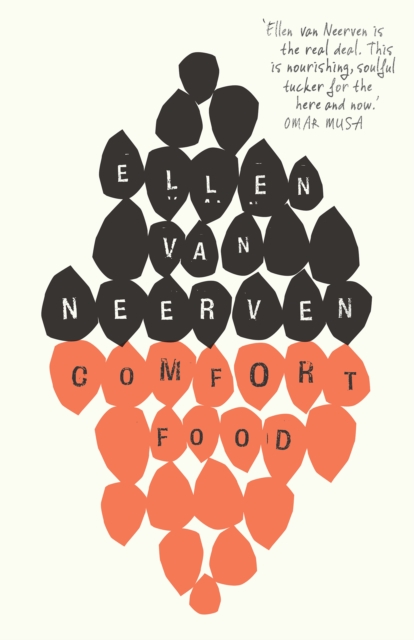
Comfort Food
A soulful exploration of identity, heritage, and healing through verse.Comfort Food , by Ellen van Neerven, offers a fresh and distinctive collection of poetry that bridges Indigenous and non-Indigenous experiences.
eBook

‘You're quite a gourmet, aren't you, Palmer?’ Masculinity and Food in the Spy Fiction of Len Deighton
In this paper, the novel and film ofLen Deighton's1962spy novelThe IPCRESS File
, along with
Len Deighton's Action Cookbook
(reprints of newspaper strips that were purposely designed for a young, male audience) will be analysed as diagnostic texts, revealing a peculiarlyBritish(or even English) variant on a new affluent and aspirationalmasculinityformed in the late 1950s and the beginning of the 1960s, where the explicit disaffection of the previous decade (the ‘Angry Young Man’ or the bohemian) is mediated intoconsumption, the pleasures ofdegustation, and a laconic ‘cool’.
Journal Article