
Catalogue Search | MBRL


Are you sure you want to remove the book from the shelf?

{{itemTitle}}
995
result(s) for
"Gemme"
Sort by:

Ruby, sapphire & spinel : an archaeological, textual and cultural study
Until about two hundred years ago, no gemological distinction was made between ruby and spinel. Red spinel and red ruby are not infrequently found together and though gem cutters and engravers noticed and commented on the difference in hardness, the assumption was that spinel was simply an \"unripe\" version of ruby. Additionally, ruby and sapphire are both versions of the mineral corundum, distinguished only by color and minute traces of the metal oxides that caused these different colors. Sapphires may be pink, yellow, and green as well as blue, while rubies come in many shades of red which, inevitably causes confusion as one person's pale red ruby is another's pink sapphire--there are no absolutes. Consequently, the nomenclature is confused, both within early texts, and also in later translations of those texts. The ancient authors could only report on the basis of the information available to them at the time, while those writing the later translations were fine textual scholars or epigraphers, but not infrequently poor gemologists, not familiar with the mineralogical distinctions between the gems. It has often been difficult to get an overarching view of the many different factors that all played a part in the spread of precious gems and of the dissemination of knowledge about them. Given the paucity of available information concentrating exclusively on the use of ancient precious gemstones, the author combed the literature for relevant references. A surprising amount of descriptive and factual information was found, mostly scattered throughout early texts. The most interesting passages were selected and wherever possible the original authors' words were quoted rather than paraphrased. The early translations in the languages used by 17th-19th century scholars are given, names of people, places or objects that otherwise might have remained obscure are explained. Gems travel. They follow wealth and because of their natural immutability, the only way they can be identified by culture is by the way man has affected their appearance, deliberately or accidentally. The dating of gems that are still in original period settings is easier because the dated typology of rings and jewelry settings generally, is more secure than the study of gem shapes, while the study and dating of specific faceting styles of unmounted stones is still in its infancy.
Book
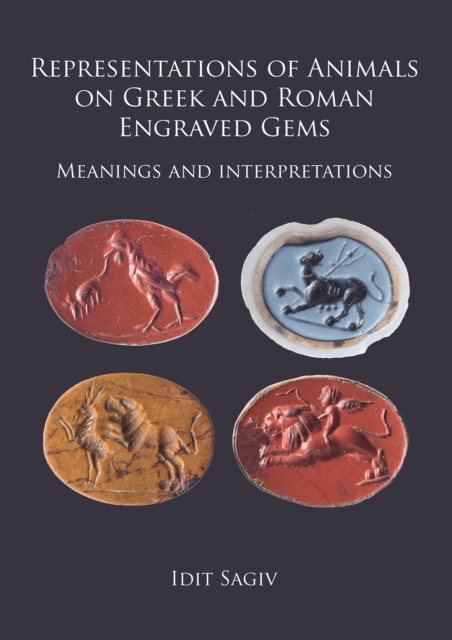
Representations of Animals on Greek and Roman Engraved Gems
A comprehensive study of the depictions of animals and their significance on Greek and Roman gems. The work examines the associations between animal depictions and the type of gemstone and its believed qualities. The study also compares the representation of animals on gems to other, larger media, and analyses the differences.
eBook

Engraved Gems
Many are no larger than a fingertip. They are engraved with symbols, magic spells and images of gods, animals and emperors. These stones were used for various purposes. The earliest ones served as seals for making impressions in soft materials. Later engraved gems were worn or carried as personal ornaments - usually rings, but sometimes talismans or amulets. The exquisite engraved designs were thought to imbue the gems with special powers. For example, the gods and rituals depicted on cylinder seals from Mesopotamia were thought to protect property and to lend force to agreements marked with the seals. This edited volume discusses some of the finest and most exceptional precious and semi-precious stones from the collection of the Dutch National Museum of Antiquities - more than 5.800 engraved gems from the ancient Near East, Egypt, the classical world, renaissance and 17th-20th centuries - and other special collections throughout Europe. Meet the people behind engraved gems: gem engravers, the people that used the gems, the people that re-used them and above all the gem collectors. This is the first major publication on engraved gems in the collection of the National Museum of Antiquities in Leiden since 1978.
eBook

Religion in Ephesos Reconsidered
This volume reviews the current state of research on the most important Ephesian projects offering evidence for religious activity during the Roman period. The essays cover a wide range of materials and question traditional understandings of material culture in Ephesos.
eBook

Genetic and pathogenic diversity of Pseudomonas syringae pv. syringae isolates associated with bud necrosis and leaf spot of pear in a single orchard Pyrus communis L.; Latium
Ninety fluorescent pseudomonads obtained from pear cultivars Coscia and Tosca showing symptoms of bacterial blast were assessed by biochemical tests and pathogenicity on lemon fruits and pear and lilac leaves. Presence of the syrB gene and ice-nucleation activity was also determined. In addition, genetic variability was assessed using repetitive sequence PCR with the BOX A1 primer. The patterns were analyzed with UPGMA and Dice's coefficients. Eighty-nine isolates were determined as putative Pseudomonas syringae pv. syringae. Four genomic patterns, A, B, C and D, were obtained by BOX-PCR analysis. Patterns A and C were identical to those shown by other P. s. pv. syringae strains previously isolated from pear in other areas. Pattern B was associated solely with leaf spot symptoms observed on cv Coscia. The syrB gene was present in 38.8% of the isolates, whereas ice-nucleation activity was observed in 77.7%. Isolates possessing the syrB gene were the most aggressive in pathogenicity tests. Different populations of P. s. pv. syringae appear to be involved in inducing blast symptoms on pear in Central Italy
[Novanta Pseudomonas fluorescenti provenienti da piante delle cultivar di pero Coscia e Tosca presentanti sintomi di necrosi batterica sono stati sottoposti a test biochimici e a prove di patogenicità su frutti di limone e foglie di pero e di serenella. E' stata pure determinata la presenza del gene syrB e di attività di nucleazione del ghiaccio. Inoltre, è stata accertata la variabilità genetica utilizzando la repetitive sequence PCR con il primer BOX A1. I pattern ottenuti sono stati analizzati con l'UPGMA e i coefficienti di Dice. Ottantanove isolati sono stati identificati come Pseudomonas syringae pv. syringae putativi. Mediante analisi BOX-PCR sono stati ottenuti quattro pattern genomici, A, B, C e D. A e C erano identici a quelli mostrati da altri ceppi di P. s. pv. syringae isolati in precedenza dal pero in altre aree. B era associato solamente ai sintomi di macchie fogliari osservati sulla cv Coscia. Il gene syrB era presente nel 38,8% degli isolati, mentre l'attività di nucleazione del ghiaccio è stata osservata nel 77,7%. Nei test di patogenicità gli isolati che possedevano il gene syrB sono risultati i più aggressivi. Popolazioni diverse di P. s. pv. syringae risultano essere interessate nell'induzione di sintomi di necrosi batterica sul pero in Italia Centrale.]
Journal Article
Gemstones and Their Origins
Each gem deposit-whether of primary origin in the parent rocks; or secondary as alluvial placers in valley floors, river gravels, or the sand of oceanic shelves presents an eloquent chronicle of the Earth's life story.
eBook

Endophytic fungi in Quercus cerris. Isolation frequency in relation to phenological phase - tree health and the organ affected Tuscany
The isolation frequency of endophytic fungi in Quercus cerris was determined in relation to sampling data, the health state of the tree, and the tree organ affected. Sampling was carried out at three times, in April (budbreak), June (full vegetation) and October (leaf fall), on trees that were either healthy or in decline, and on three organs: current-year twigs, with a diameter less than 2 cm, buds, and leaves. The experiment was done in an approximately 20-year-old oak forest at an altitude of 350-400 m above sea level. Three healthy and three declining trees were sampled annually in 1999 and 2000. From each tree 20 current-year twigs, 20 buds and 10 leaves were harvested. Tissue fragments, after sterilization with 10% H₂O₂, were incubated on potato-dextrose-agar amended with streptomycin, at 20°C in the dark for 7 days, and the isolated mycelia maintained at 4°C on malt-extract agar. A total of 15 fungal species were isolated. All organs yielded fungal species but the greatest number of endophytic species came from current year twigs. Individual species were isolated more often from declining trees than from healthy trees, and more fungi were isolated in June (full vegetation) than in April or October. Diplodia mutila, Discula quercina and Phomopsis quercina, which are known to be pathogenetic on oaks, were present on oaks for a large part of the year. These fungi are both saprophytes (as endophytes) and parasites and are, therefore, probably a serious contributing and inciting factor in the oak decline syndrome.
Journal Article
In-season variations in transmission of cherry X-phytoplasma and implication in certification programs Prunus avium L.; California
Different aged shoots of X-disease cherry trees (Prunus avium cv Bing) collected in Spring (June) or Summer (August) were assayed using fruit spurs or bud chips from current, 1-, 2- and 3-year old shoots. Ten to 20 single T-grafts were made onto indicator trees of Bing scions on mahaleb (P. mahaleb) rootstocks. Spring collections, irrespective of shoot age, produced transmission rates of 10%. In contrast, over half of the indicators were infected with Summer collections, which, when T-bud propagated onto mazzard (P. avium) seedlings, resulted in 90% diseased progeny trees. Results showed that biologic assays for cherry X-phytoplasma were optimized using Summer collections. Besides cherry sources, index-transmissions and propagations of scion buds from X- and peach yellow leaf roll (PYLR) peach trees produced high rates of transmission (both diseases) and high numbers of diseased progeny (PYLR)
[Sono stati saggiati rami di piante di ciliegio dolce (Prunus avium cv Bing) affette da X-disease, raccolti in primavera (giugno) o estate (agosto) utilizzando rametti a frutto o gemme prelevati da rami dell'anno, di 1, 2 e 3 anni. Sono stati effettuati da 10 a 20 innesti a T su piante indicatrici di Bing innestata su magaleppo (P. mahaleb). Le raccolte primaverili, indipendentemente dall'età dei rami, presentavano un livello di trasmissione del 10%; al contrario, più della metà delle piante indicatrici erano infettate nel caso delle raccolte estive, che, propagate mediante gemme con innesto a T su piantine di ciliegio dolce (P. avium), davano circa il 90% di piante ammalate. I risultati hanno dimostrato che i saggi biologici per il fitoplasma X del ciliegio sono ottimizzati ricorrendo a raccolte estive. Oltre che da fonti costituite dal ciliegio, le trasmissioni a fini diagnostici e le propagazioni di gemme da piante di pesco affette dalla X disease e dall'accartocciamento fogliare giallo (PYLR) producevano livelli elevati di trasmissione (ambedue le malattie) e numeri elevati di progenie affetta (PYLR).]
Journal Article

Police chief able to cow the council
The council's inability to pass on first try a Councilor Konnie Lukes-sponsored resolution in support of his department's \"high level of professionalism, leadership in community relations and dedication to the citizens of Worcester,\" is a failure of leadership, he wrote. They passed Ms. Lukes' resolution. Then, to appease the community, they passed another calling for respecting the civil rights of everyone, saying everybody's lives matter, and implicitly carrying the message that African-Americans should know their place in this community. City Manager Ed Augustus said he didn't support Chief [Gary Gemme]'s letter to the editor, but he couldn't blame the chief for going to bat for his men and women in uniform.
Newspaper Article