
Catalogue Search | MBRL


Are you sure you want to remove the book from the shelf?

{{itemTitle}}
993
result(s) for
"Gemmes"
Sort by:

The jeweler's directory of gemstones : a complete guide to appraising and using precious stones, from cut and color to shape and setting
A comprehensive guide to identifying, buying, using, and caring for an array of jewels and gems.
Book
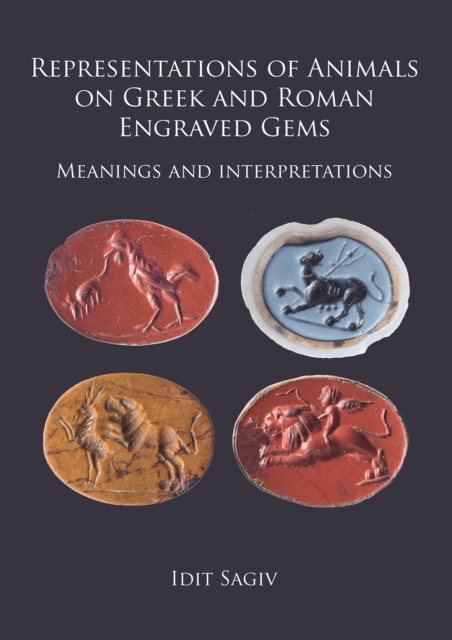
Representations of Animals on Greek and Roman Engraved Gems
A comprehensive study of the depictions of animals and their significance on Greek and Roman gems. The work examines the associations between animal depictions and the type of gemstone and its believed qualities. The study also compares the representation of animals on gems to other, larger media, and analyses the differences.
eBook

Des vertus et couleurs de quelques minéraux dans les écrits des médecins de langue arabe (ixe-xiiie siècle)
Les minéraux, ou « pierres » au sens large, sont associés aux substances végétales et à celles d’origine animale pour former le corpus des simples médicinaux. Les sources les concernant sont à rechercher non seulement dans les manuels de médecine et de pharmacologie, mais également dans les traités d’alchimie et les lapidaires qui eux-mêmes puisent dans les traditions locales ou étrangères parfois marquées par les superstitions, les pratiques magiques et les récits légendaires et ont pour références des médecines d’origines diverses. L’étude concerne quelques gemmes remarquables. On s’est interrogé, à leur propos, sur l’influence qu’ont pu avoir les conceptions anciennes sur la pensée médicale. On a également examiné la possibilité que les vertus médicinales attribuées aux pierres aient un lien avec leur couleur, leur transparence ou leur brillance en vertu de la fameuse théorie de la signature connue également pour les végétaux et diverses parties des animaux. Il a été tenté de répondre à ces questions en regroupant les gemmes étudiées selon leur couleur dominante puis en confrontant les vertus qui leur sont dévolues dans divers écrits médicaux de langue arabe.
Journal Article

Engraved Gems
Many are no larger than a fingertip. They are engraved with symbols, magic spells and images of gods, animals and emperors. These stones were used for various purposes. The earliest ones served as seals for making impressions in soft materials. Later engraved gems were worn or carried as personal ornaments - usually rings, but sometimes talismans or amulets. The exquisite engraved designs were thought to imbue the gems with special powers. For example, the gods and rituals depicted on cylinder seals from Mesopotamia were thought to protect property and to lend force to agreements marked with the seals. This edited volume discusses some of the finest and most exceptional precious and semi-precious stones from the collection of the Dutch National Museum of Antiquities - more than 5.800 engraved gems from the ancient Near East, Egypt, the classical world, renaissance and 17th-20th centuries - and other special collections throughout Europe. Meet the people behind engraved gems: gem engravers, the people that used the gems, the people that re-used them and above all the gem collectors. This is the first major publication on engraved gems in the collection of the National Museum of Antiquities in Leiden since 1978.
eBook

Religion in Ephesos Reconsidered
This volume reviews the current state of research on the most important Ephesian projects offering evidence for religious activity during the Roman period. The essays cover a wide range of materials and question traditional understandings of material culture in Ephesos.
eBook
La fabrique de l’image statuaire dans l’art glyptique
En sa qualité de fabricant d’images, l’artiste antique peut être amené à intégrer, au sein de sa composition, une représentation de « statue-objet ». Ce motif est à dissocier du personnage, surtout si la posture de ce dernier reproduit ou s’inspire de canons et autres types sculpturaux ; à la « statue-objet » inanimée s’oppose le protagoniste « vivant ». Afin de représenter la statue-objet, le graveur a recours à une palette de stratégies figuratives qu’il importe d’identifier.
Journal Article
Gemstones and Their Origins
Each gem deposit-whether of primary origin in the parent rocks; or secondary as alluvial placers in valley floors, river gravels, or the sand of oceanic shelves presents an eloquent chronicle of the Earth's life story.
eBook

Genetic and pathogenic diversity of Pseudomonas syringae pv. syringae isolates associated with bud necrosis and leaf spot of pear in a single orchard Pyrus communis L.; Latium
Ninety fluorescent pseudomonads obtained from pear cultivars Coscia and Tosca showing symptoms of bacterial blast were assessed by biochemical tests and pathogenicity on lemon fruits and pear and lilac leaves. Presence of the syrB gene and ice-nucleation activity was also determined. In addition, genetic variability was assessed using repetitive sequence PCR with the BOX A1 primer. The patterns were analyzed with UPGMA and Dice's coefficients. Eighty-nine isolates were determined as putative Pseudomonas syringae pv. syringae. Four genomic patterns, A, B, C and D, were obtained by BOX-PCR analysis. Patterns A and C were identical to those shown by other P. s. pv. syringae strains previously isolated from pear in other areas. Pattern B was associated solely with leaf spot symptoms observed on cv Coscia. The syrB gene was present in 38.8% of the isolates, whereas ice-nucleation activity was observed in 77.7%. Isolates possessing the syrB gene were the most aggressive in pathogenicity tests. Different populations of P. s. pv. syringae appear to be involved in inducing blast symptoms on pear in Central Italy
[Novanta Pseudomonas fluorescenti provenienti da piante delle cultivar di pero Coscia e Tosca presentanti sintomi di necrosi batterica sono stati sottoposti a test biochimici e a prove di patogenicità su frutti di limone e foglie di pero e di serenella. E' stata pure determinata la presenza del gene syrB e di attività di nucleazione del ghiaccio. Inoltre, è stata accertata la variabilità genetica utilizzando la repetitive sequence PCR con il primer BOX A1. I pattern ottenuti sono stati analizzati con l'UPGMA e i coefficienti di Dice. Ottantanove isolati sono stati identificati come Pseudomonas syringae pv. syringae putativi. Mediante analisi BOX-PCR sono stati ottenuti quattro pattern genomici, A, B, C e D. A e C erano identici a quelli mostrati da altri ceppi di P. s. pv. syringae isolati in precedenza dal pero in altre aree. B era associato solamente ai sintomi di macchie fogliari osservati sulla cv Coscia. Il gene syrB era presente nel 38,8% degli isolati, mentre l'attività di nucleazione del ghiaccio è stata osservata nel 77,7%. Nei test di patogenicità gli isolati che possedevano il gene syrB sono risultati i più aggressivi. Popolazioni diverse di P. s. pv. syringae risultano essere interessate nell'induzione di sintomi di necrosi batterica sul pero in Italia Centrale.]
Journal Article

Endophytic fungi in Quercus cerris. Isolation frequency in relation to phenological phase - tree health and the organ affected Tuscany
The isolation frequency of endophytic fungi in Quercus cerris was determined in relation to sampling data, the health state of the tree, and the tree organ affected. Sampling was carried out at three times, in April (budbreak), June (full vegetation) and October (leaf fall), on trees that were either healthy or in decline, and on three organs: current-year twigs, with a diameter less than 2 cm, buds, and leaves. The experiment was done in an approximately 20-year-old oak forest at an altitude of 350-400 m above sea level. Three healthy and three declining trees were sampled annually in 1999 and 2000. From each tree 20 current-year twigs, 20 buds and 10 leaves were harvested. Tissue fragments, after sterilization with 10% H₂O₂, were incubated on potato-dextrose-agar amended with streptomycin, at 20°C in the dark for 7 days, and the isolated mycelia maintained at 4°C on malt-extract agar. A total of 15 fungal species were isolated. All organs yielded fungal species but the greatest number of endophytic species came from current year twigs. Individual species were isolated more often from declining trees than from healthy trees, and more fungi were isolated in June (full vegetation) than in April or October. Diplodia mutila, Discula quercina and Phomopsis quercina, which are known to be pathogenetic on oaks, were present on oaks for a large part of the year. These fungi are both saprophytes (as endophytes) and parasites and are, therefore, probably a serious contributing and inciting factor in the oak decline syndrome.
Journal Article