
Catalogue Search | MBRL


Are you sure you want to remove the book from the shelf?

{{itemTitle}}
39
result(s) for
"Gems, Classical."
Sort by:

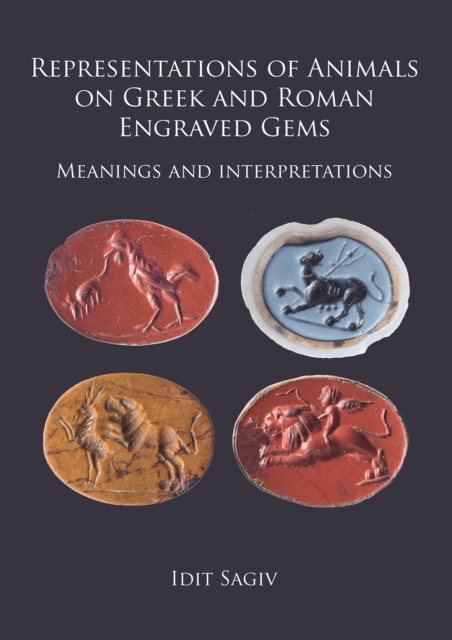
Representations of Animals on Greek and Roman Engraved Gems
A comprehensive study of the depictions of animals and their significance on Greek and Roman gems. The work examines the associations between animal depictions and the type of gemstone and its believed qualities. The study also compares the representation of animals on gems to other, larger media, and analyses the differences.
eBook

Engraved Gems
Many are no larger than a fingertip. They are engraved with symbols, magic spells and images of gods, animals and emperors. These stones were used for various purposes. The earliest ones served as seals for making impressions in soft materials. Later engraved gems were worn or carried as personal ornaments - usually rings, but sometimes talismans or amulets. The exquisite engraved designs were thought to imbue the gems with special powers. For example, the gods and rituals depicted on cylinder seals from Mesopotamia were thought to protect property and to lend force to agreements marked with the seals. This edited volume discusses some of the finest and most exceptional precious and semi-precious stones from the collection of the Dutch National Museum of Antiquities - more than 5.800 engraved gems from the ancient Near East, Egypt, the classical world, renaissance and 17th-20th centuries - and other special collections throughout Europe. Meet the people behind engraved gems: gem engravers, the people that used the gems, the people that re-used them and above all the gem collectors. This is the first major publication on engraved gems in the collection of the National Museum of Antiquities in Leiden since 1978.
eBook

Reuse Value
This book offers a range of views on spolia and appropriation in art and architecture from fourth-century Rome to the late twentieth century. Using case studies from different historical moments and cultures, contributors test the limits of spolia as a critical category and seek to define its specific character in relation to other forms of artistic appropriation. Several authors explore the ethical issues raised by spoliation and their implications for the evaluation and interpretation of new work made with spolia. The contemporary fascination with spolia is part of a larger cultural preoccupation with reuse, recycling, appropriation and re-presentation in the Western world. All of these practices speak to a desire to make use of pre-existing artifacts (objects, images, expressions) for contemporary purposes. Several essays in this volume focus on the distinction between spolia and other forms of reused objects. While some authors prefer to elide such distinctions, others insist that spolia entail some form of taking, often violent, and a diminution of the source from which they are removed. The book opens with an essay by the scholar most responsible for the popularity of spolia studies in the later twentieth century, Arnold Esch, whose seminal article 'Spolien' was published in 1969. Subsequent essays treat late Roman antiquity, the Eastern Mediterranean and the Western Middle Ages, medieval and modern attitudes to spolia in Southern Asia, the Italian Renaissance, the European Enlightenment, modern America, and contemporary architecture and visual culture.
eBook
Nonlinear dynamics of a circular curved cantilevered pipe conveying pulsating fluid based on the geometrically exact model
Due to the novel applications of flexible pipes conveying fluid in the field of soft robotics and biomedicine, the investigations on the mechanical responses of the pipes have attracted considerable attention. The fluid-structure interaction (FSI) between the pipe with a curved shape and the time-varying internal fluid flow brings a great challenge to the revelation of the dynamical behaviors of flexible pipes, especially when the pipe is highly flexible and usually undergoes large deformations. In this work, the geometrically exact model (GEM) for a curved cantilevered pipe conveying pulsating fluid is developed based on the extended Hamilton’s principle. The stability of the curved pipe with three different subtended angles is examined with the consideration of steady fluid flow. Specific attention is concentrated on the large-deformation resonance of circular pipes conveying pulsating fluid, which is often encountered in practical engineering. By constructing bifurcation diagrams, oscillating shapes, phase portraits, time traces, and Poincare maps, the dynamic responses of the curved pipe under various system parameters are revealed. The mean flow velocity of the pulsating fluid is chosen to be either subcritical or supercritical. The numerical results show that the curved pipe conveying pulsating fluid can exhibit rich dynamical behaviors, including periodic and quasi-periodic motions. It is also found that the preferred instability type of a cantilevered curved pipe conveying steady fluid is mainly in the flutter of the second mode. For a moderate value of the mass ratio, however, a third-mode flutter may occur, which is quite different from that of a straight pipe system.
Journal Article

Ultrasoft Classical Systems at Zero Temperature
At low temperatures, classical ultrasoft particle systems develop interesting phases via the self-assembly of particle clusters. In this study, we reach analytical expressions for the energy and the density interval of the coexistence regions for general ultrasoft pairwise potentials at zero temperatures. We use an expansion in the inverse of the number of particles per cluster for an accurate determination of the different quantities of interest. Differently from previous works, we study the ground state of such models, in two and three dimensions, considering an integer cluster occupancy number. The resulting expressions were successfully tested in the small and large density regimes for the Generalized Exponential Model α, varying the value of the exponent.
Journal Article

When does the Hawking into Unruh mapping for global embeddings work?
A
bstract
We discuss for which smooth global embeddings of a metric into a Minkowskian spacetime the Hawking into Unruh mapping takes place. There is a series of examples of global embeddings into the Minkowskian spacetime (GEMS) with such mapping for physically interesting metrics. These examples use Fronsdal-type embeddings for which time-lines are hyperbolas. In the present work we show that for some new embeddings (non Fronsdal-type) of the Schwarzschild and Reissner-Nordström metrics there is no mapping. We give also the examples of hyperbolic and non hyperbolic type embeddings for the de Sitter metric for which there is no mapping. For the Minkowski metric where there is no Hawking radiation we consider a non trivial embedding with hyperbolic timelines, hence in the ambient space the Unruh effect takes place, and it follows that there is no mapping too. The considered examples show that the meaning of the Hawking into Unruh mapping for global embeddings remains still insufficiently clear and requires further investigations.
Journal Article

Numerical Simulation of Reactive Fluid Flow on Unstructured Meshes
Reactive transport simulation on unstructured meshes can provide fundamental insight into the effect that geometric complexity of geologic structures has on fluid flow and development of reaction fronts. When applied to conditions ranging from ambient to hydrothermal and combined with compressible flow, accounting for geometric complexity provides an advantage for applications such as enhanced geothermal systems, carbon dioxide sequestration, hydrothermal ore formation, and radioactive waste disposal. We introduce CSMP–GEMS, a thermo–hydro and chemical multicomponent reactive transport code based on coupling of the Complex System Modeling Platform (CSMP) transport modeling framework with the GEMS3K chemical speciation solver. GEMS3K features a comprehensive suite of non-ideal activity and equation-of-state models of solution phases (aqueous electrolyte, gas and fluid mixtures, solid solutions). Current features include transient, compressible, single-phase advective and/or dispersive fluid flow, mass transport, heat transport in saturated porous media, and geochemical reactions in subsurface hydrothermal systems. We present two one-dimensional numerical experiments to compare CSMP–GEMS with the reactive transport codes OpenGeoSys–GEM and TOUGHREACT. Each experiment simulates calcite dissolution and dolomite precipitation during advection and hydrodynamic dispersion. One experiment corresponds to an existing isothermal
(
25
∘
C
)
benchmark; the second explores the applicability of the codes to non-isothermal problems. We also present a two-dimensional example that illustrates the application of CSMP–GEMS on unstructured meshes that can represent complex geologic relations. The results suggest that all three codes are well suited to predicting fluid circulation, heat transport, and mineral stability within hydrothermal systems relevant to enhanced geothermal systems and carbon dioxide sequestration in deep aquifers. Self-consistent accounting for kinetic processes is a major advantage of TOUGHREACT, but published applications are restricted to orthogonal meshes, potentially limiting the applicability of TOUGHREACT to geometrically less complex natural systems. OpenGeoSys–GEM can operate on unstructured meshes that may include multiple element types, facilitating the examination of non-orthogonal domains. However, due to its reliance on the groundwater equations, OpenGeoSys–GEM may be best suited for application to systems in which flow includes dispersion/diffusion and is not compressible. CSMP–GEMS does not currently calculate reaction kinetics, but may be useful for application to geometrically complex systems.
Journal Article

From GEM to electromagnetism
In the first part of the present work, we focus on the theory of gravitoelectromagnetism (GEM), and we derive the full set of equations and constraints that the GEM scalar and vector potentials ought to satisfy. We discuss important aspects of the theory, such as the presence of additional constraints resulting from the field equations and gauge condition, the requirement of the time-independence of the vector potential and the emergence of additional terms in the expression of the Lorentz force. We also propose an alternative ansatz for the metric perturbations that is found to be compatible only with a vacuum configuration but evades several of the aforementioned obstacles. In the second part of this work, we pose the question of whether a tensorial theory using the formalism of General Relativity could re-produce the theory of Electromagnetism. We demonstrate that the full set of Maxwell’s equations can be exactly re-produced for a large class of models, but the framework has several weak points common with those found in GEM.
Journal Article